Share this tool:
 |
Description:
Neurons AI is a marketing intelligence platform that predicts how people are likely to respond to ads, images, videos, packaging, websites, and other visual assets before they go live. It is built for creative testing, not creative generation. Instead of asking it to make an ad, you use it to judge whether an existing ad will get noticed, feel engaging, stay memorable, and place attention on the right elements.
| Feature | Practical Value |
|---|---|
| Attention Heatmaps | Shows where viewers are most likely to look in an image or video. |
| Fogmaps | Makes low-attention areas easier to spot, especially on colorful layouts. |
| Cognitive Demand | Helps identify visual complexity and areas that may be harder to process. |
| Engagement and Memory Scores | Estimates emotional response and recall potential. |
| Neurons Impact Score | Gives one summary score from 1 to 10 for creative impact. |
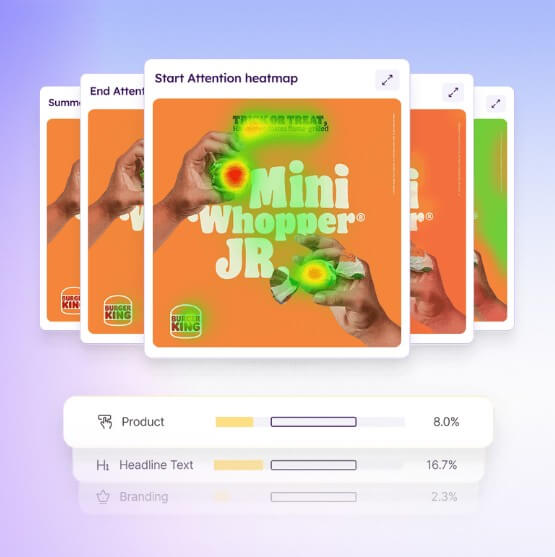
| AOI Analysis | Measures attention on key elements such as branding, product, headline, body text, and CTA. |
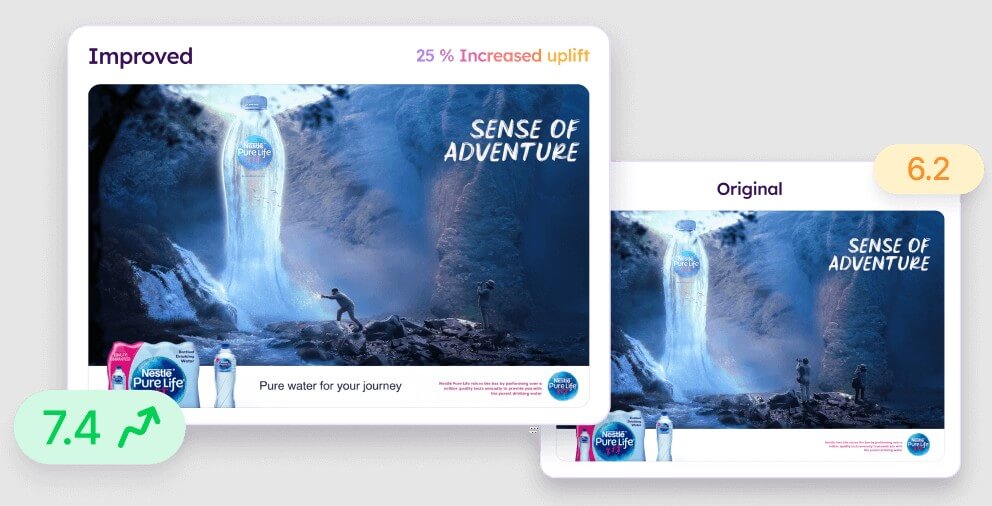
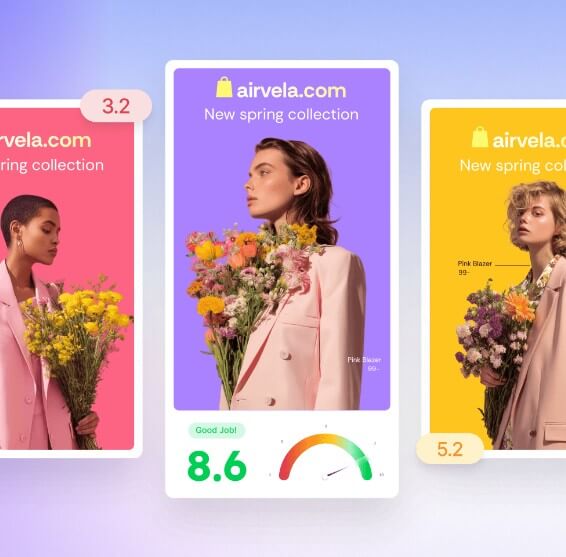
The Impact Score is one of the most useful features for non-specialist teams. Neurons describes it as a single score from 1 to 10 that combines neuroscience-backed metrics around attention, emotional engagement, and memorability. It is designed to help users avoid juggling too many separate metrics at once.
Neurons AI is strongest when teams need fast pre-launch feedback on creative assets. The tool uses predictive models trained on consumer neuroscience and eye-tracking data to estimate how viewers will process a visual. Neurons says its attention AI can predict eye-tracking results with over 95% accuracy and can produce results similar to an eye-tracking study with roughly 100 to 150 participants, but in far less time.
That makes the product useful for a common marketing problem: teams often debate creative details without enough evidence. Should the logo be larger? Is the call to action visible? Is the product getting enough focus? Is the ad too visually busy? Neurons AI gives teams a structured way to answer those questions before spending media budget.
The best way to think about it is as a creative pre-flight check. It does not replace brand strategy, human taste, or real campaign data. But it can reduce guesswork during the design and approval stage.
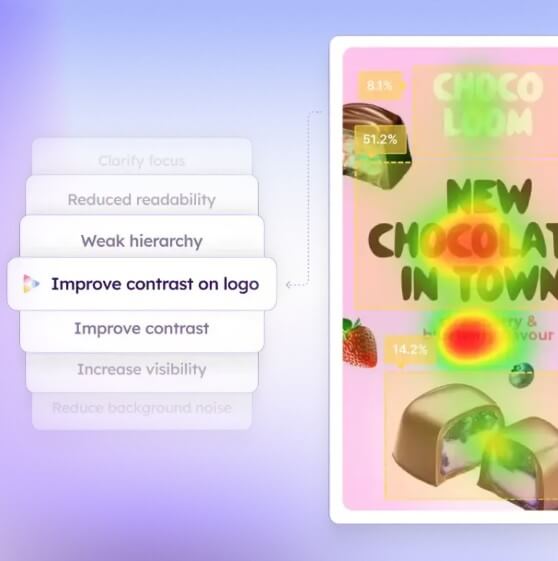
The workflow is direct: upload files, run predictions, confirm objectives and Areas of Interest, then review the results. Neurons AI can automatically suggest the likely purpose, industry, and use case for the asset, but users can edit those inputs so the results match the campaign context.
That setup step matters. A brand-building ad should not be judged the same way as a conversion-focused banner. A food ad should not be benchmarked the same way as a financial services ad. Neurons AI uses objectives to decide which benchmarks and recommendations are most relevant, so users should not skip that review step.
Once the prediction is ready, the platform shows heatmaps, scores, benchmarks, AOI results, recommendations, and comparison options. Users can also compare up to six images to see which version performs better.
For design teams, the plugin support is useful. Neurons AI offers plugin workflows for Figma and Google Chrome, letting users analyze assets closer to where they already work. The Figma plugin can analyze a selected frame and return results in the plugin dialog and dashboard.
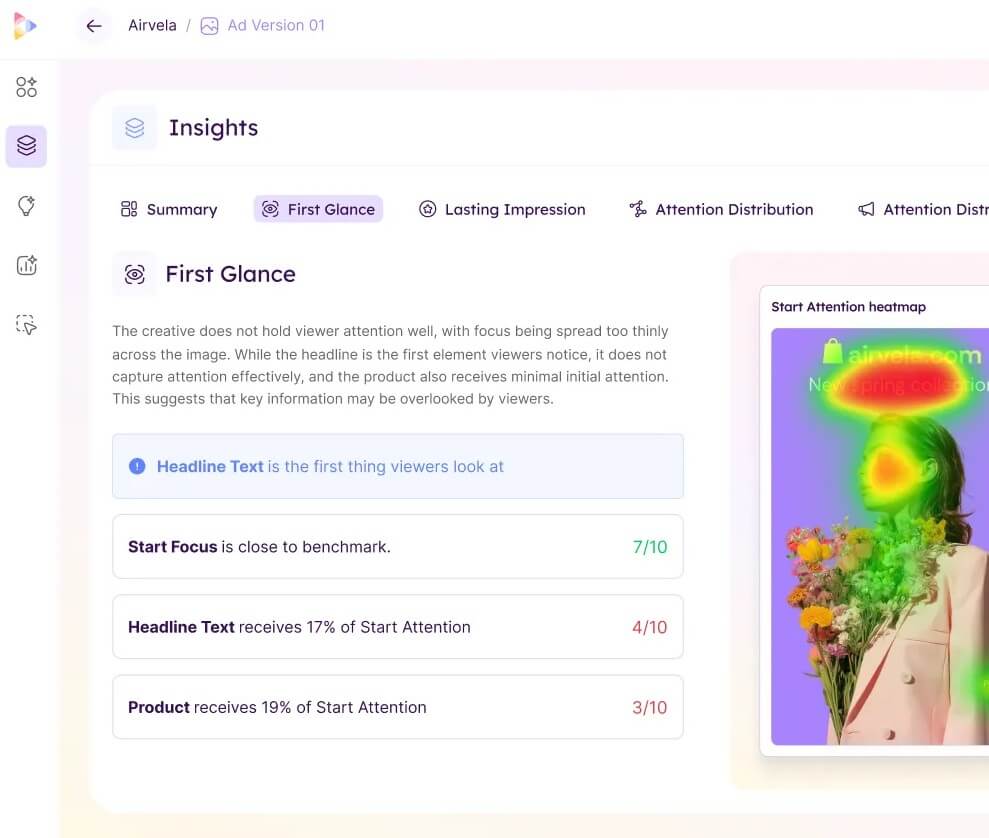
Neurons AI gives data-like outputs, but the value depends on interpretation. A heatmap is not a magic answer. It shows likely attention, not whether the concept is good, whether the offer is strong, or whether the audience likes the brand.
This is where AOIs become important. Neurons AI can detect areas such as branding, product, headline text, body text, and CTA. For images, users can select relevant AOIs and judge whether the right parts of the ad are doing their job. For videos, the platform can also show scores over time, which is useful for checking whether brand exposure appears early enough or disappears too quickly.
The heatmap options are also practical. Attention heatmaps show likely eye focus, while fogmaps reverse the view so users can better spot small attention zones that may be hard to read on busy or green backgrounds. Cognitive Demand heatmaps point to areas that add processing load.
The biggest strength here is not one metric. It is the combination of visual evidence, benchmarks, and recommendations. A creative director may still disagree with the score, but the discussion becomes more specific.
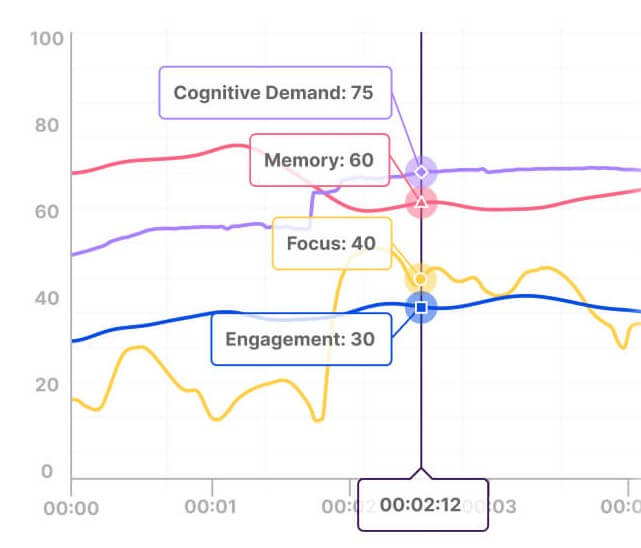
Neurons AI combines predictive AI with recommendation features. The platform includes metrics such as Focus, Cognitive Demand, Engagement, and Memory. Its knowledge base also notes newer or additional prediction models such as Trust, Avoidance, and Intent in API-related materials.
The recommendations layer is worth noting because it uses large language models grounded in Neurons’ scores and benchmarks. Neurons says it uses Claude for image analysis and Gemini for video analysis, with outputs shaped by campaign context, benchmarks, and predictive scores.
That means the tool is not only showing a heatmap. It is also trying to explain what to change. For marketers, this may be more useful than raw prediction data alone.
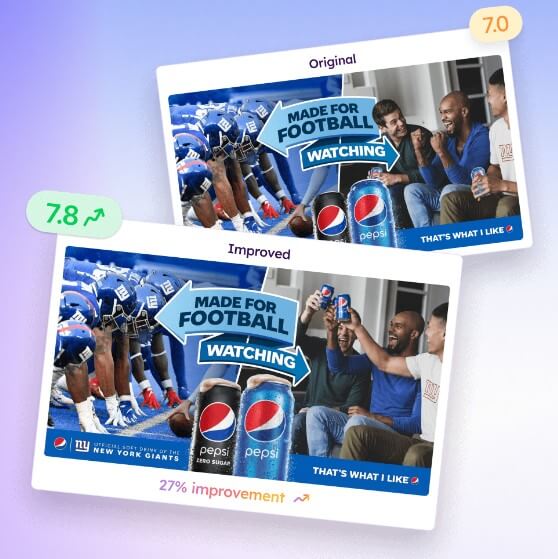
- Ad pre-testing: Compare static ads, banners, social posts, and video creatives before launch.
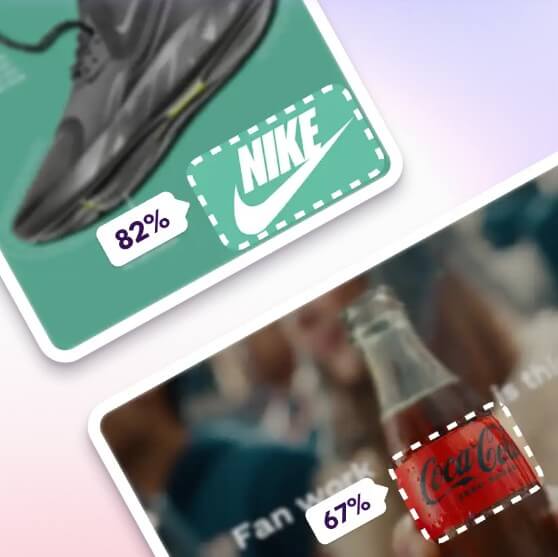
- Brand visibility checks: See whether the logo, product, or brand cue gets enough attention.
- Creative iteration: Test multiple versions of a layout, CTA, product crop, or headline treatment.
- Video review: Track attention and impact frame by frame, especially for short ads.
- Agency-client presentations: Use one-click reports and visual evidence to support creative decisions.
- API-based creative QA: Integrate predictive analysis into larger systems for teams processing many assets. The Neurons API supports image and video analysis as part of external workflows.
- Use Neurons AI before final creative approval, not after the campaign is already locked.
- Check the auto-detected objectives and AOIs. If they are wrong, your recommendations may be less useful.
- Compare variants rather than judging one asset in isolation. The tool is more valuable when it helps choose between real options.
- Watch cognitive demand on crowded ads. If the viewer has to process too much, the message may lose force.
- For video, check the timeline, not just the overall score. A strong average can still hide weak brand exposure in the first few seconds.
- Neurons AI predicts likely response: It does not guarantee campaign performance. Media placement, audience fit, offer strength, brand equity, timing, and channel context still matter.
- It also works best when the creative goal is clear: If the team cannot define whether the asset is for brand building, conversion, awareness, or product education, the analysis can become less focused.
- The platform may also feel too metrics-heavy for small teams: It is more valuable when creative decisions affect media spend, brand consistency, or client approval.
- Finally, AI recommendations should not be followed blindly: A lower-scoring creative may still be right for a niche audience, a distinctive brand system, or a long-term campaign idea. Neurons AI should guide judgment, not replace it.
Neurons AI is best for marketers, agencies, brand teams, and creative leads who want predictive feedback before launching ads or visual assets.
Its strongest value is turning subjective creative debates into clearer discussions about attention, memory, complexity, and brand visibility.
The main caveat is that it predicts response to the asset, not the full success of the campaign, so human strategy and real market context still matter.
TAGS: Marketing
Related Tools:

Enhances customer discovery and market research

Automates phone calls for businesses using voice agents

Optimizes link management and enhances SEO strategies

Generates digital marketing assets

Automates lead generation and marketing for real estate
Automates multi-channel sales