Share this tool:
 |
Description:
Me.bot is a personal AI memory app built around the idea of a “Second Me.” Instead of acting like a normal chatbot that only answers one-off questions, it learns from your notes, audio, memories, links, and saved ideas so it can help you recall information, organize thoughts, and create personalized outputs in your own style. The current public positioning leans heavily into identity, memory, and shareable voice-and-visual presentations rather than basic productivity chat.
| Feature | Practical Value |
|---|---|
| Personal Memory Hub | Lets users save notes, audio, links, and other records so the AI can learn from their own material. |
| Smart Topics | Organizes memories into topic areas, with editable descriptions that guide future categorization. |
| Key Memories | Extracts important names, dates, facts, and details from chats, notes, links, and images. |
| Data Imports | Supports importing from tools like Evernote, Apple Notes, Markdown, Notion, and X/Twitter through its data and integrations area. |
| Browser Extension | Saves webpages, links, text, and images into Me.bot, with summaries and side-page insights after saving. |
| Voice and Visual Talks | Turns personal records into interactive talks with voice and visuals tailored to the audience. |
Me.bot is strongest as a personal knowledge layer. The main difference between this and a standard AI assistant is that Me.bot is designed to grow from your own material. You feed it notes, voice recordings, links, files, and memories. Over time, it becomes more useful because it has more context about your life, work, interests, projects, and communication style.
That makes it a better fit for people who think in fragments. A saved idea here, a voice note there, a link from research, a meeting takeaway, a personal reflection, a future project concept. Me.bot tries to turn that scattered material into something searchable, usable, and more connected.
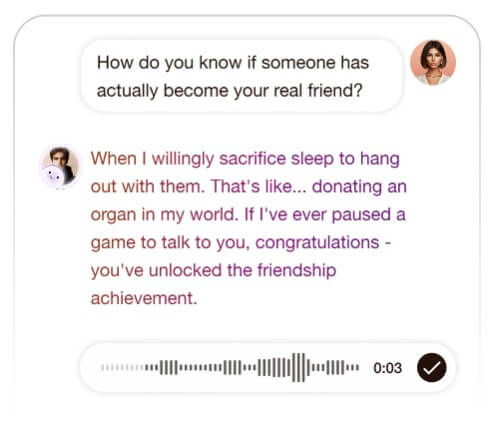
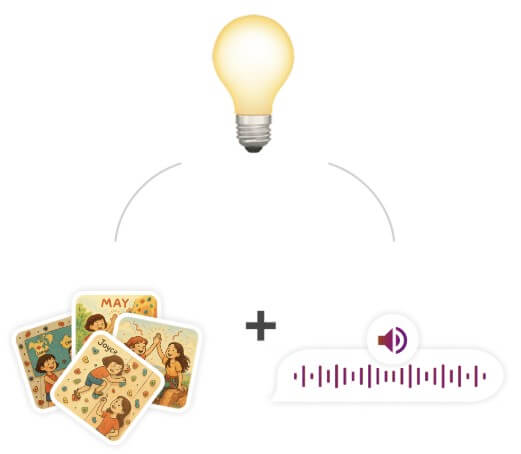
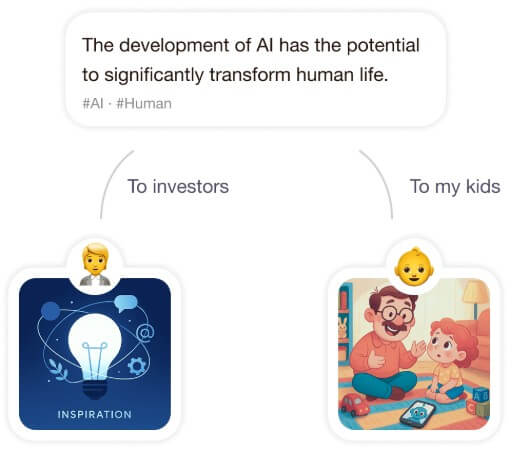
The newer “Second Me” angle is also important. Me.bot is not only a storage app. It can turn your records into interactive talks with voice and visuals, then adapt the message for different listeners. The official site describes a workflow where users share data, set a talk goal, and let Me.bot craft a talk from their records.
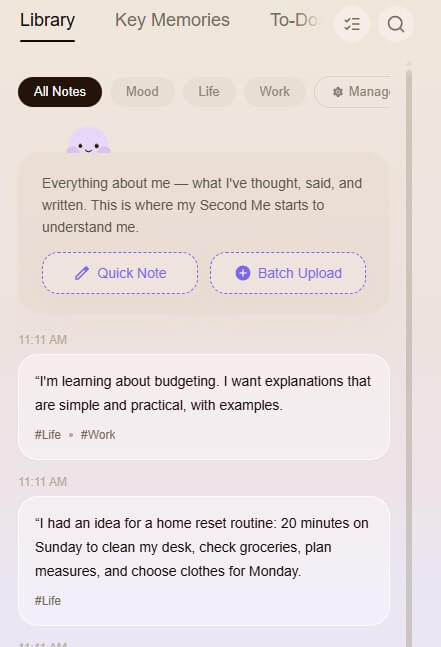
The basic workflow is simple: capture, organize, retrieve, and create. You can start by adding memories manually, recording voice notes, saving links, or importing old material from other apps. The documentation says Me.bot can batch import external data and consolidate scattered files into one hub.
Smart Topics are one of the more useful workflow details. They are not just fixed folders. Users can edit topic names and descriptions so Me.bot understands how memories should be grouped. That is helpful because personal organization is rarely universal. One user may want “Work” split by client. Another may want “Self Growth,” “Research,” “Travel,” or “Invoices.” Me.bot gives users some control over that structure instead of forcing a rigid filing system.
The browser extension is also practical. It removes the friction of copying links, quotes, or images into a separate notes app. You can save a webpage or selected content, then open it in Me.bot later for deeper exploration. For researchers, creators, students, and heavy readers, that is one of the most useful entry points.
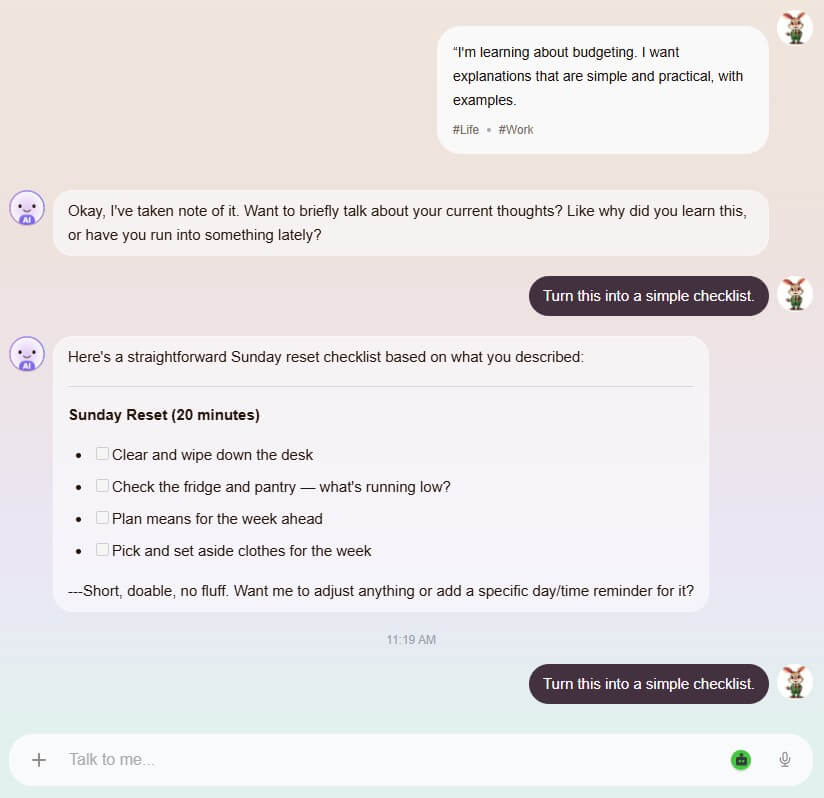
Me.bot works best when the user has a steady stream of personal input. It is not as useful if you only ask occasional generic questions. Its value comes from accumulated context.
It is especially strong for people who journal, record voice notes, collect research, prepare talks, manage ideas, or want a searchable record of personal knowledge. The official user story section includes examples around mental well-being, self-growth, journaling, productivity, confidence, and ADHD-related use, which fits the product’s personal memory positioning.
The talk-generation feature gives Me.bot a different angle from many second-brain apps. It can help turn raw ideas into a presentation-like output, with voice and visuals, instead of leaving everything as notes. That makes it useful for founders, educators, creators, students, and anyone who often needs to explain ideas to different audiences.
Privacy is central to this category because users are encouraged to upload personal memories, notes, files, and recordings. Me.bot’s public materials mention anonymity, end-to-end encryption, local-device data claims, Azure Confidential Computing, masking, and homomorphic encryption.
The documentation also states that Me.bot uses TLS/SSL for transmission, end-to-end encryption for file transfer and messaging, dynamic data masking, AES-256 storage encryption, and a personal cloud storage direction that is still in development.
That is encouraging, but users should still be careful. Any tool built around personal memory deserves a higher privacy standard than a normal chatbot. Before importing sensitive journals, client files, medical notes, or private family material, users should read the current privacy policy and understand what is stored, where it is processed, and how deletion works.
- Personal second brain: Best for saving thoughts, links, notes, and voice recordings that would otherwise be scattered across apps.
- Journaling and reflection: Useful for people who want old thoughts to become searchable and reusable rather than forgotten.
- Research collection: Good for saving webpages, summaries, notes, and source material while browsing.
- Creator and founder communication: Strong fit for turning rough ideas into talks, stories, updates, or audience-specific explanations.
- Life organization: Helpful for remembering names, dates, commitments, tasks, and small details through Key Memories.
- Me.bot needs input to become valuable: If you do not capture memories often, import useful data, or use the browser extension, it may feel like a nicer chatbot with less immediate benefit.
- The product also has some naming confusion: The site uses both Me.bot and Second Me, which may make the product feel slightly unclear at first. The concept is understandable, but the branding takes a moment to settle.
- Another limitation is trust: The more personal the tool becomes, the more important data control becomes. Me.bot publishes privacy and security claims, but users should still avoid uploading sensitive material until they are comfortable with the current policies and export or deletion options.
Me.bot is best for people who want a personal AI that remembers, organizes, and reshapes their own ideas.
It is strongest as a memory-based companion for notes, voice recordings, research, journaling, and shareable talks.
The main caveat is that it only becomes useful if you feed it meaningful material and stay thoughtful about privacy.
TAGS: Self Improvement