Share this tool:
 |
Description:
Semrush One is Semrush’s combined platform for tracking traditional SEO performance and AI search visibility in one workflow. It is built for marketers who now have to answer two questions at the same time: how visible are we on Google, and how visible are we inside AI-generated answers?
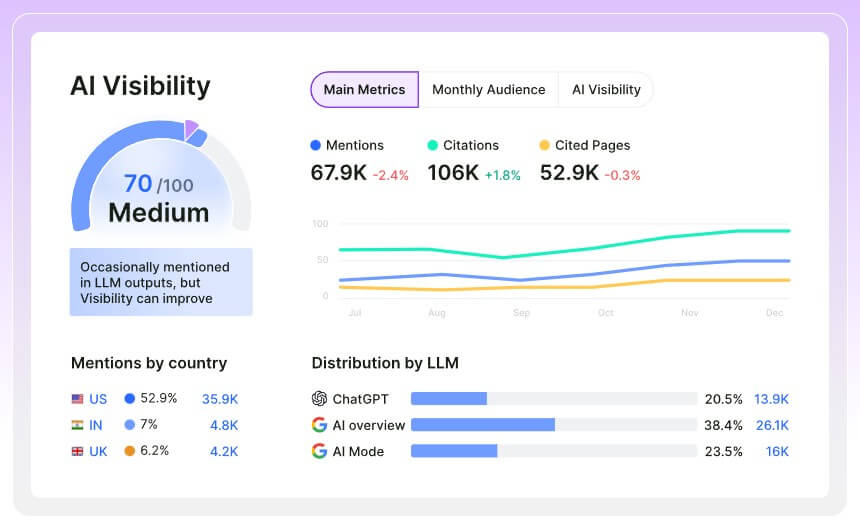
Semrush One is not just “Semrush with AI added on.” Its real value is that it connects classic SEO data with newer AI discovery signals. The landing page describes it as a single place to track SEO and AI-driven discovery, including Google, AI Overviews, and LLM answers. It also highlights keyword data, backlink data, AI prompt data, competitive research, visibility tracking, and website optimization as part of the same product story.
That matters because search behavior is changing. A buyer may still search Google, but they may also ask ChatGPT, Gemini, Perplexity, or Google AI Mode for recommendations. Semrush One helps teams see where their brand appears, where competitors show up, and which prompts or topics may shape future demand. Semrush says the AI Visibility Toolkit inside Semrush One tracks brand mentions, prompts, and visibility across large language models such as ChatGPT, Gemini, and Perplexity, with broader tracking across Google AI Overviews, AI Mode, ChatGPT, Perplexity, and Gemini depending on the report.
| Area | What It Helps You Do |
|---|---|
| SEO visibility tracking | Track rankings, organic visibility, and search performance. |
| AI visibility tracking | See how your brand appears in AI-generated answers. |
| Prompt research | Find topics and prompts people use in AI search. |
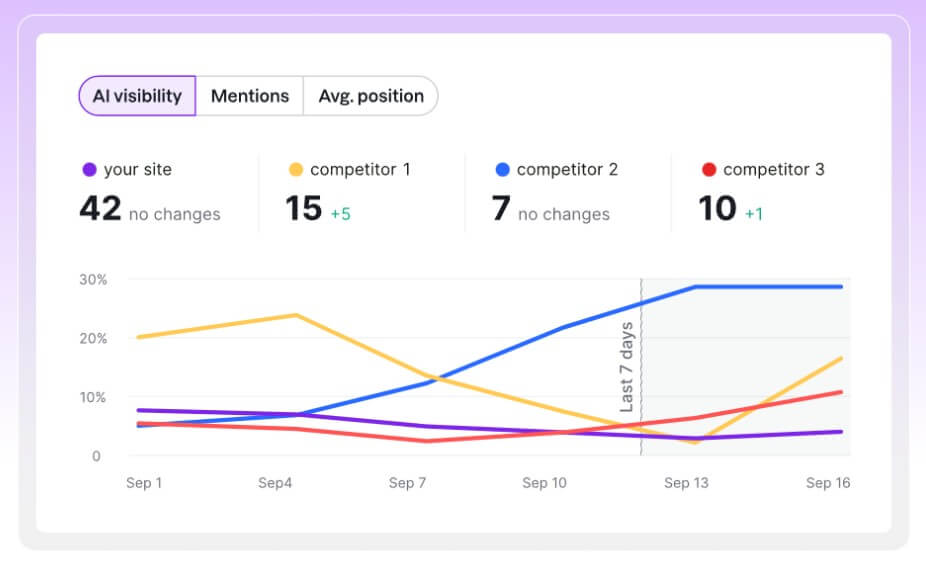
| Competitor benchmarking | Compare your visibility with competing domains. |
| Brand perception | Review sentiment, share of voice, and narrative drivers. |
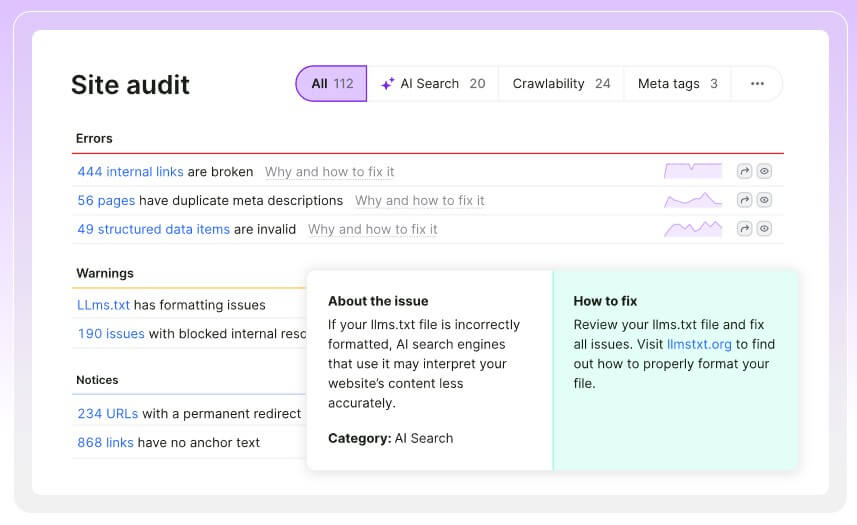
| Site auditing | Find technical issues that may hurt SEO or AI visibility. |
| Reporting | Turn search and AI visibility data into shareable reports. |
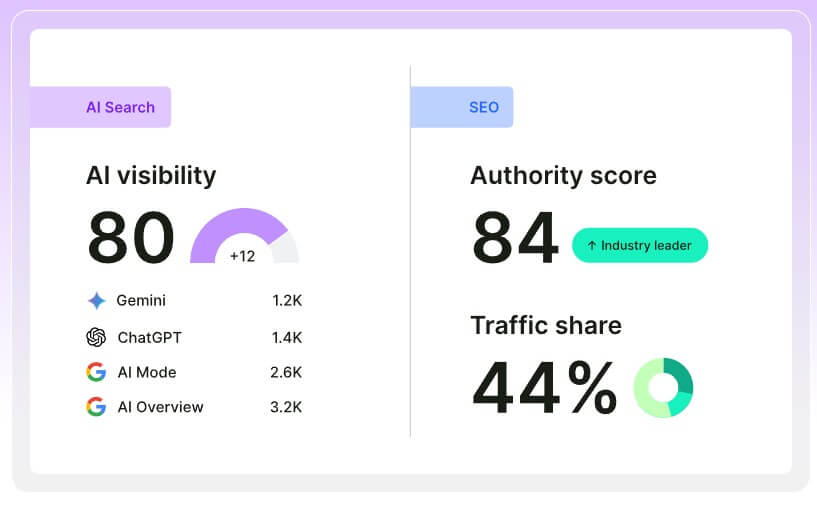
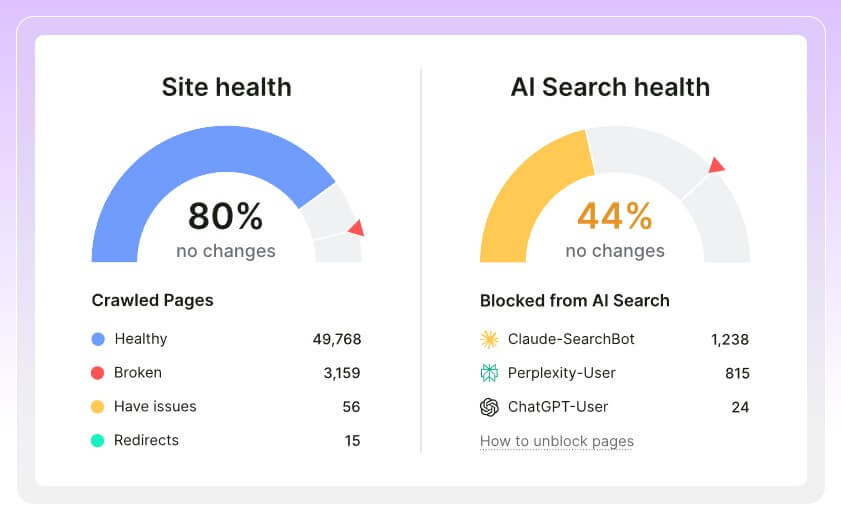
The most interesting part of Semrush One is the AI Visibility Toolkit. It shows how brands appear in AI-generated answers and helps teams benchmark visibility, analyze sentiment, discover prompts, track daily AI visibility, audit technical blockers, identify competitor gaps, and build reports.
This is useful because AI search does not behave exactly like classic SEO. In Google, you can track a page ranking for a keyword. In AI search, the question is more layered. Is your brand mentioned? Is it cited? Is it framed positively? Which sources shape the answer? Which competitors are recommended instead?
Semrush One gives marketers a way to stop guessing. It does not make AI visibility perfectly predictable, but it gives teams a working measurement system.
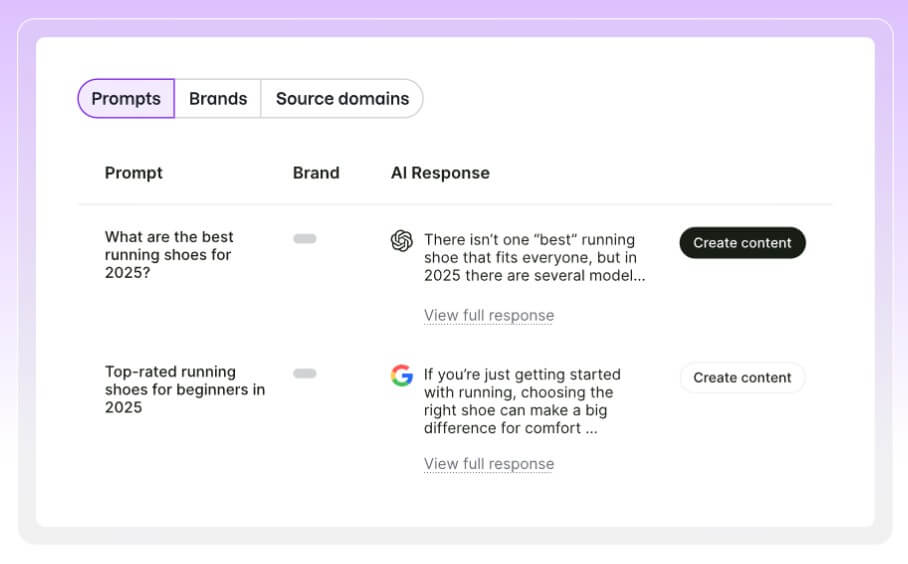
Semrush One is feature-led, not prompt-led, but prompt data is still important. The Prompt Research report helps users discover and prioritize the topics and prompts people use in AI-generated search. Semrush describes this as similar to keyword research for the AI era, where the focus shifts from short keywords to the questions and prompts people ask AI platforms.
For content teams, this is one of the more practical workflows. Instead of writing only around keyword volume, they can look at AI-style questions and build content that answers the way buyers now research products, services, and categories.
The Brand Performance reports are useful for teams that care about perception, not just traffic. They show how AI platforms position a brand against competitors, including share of voice, sentiment, narrative drivers, and the questions audiences ask.
That makes Semrush One helpful for brand, SEO, and content teams working together. A content lead might see which questions need better pages. A brand lead might see that AI tools describe competitors more favorably. An SEO lead might check which cited sources influence those answers.
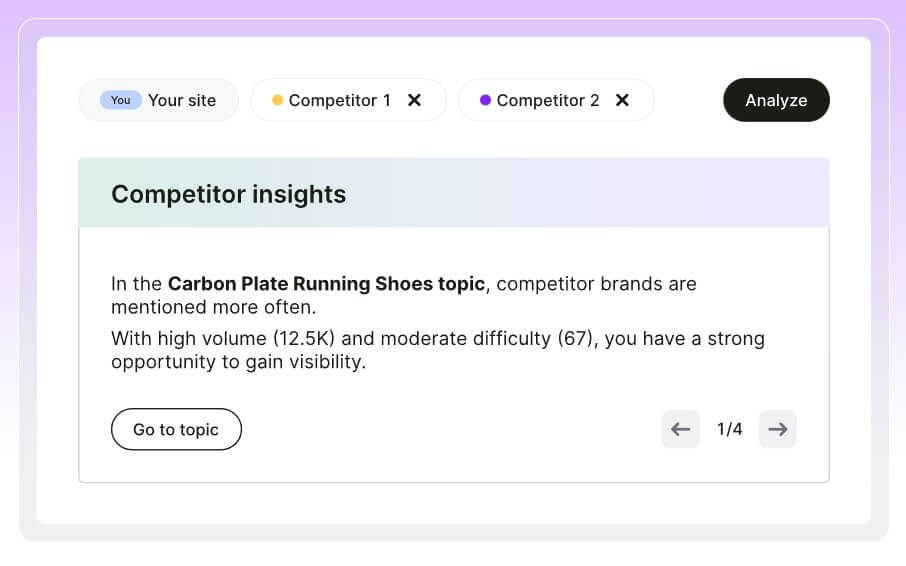
The competitor view also makes the data easier to act on. A low AI visibility score is useful, but knowing which competitors are winning specific prompts is more useful.
Semrush One will feel most natural to teams already familiar with SEO platforms. The workflow is built around research, tracking, auditing, optimization, and reporting. You check visibility, compare competitors, review prompts, fix site issues, then report progress.
The challenge is focus. Semrush is a large platform, and Semrush One adds another layer of data. New users should avoid opening every report on day one. A better starting workflow is: choose priority domains, track core keywords and prompts, check AI mentions, compare two or three competitors, run a site audit, then build a simple monthly report.
SEO teams can use Semrush One to connect classic ranking work with AI search visibility. It is a strong fit for teams that already track keywords and now need to understand how AI answers mention or skip their brand.
Agencies can use it for client reporting, competitive benchmarking, and AI visibility audits. The AI layer gives agencies a timely topic to explain to clients, but the classic SEO data keeps the work grounded.
Content teams can use prompt and topic insights to plan content that answers real discovery questions. Semrush’s Content Toolkit also supports topic research, brief creation, article generation, optimization, repurposing, and publishing across channels.
Marketing leaders can use it to see where brand visibility is improving or slipping across search surfaces. This is helpful when organic traffic alone does not explain what is happening.
Semrush One is not a lightweight tool. Smaller teams may need time to decide which reports matter. The platform is strongest when someone owns the workflow and reviews the data on a schedule.
AI visibility data also needs careful reading. AI platforms change, answers vary, and prompt wording can shift results. Treat the data as directional intelligence and trend tracking, not a perfect map of every AI answer.
The other caveat is execution. Semrush One can identify gaps, prompts, and technical issues, but your team still has to improve the site, publish better content, earn stronger authority signals, and refine messaging.
Semrush One is best for SEO teams, agencies, content teams, and marketing leaders who want one place to track classic search visibility and AI discovery.
Its strongest value is the way it joins SEO data, AI visibility tracking, prompt research, competitor benchmarking, brand perception, audits, and reporting.
The main caveat is complexity: it works best when teams start with a focused workflow instead of trying to use every report at once.
TAGS: Marketing
Related Tools:
Create high-quality animations and motion graphics
Helps businesses track, analyze, and improve their visibility
Transforms basic product photos into high-quality images
Monitors websites, turning real-time changes into clear insights
Provides customizable email templates
Creates and optimizes Google Ads campaigns