Share this tool:
 |
Description:
Namelix is an AI business name generator for founders, creators, marketers, and small teams that need brand name ideas without starting from a blank page. It takes keywords and a short business description, then generates name options based on style, randomness, length, and domain preferences. Its best use is early-stage naming exploration: getting enough strong directions to compare, refine, reject, and test before making a final brand decision.
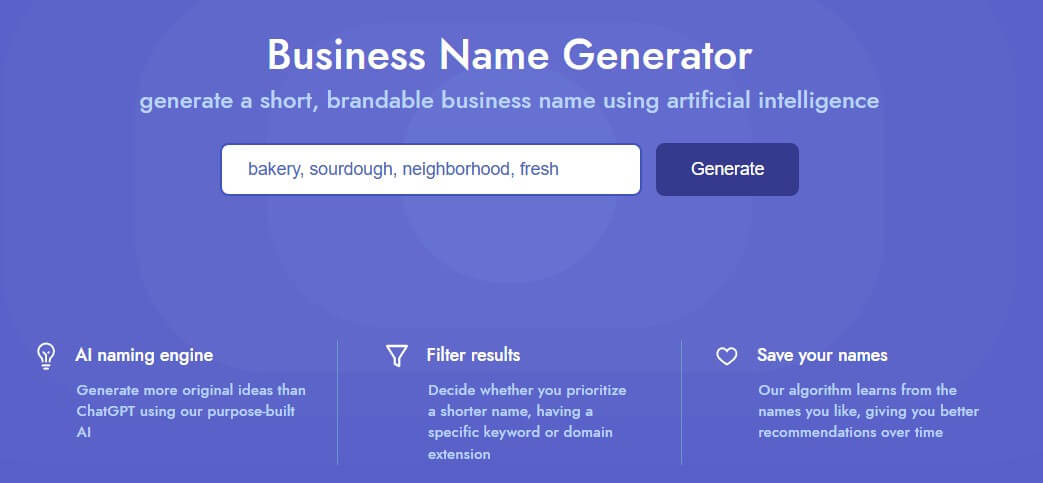
Namelix is not a long-form writing tool, so the “prompt” is usually a keyword set plus a short description. The better your input, the better the name pool.
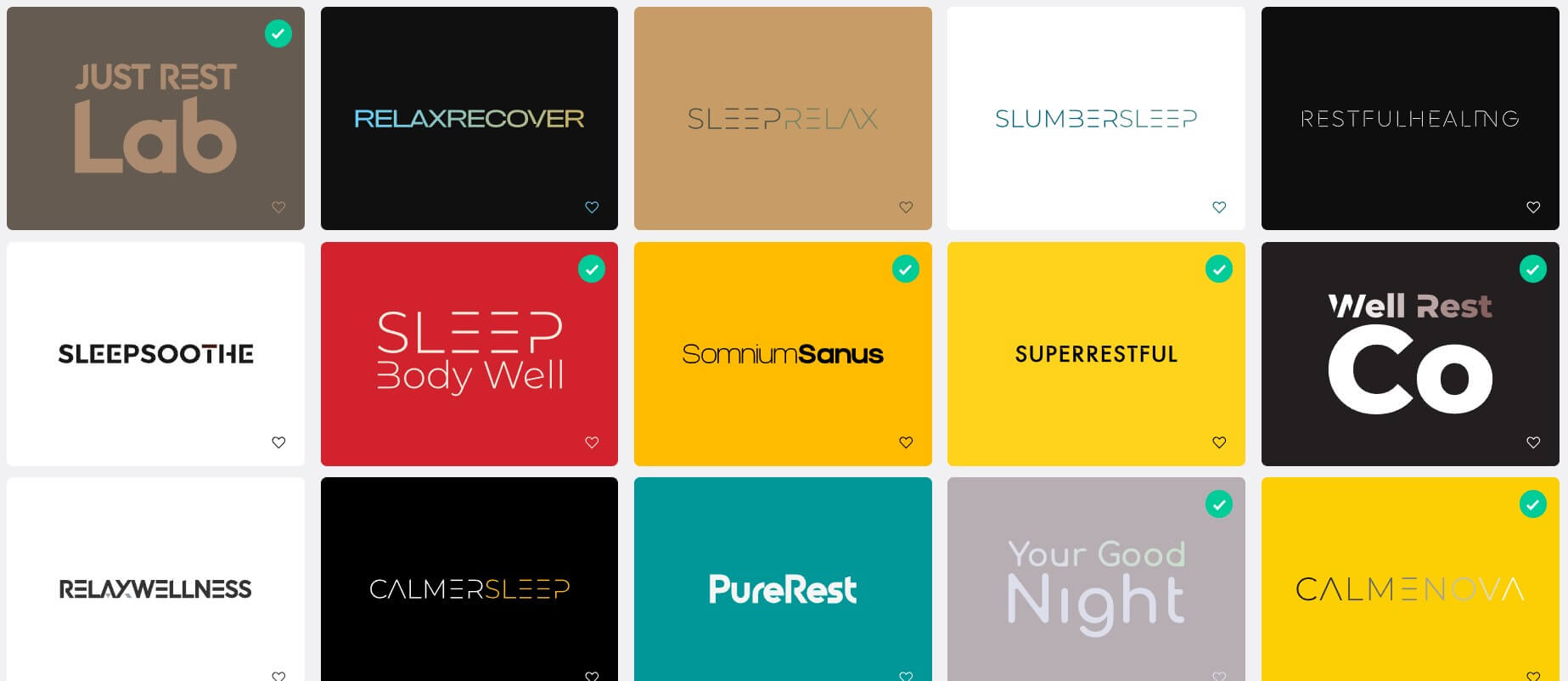
Use Case: Short, calm, brandable names
Keywords: “sleep, recovery, calm, wellness”
Description: “A premium wellness brand that sells sleep sprays, relaxation oils, and recovery products for busy professionals.”
Use a lower or medium randomness setting here if you want names that still feel tied to the product. Use higher randomness if you want more abstract names.
Here are the Namelix results for this sample input.
Use Case: Modern tech names
Keywords: “automation, workflow, teams, AI”
Description: “An AI workspace that helps small teams automate repetitive tasks and organize client workflows.”
Try Brandable, Compound, and Alternate Spelling styles. Namelix includes style options such as brandable names, evocative names, short phrases, compound words, alternate spelling, non-English words, and real words.
Here are the Namelix results for this sample input.
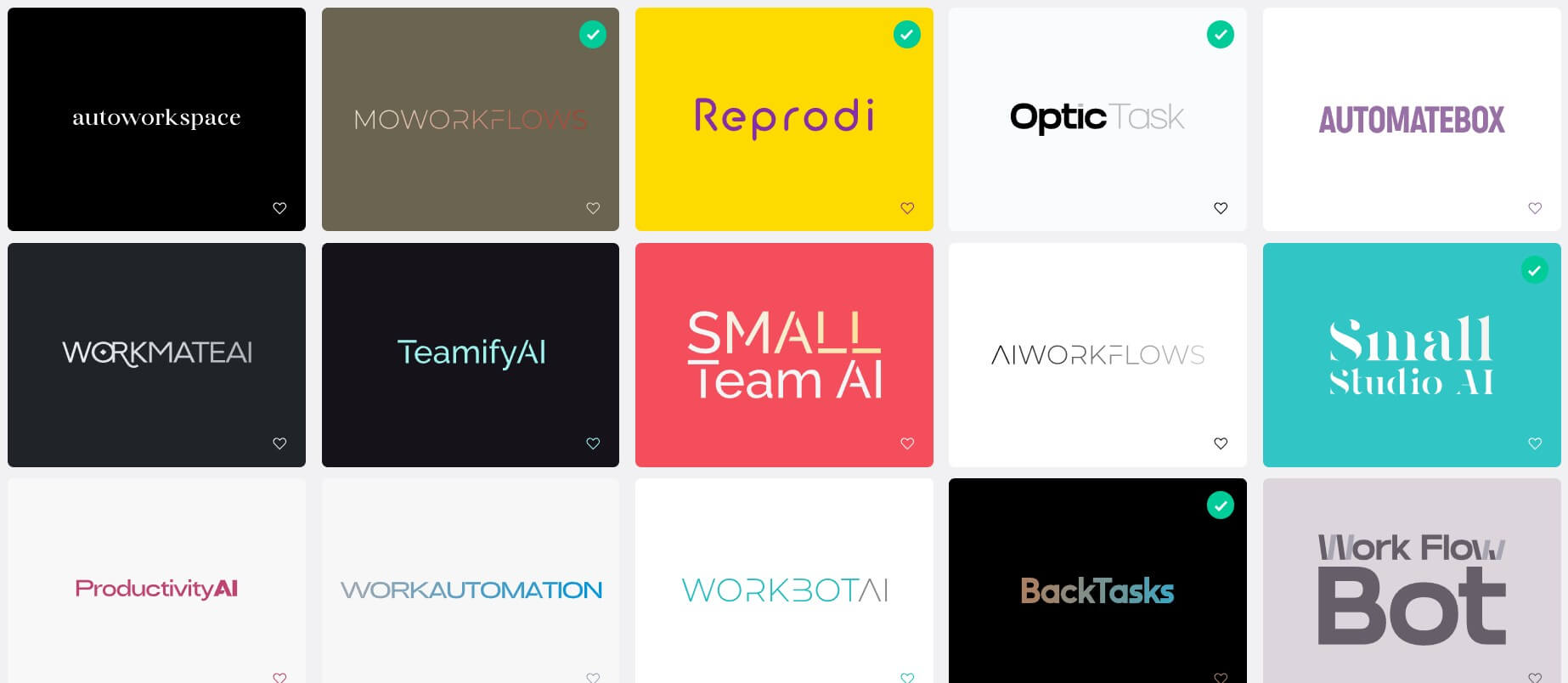
Use Case: Friendly names with a clear category signal
Keywords: “bakery, sourdough, neighborhood, fresh”
Description: “A local bakery focused on sourdough bread, morning pastries, and community coffee.”
For this kind of business, don’t chase names that are too abstract. A local brand often benefits from warmth and clarity.
Here are the Namelix results for this sample input.
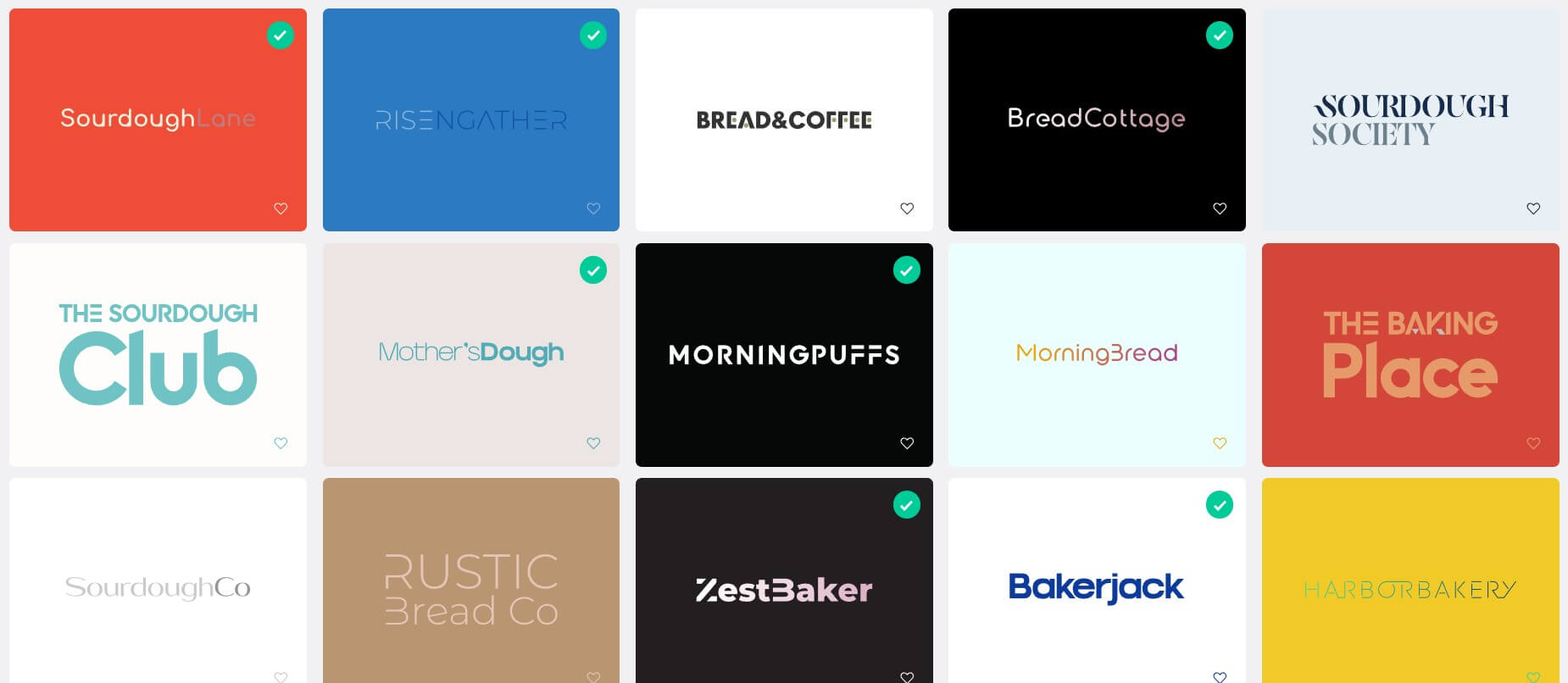
Use Case: Memorable media brand names
Keywords: “creator economy, strategy, growth, newsletter”
Description: “A weekly newsletter that gives creators practical advice on audience growth, digital products, and online business.”
Try Evocative or Short Phrase. These styles tend to work better for media brands because the name can carry a bit more personality.
Here are the Namelix results for this sample input.
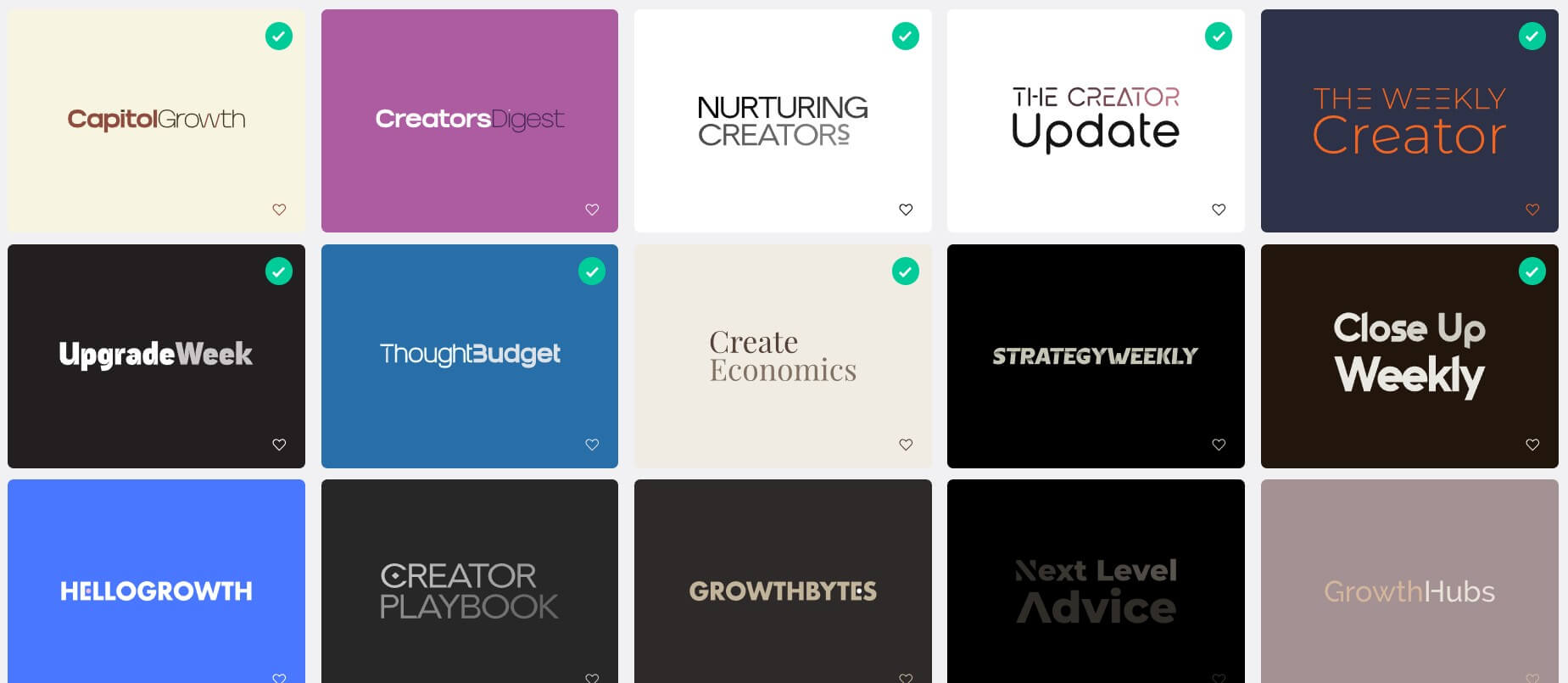
Use Case: Naming a product, not the whole company
Keywords: “hydration, citrus, energy, clean”
Description: “A sparkling hydration drink with citrus flavor, light caffeine, and clean packaging for active people.”
This is where Namelix can be useful even if you already have a company name. It can help generate product names, feature names, app names, newsletter names, and campaign names.
Here are the Namelix results for this sample input.
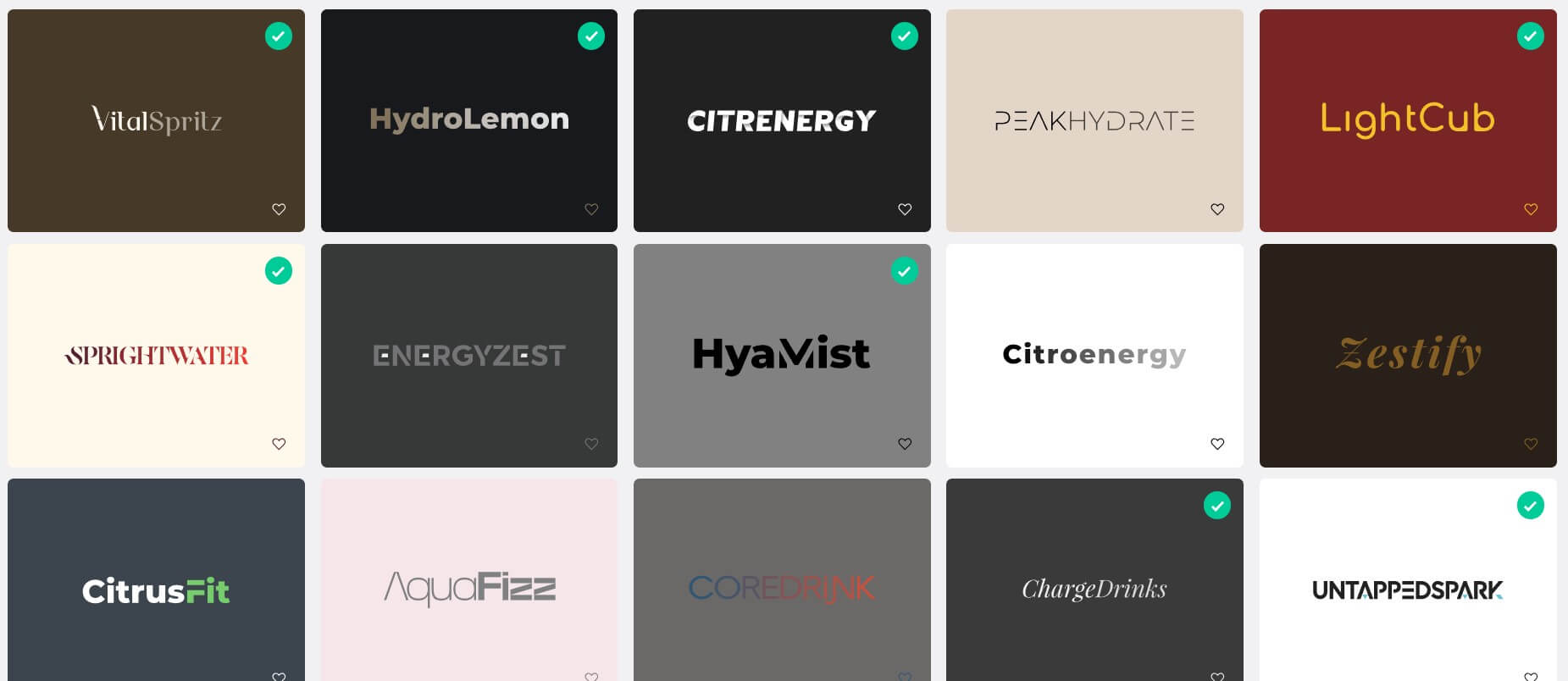
Namelix is strongest at generating short, startup-style names. Its own site makes that point directly: it focuses on short, brandable business names rather than long dictionary-word combinations. That matters because many name generators produce obvious results that sound like “Blue River Consulting” or “Fresh Garden Bakery.” Those may be usable, but they rarely feel distinctive. Namelix is more interesting when it invents names that sound like they could become brands.
The tool also gives users a useful amount of control without making the process feel heavy. You can choose a naming style, select randomness, add a business description, exclude words, set a maximum length preference, and check domains across extensions such as .com, .co, .io, .ai, .app, .org, and others.
The other useful detail is saving names. Namelix says its algorithm learns from the names you like and gives better recommendations over time. In practice, that means the tool is better used as an interactive naming board than a one-click answer machine. Save the names that feel close, dislike the ones that miss, then generate again.
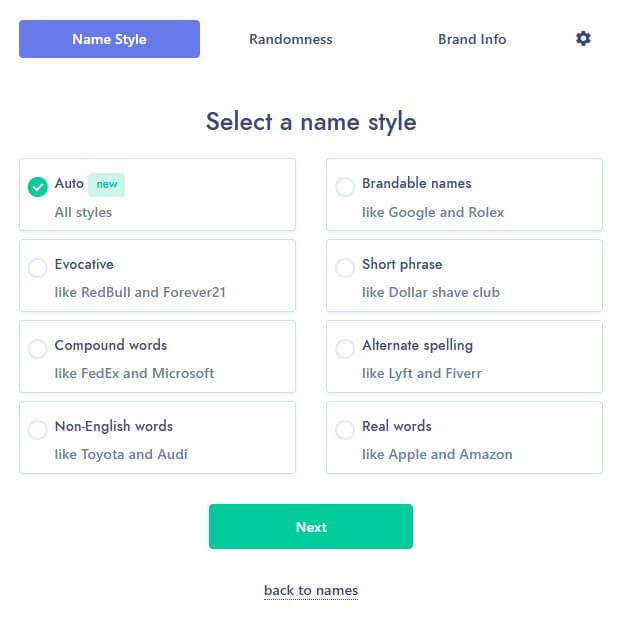
| Feature | Why It Matters |
|---|---|
| AI naming engine | Generates more original name ideas from keywords and business context. |
| Naming styles | Lets users steer toward brandable, evocative, compound, real-word, or alternate-spelling names. |
| Randomness control | Helps balance direct, keyword-driven ideas with more abstract brand names. |
| Domain checking | Lets users review domain options while browsing names. |
| Save and dislike actions | Helps the system refine results based on user preference. |
| Brandmark connection | Helps move from name idea to logo and brand assets through Brandmark.io. |
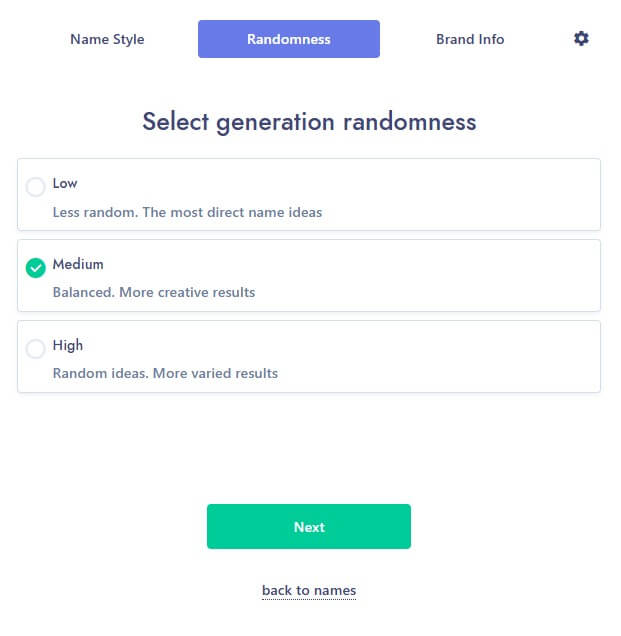
Namelix is fast because it keeps the workflow narrow. You enter keywords, add a short description, choose style and randomness, then browse results. That is the right level of friction for naming. Too little guidance produces generic ideas. Too much setup makes the user feel like they are filling out a brand-strategy worksheet before they have even found a name.
The style settings are especially important. “Brandable” is good when you want something invented and flexible. “Compound words” can work for software, marketplaces, and digital products. “Short phrase” is better for service businesses, newsletters, and consumer brands that need instant clarity. “Alternate spelling” can create punchier names, but it also creates a risk: some names may be harder to spell, pronounce, or remember.
The randomness setting is another useful control. Low randomness gives direct ideas closer to your keywords. Medium gives more creative but still relevant names. High produces more varied ideas. For most users, medium is the best starting point because it avoids both extremes: bland literal names and abstract names that need too much explaining.
Namelix is good at volume. It gives you enough naming directions to notice patterns: short invented names, smoother-sounding names, names with category hints, names that feel premium, names that feel playful, and names that do not fit at all.
That variety is useful, but it also means the user still has work to do. A good name is not just catchy. It should be easy to say, easy to spell, hard to confuse with competitors, flexible enough for future products, and suitable for the audience. Namelix can help with the creative search, but it cannot fully judge strategy, trademark risk, cultural meaning, or long-term brand fit.
The strongest results usually come from inputs that include both category and mood. “AI productivity tool” is too broad. “AI workspace for small agencies that need calm project automation” gives the tool more useful direction.
Namelix connects naturally with Brandmark, which creates logos and brand identity assets. Brandmark’s official site describes its logo maker as a way to create a professional logo, business card designs, social media graphics, animations, websites, and other brand assets.
This connection makes sense. A name that looks strong as text may feel weaker once placed in a logo. Seeing a name in a visual identity helps users judge tone, length, shape, and memorability. A short name may look premium in a wordmark. A longer phrase may feel friendlier but less flexible. That visual check is useful before committing.
- Startup naming: Namelix is a strong fit for founders who want short, modern, brandable names.
- Product names: It works well for apps, features, drinks, newsletters, courses, tools, and digital products.
- Early brand exploration: Teams can generate multiple directions before narrowing the brief.
- Domain-aware brainstorming: The domain checking flow helps users think about web presence while reviewing names.
- Agency brainstorming: Marketers and brand consultants can use it to create first-round naming boards faster.
- Start with 4 to 6 strong keywords, not a long paragraph. Add a short description that explains the audience, category, and tone.
- Run the same idea through several styles. A wellness brand might work as a real word, an evocative name, or a brandable invented name. You won’t know until you compare.
- Say names out loud. If people cannot pronounce it after seeing it once, be careful.
- Search beyond the domain result. Check trademarks, competitors, social handles, and cultural meanings before using any name publicly.
- Save aggressively, then compare later. Naming judgment improves when you look at a shortlist instead of reacting to each result in isolation.
- Namelix is a brainstorming tool, not a naming consultant. It can produce clever options, but it does not replace legal checks, trademark research, customer testing, or brand strategy.
- Some names may feel too startup-like. Short invented names can sound modern, but they can also feel vague if the business needs trust, clarity, or local recognition.
- Alternate spellings can be risky. A name that looks stylish may be annoying to explain in conversation, email, or search.
- Domain availability is helpful, but it should not be the only decision factor. A weak name with an available domain is still a weak name.
Namelix is best for founders, creators, agencies, and small teams that need a faster way to generate short, brandable name ideas.
Its strongest value is the guided naming workflow: keywords, descriptions, style filters, randomness control, saved preferences, domain checks, and a smooth path into logo exploration through Brandmark.
The main caveat is judgment. Namelix can give you a strong naming shortlist, but the final decision still needs human review, market research, and legal due diligence.
TAGS: Marketing
Related Tools:

Helps marketing teams create content

AI-driven mapping for business networking
Trandsforms texts into detailed UI designs

Automates competitor analysis

Automates phone calls for businesses using voice agents

Helps businesses track, analyze, and improve their visibility