
Share this tool:
 |
Description:
- Introduction: What Is Roketfy?
- What Roketfy Does Best
- Core Features and Capabilities
- Workflow and Ease of Use
- Keyword and Product Research Quality
- Competitor Analysis and Review Insights
- POD AI for Print-on-Demand Sellers
- Best Use Cases
- Practical Tips for Better Results
- Limitations and Trade-Offs
- Final Takeaway
Roketfy is an AI and data platform built mainly for Etsy sellers who want help with listing optimization, keyword research, product research, competitor analysis, AI-generated listing content, print-on-demand design workflows, and review analysis. It is not a general design tool or a broad e-commerce dashboard. Its value sits in one specific area: helping sellers make better Etsy decisions without manually digging through listings, tags, keywords, reviews, and competitors all day.
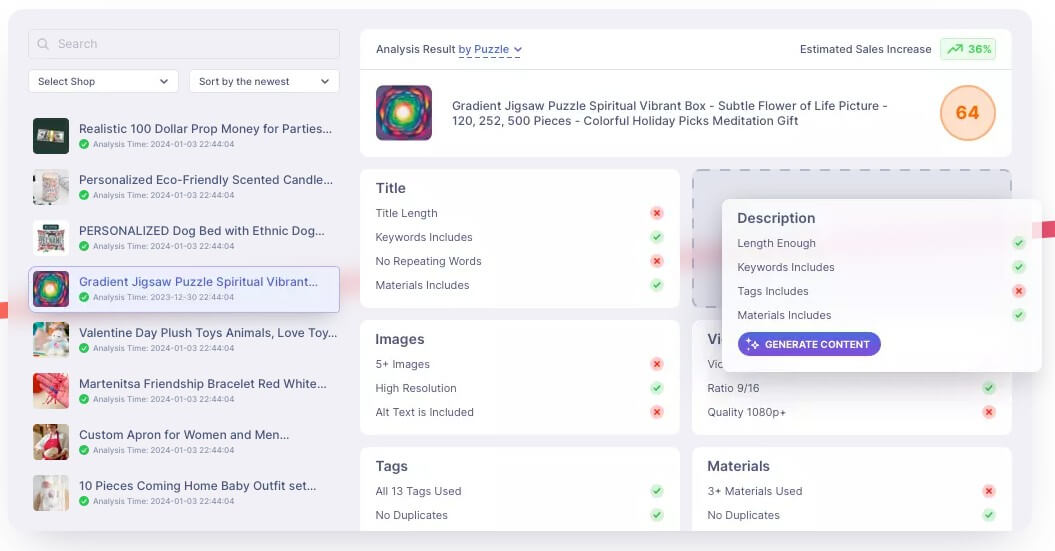
Roketfy is strongest when used as a shop improvement system, not just an AI writer. Many Etsy sellers struggle with the same set of problems: weak titles, poor keyword choices, unclear descriptions, underpriced or overpriced products, low-quality listing images, and little insight into what competing shops are doing. Roketfy pulls several of those tasks into one workspace.
The strongest feature mix is practical: Listing Checker for diagnosing current listings, Keyword Research for finding terms shoppers use, Product Research for spotting market demand, Competitor Analysis for studying rival listings and shops, AI Writer for producing Etsy-focused content, and AI Reviews for understanding buyer feedback. Roketfy also includes POD AI for print-on-demand sellers who want to create designs, mockups, and listing content from one flow.
That makes Roketfy more useful for sellers who already have products or at least a product direction. It can help beginners too, but the real value appears when there are listings to improve, competitors to compare, and search terms to test.
| Feature | Practical Value |
|---|---|
| Listing Checker | Reviews Etsy listings and gives suggestions around title, description, images, price, stock, and other listing signals. |
| AI Writer | Generates Etsy-oriented titles, descriptions, listing attributes, policy content, announcements, and social posts. |
| Keyword Research | Shows keyword trends, visitor data, competition, related keyword ideas, and top listings for Etsy search terms. |
| Product Research | Helps sellers study demand, sales estimates, revenue signals, listing age, and trend patterns by category or keyword. |
| Competitor Analysis | Lets users review competing products, shops, keywords, tags, pricing, views, favorites, and store-level details. |
| AI Reviews | Uses sentiment and topic analysis to turn customer feedback into product and service insights. |
Roketfy’s workflow is built around common Etsy seller questions: What should I sell? Which keywords should I use? Why is this listing underperforming? What are competitors doing better? What do customers complain about? How should I rewrite this listing?
That structure is useful because Etsy optimization can feel scattered. A seller might check Etsy search manually, browse competitors, rewrite a product title in a separate AI tool, review tags in another tab, and then guess whether the listing is better. Roketfy reduces some of that jumping around by placing the main Etsy growth tasks inside a single toolset.
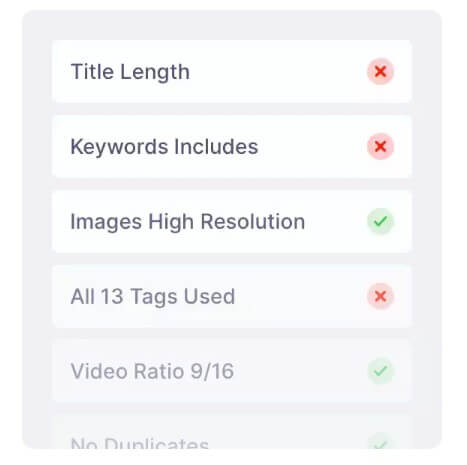
The Listing Checker is a good starting point. Roketfy says it evaluates key areas such as price, stock, title, description, and images, then shows recommendations through a smart score system. That works well for sellers who know something is wrong but do not know where to start. The best use is not blindly accepting every suggestion. It is using the score as a diagnostic checklist, then deciding which changes fit the product and audience.
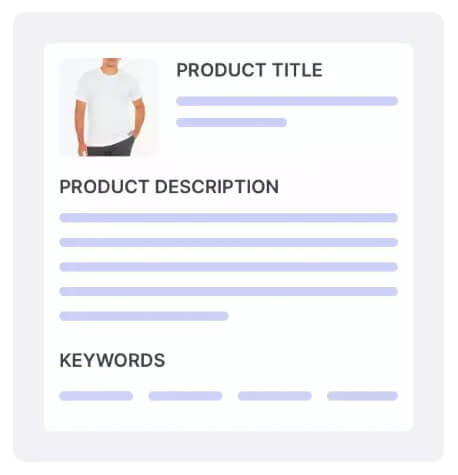
The AI Writer is the more generative side of the platform. It is designed for Etsy listing titles, descriptions, and related shop content rather than open-ended copywriting. Roketfy says the writer supports 24+ languages and creates content according to the platform plan and marketplace algorithm. That focus matters. A general AI writer can produce clean copy, but it may not understand Etsy listing structure, keywords, buyer intent, or category-specific attributes unless the user gives it a detailed prompt.
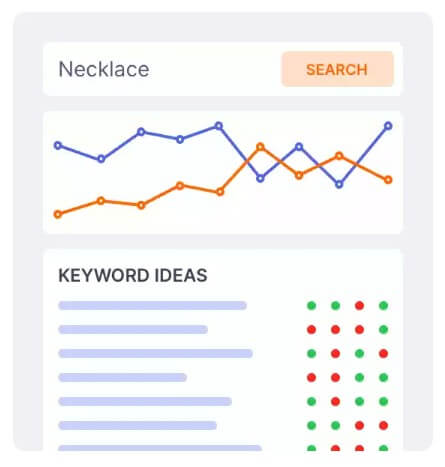
Keyword Research is one of Roketfy’s more important sections because Etsy visibility depends heavily on how buyers search. Roketfy’s keyword tool shows trends, unique visitors, new keyword ideas, volume and competition, and top listings for a searched term. It also says users can view top 48, 100, and 500 listed products for a keyword, along with estimated sales data and commonly used tags.
This is useful for two kinds of sellers. The first is the seller with an existing product who needs better tags and titles. The second is the seller researching a niche before creating products. In both cases, the tool helps replace vague guessing with visible market signals.
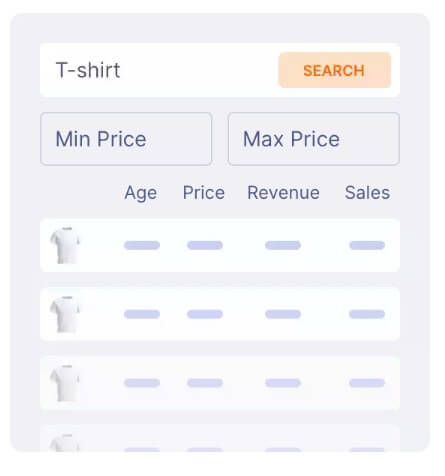
Product Research adds another layer. Roketfy describes it as a way to analyze market demand, sales performance, estimated daily sales, daily sales trends, revenue, listing age, and filtered product opportunities. For print-on-demand sellers, digital product sellers, and handmade shops with flexible product lines, this can help avoid creating products nobody is searching for. The caveat is that estimated marketplace data should be treated as directional. It can guide decisions, but it should not be treated like exact sales reporting. Etsy search shifts, seasonality matters, and a popular product category can still be too crowded for a new seller with weak photos or unclear positioning.
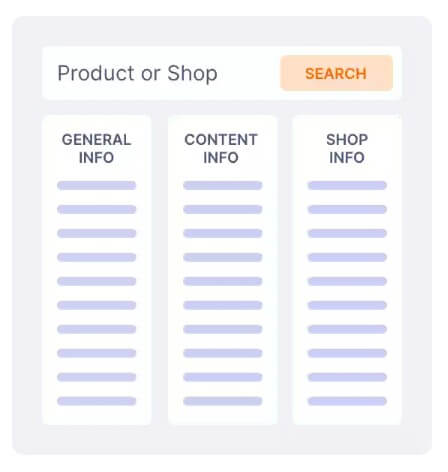
Competitor Analysis is valuable because Etsy is a public marketplace. Sellers can learn a lot from what is already ranking, selling, and earning attention. Roketfy’s competitor tools cover product details such as listing age, shipping country, views, keywords, tags, materials, and sales information. At the shop level, it can show product count, total sales, favorites, store age, price ranges, common keywords, and popular products.
That is useful, but it needs judgment. Competitor research should not become copying. The better use is to look for patterns: common terms, price expectations, product bundles, photo styles, shipping norms, and unmet customer needs.
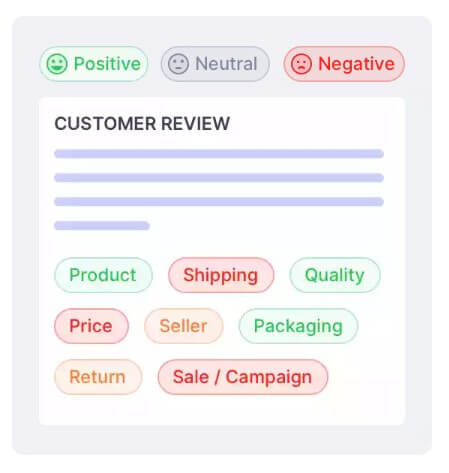
AI Reviews is another strong feature because buyer feedback often contains the best product roadmap. Roketfy’s AI Reviews tool groups review topics, analyzes sentiment, highlights frequent words, supports filters, and provides broader review reports. The most practical use is finding repeated friction: shipping complaints, sizing issues, packaging problems, unclear instructions, or features customers keep praising.
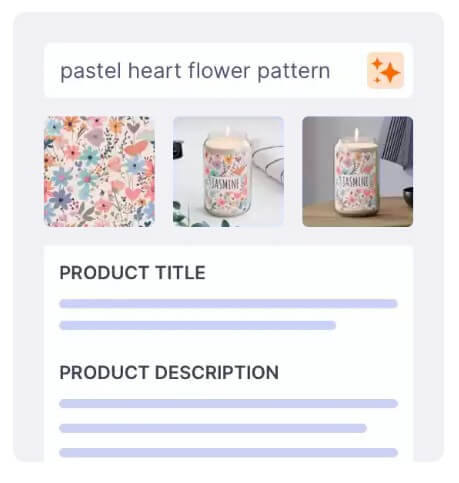
Roketfy’s POD AI gives the platform a more creative layer. The tool lets sellers choose from 900+ products, describe a design idea, generate designs, view them on products, create lifestyle mockups, and produce SEO-focused listing content. Roketfy also notes a Printify connection for transferring created content.
This is most useful for POD sellers who move quickly across niches and need designs, mockups, and listing copy in one place. The main risk is sameness. AI-generated POD designs can become generic if the seller relies on broad prompts or common trends. Stronger results come from more specific concepts, clear audience targeting, and careful quality review before publishing.
- Etsy listing optimization: Roketfy is a good fit for sellers who need a clear checklist for improving titles, descriptions, tags, images, and pricing signals.
- Keyword research before listing: Sellers can use keyword data to shape titles, tags, and product positioning before publishing.
- Product niche research: The Product Research feature helps sellers compare demand, trends, and competition before investing time in a new product line.
- Competitor research: Sellers can study what successful listings and shops are doing without manually collecting every detail.
- Review-based product improvement: AI Reviews is useful for finding patterns in buyer feedback and turning complaints into operational fixes.
- Print-on-demand workflows: POD AI suits sellers who want design generation, mockups, and listing content tied to marketplace selling.
- Start with Listing Checker on your current best-selling or most-viewed listings. Improving a listing that already has traction is often more useful than rewriting everything at once.
- Use Keyword Research before AI Writer. The copy will be more useful when it is built around search terms that have real buyer demand.
- Do not optimize only for search. Etsy buyers still judge photos, trust signals, shipping clarity, reviews, and product fit.
- Use Competitor Analysis to find gaps, not to duplicate another shop. Look for missing bundles, weak descriptions, unclear images, or customer complaints that your product can answer.
- For POD AI, avoid generic prompts like “funny cat shirt.” Better prompts define the buyer, occasion, style, phrase, and product type.
- Roketfy’s focus on Etsy is both a strength and a limitation. It is useful for Etsy sellers, but less relevant for businesses that mainly sell through Shopify, Amazon, physical retail, or custom wholesale channels.
- The AI Writer can speed up listing creation, but sellers still need to check accuracy, tone, keyword stuffing, and brand voice. Etsy content should sound natural to buyers, not like a list of search terms.
- Market and competitor estimates should be treated as guidance, not certainty. A tool can show demand signals, but it cannot guarantee sales. Product quality, photos, price, reviews, shipping, niche timing, and customer trust still matter.
- POD AI can help with speed, but design originality remains the seller’s responsibility. Sellers should also be careful with copyright, trademarked phrases, protected characters, and marketplace policies before publishing AI-generated products.
Roketfy is best for Etsy sellers who want a focused toolset for listing optimization, keyword research, product research, competitor analysis, AI listing content, POD creation, and review insights.
Its biggest strength is that it connects research and action: sellers can study keywords, inspect competitors, check listings, rewrite content, and improve products from one Etsy-centered workflow.
The main caveat is that Roketfy supports better decisions, but it does not replace product judgment, brand taste, customer service, or careful marketplace compliance.
TAGS: Marketing
Related Tools:

Transforms basic product photos into high-quality images
Simplifies creation of visual content for marketing

Automate sales outreach and workflow management

Enhances product photography

Create website tools like forms and chat widgets
Enables users to create precise 2D and 3D drawings