
Share this tool:
 |
Description:
Kvitly is an AI-powered business platform for launching and managing an online presence without needing separate tools for every small task. It combines a website builder, landing pages, e-commerce, CRM, forms, payments, email workflows, and integrations. The main appeal is practical: Kvitly helps small businesses get online, collect leads, take orders, and keep basic operations in one place.
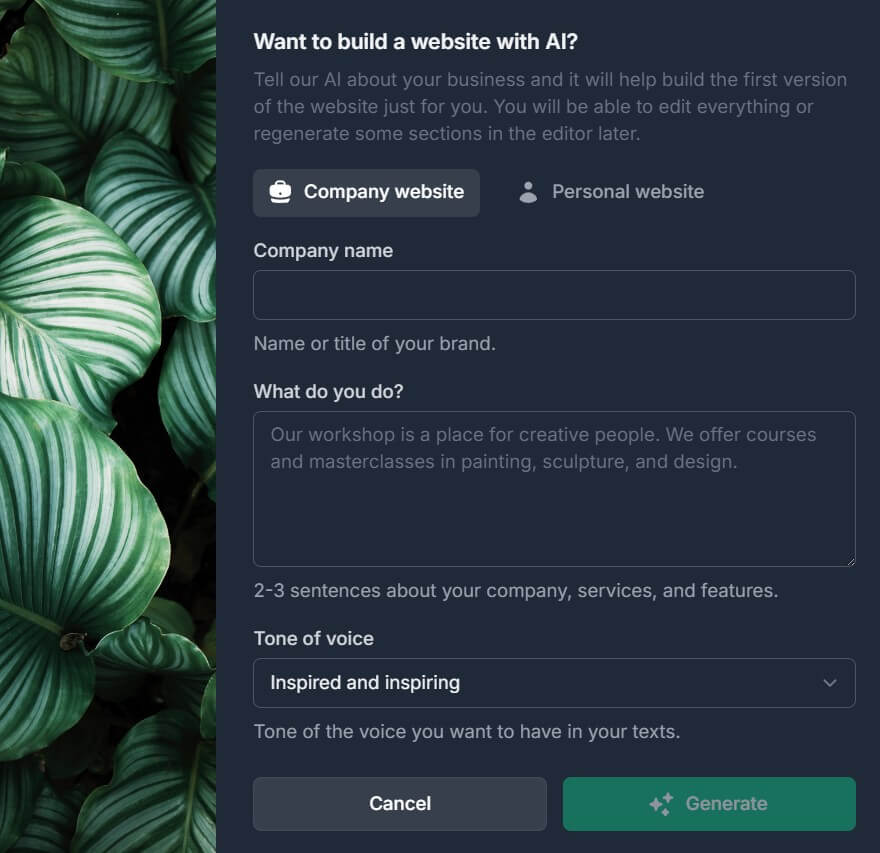
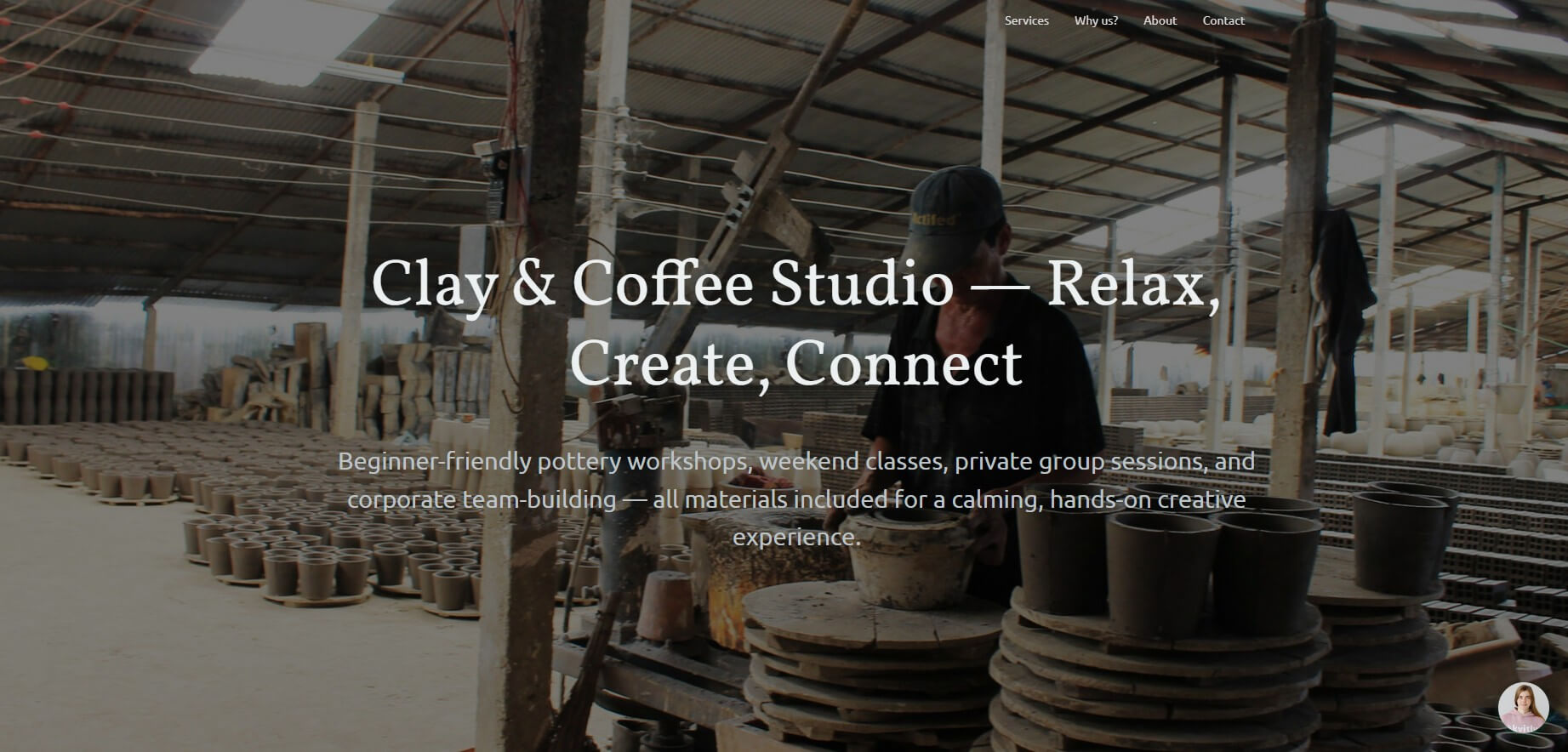
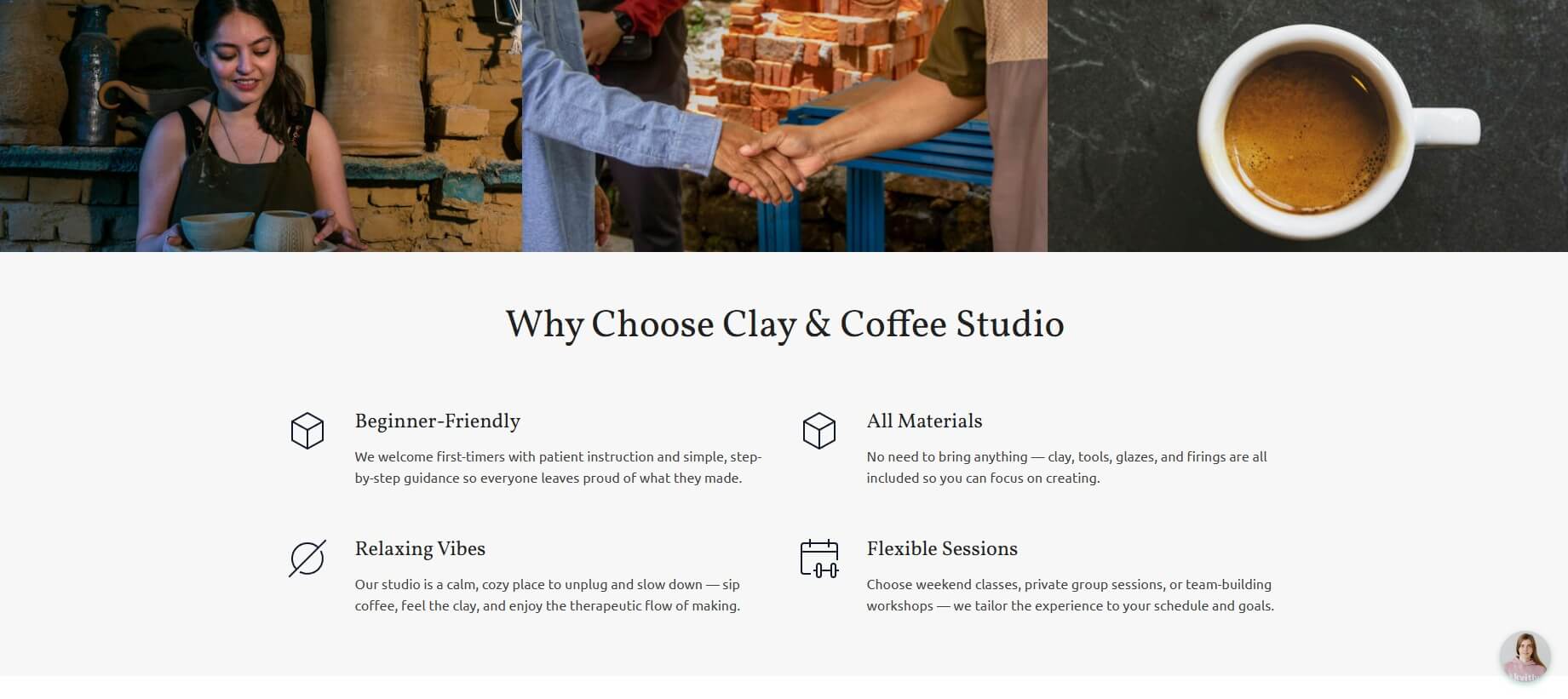
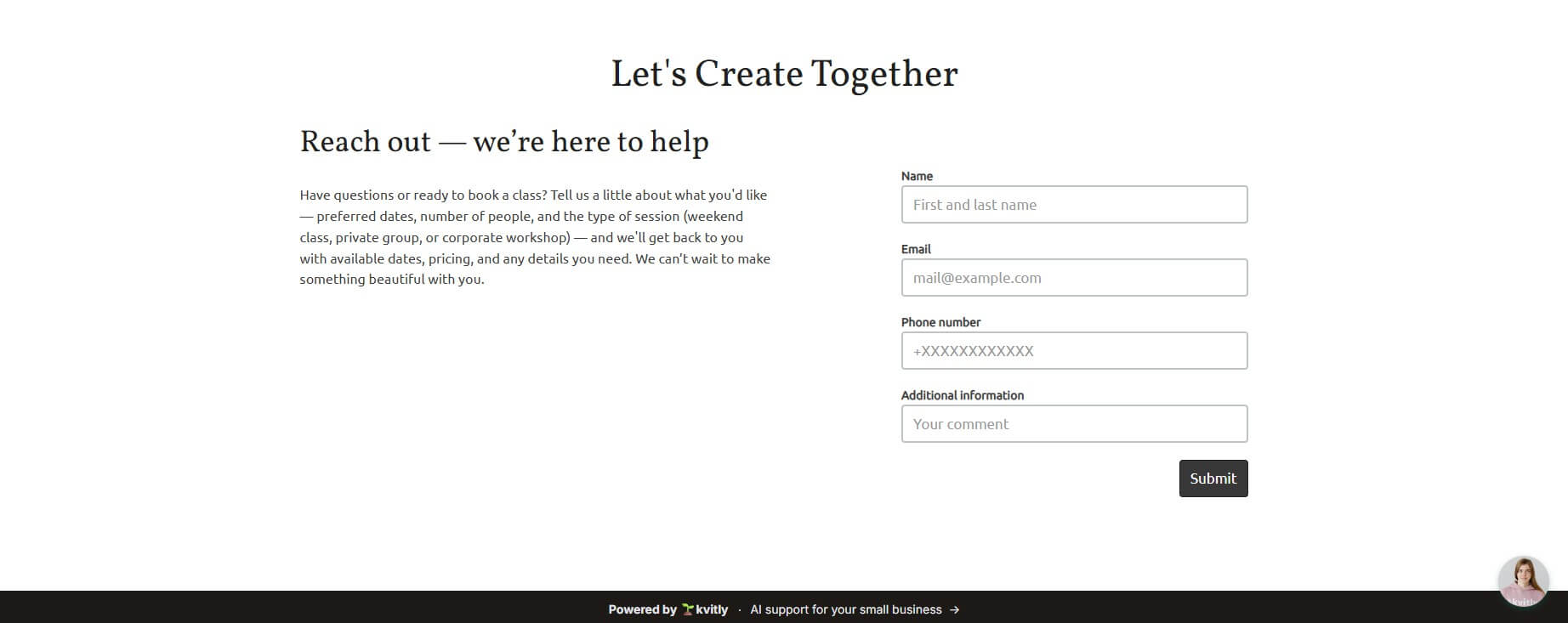
What do you do?: Clay & Coffee Studio is a beginner-friendly pottery workshop for people who want a relaxing creative experience. We offer weekend classes, private group sessions, and corporate team-building workshops with all materials included.
This is the company website sample generated from the Creative Workshop input.



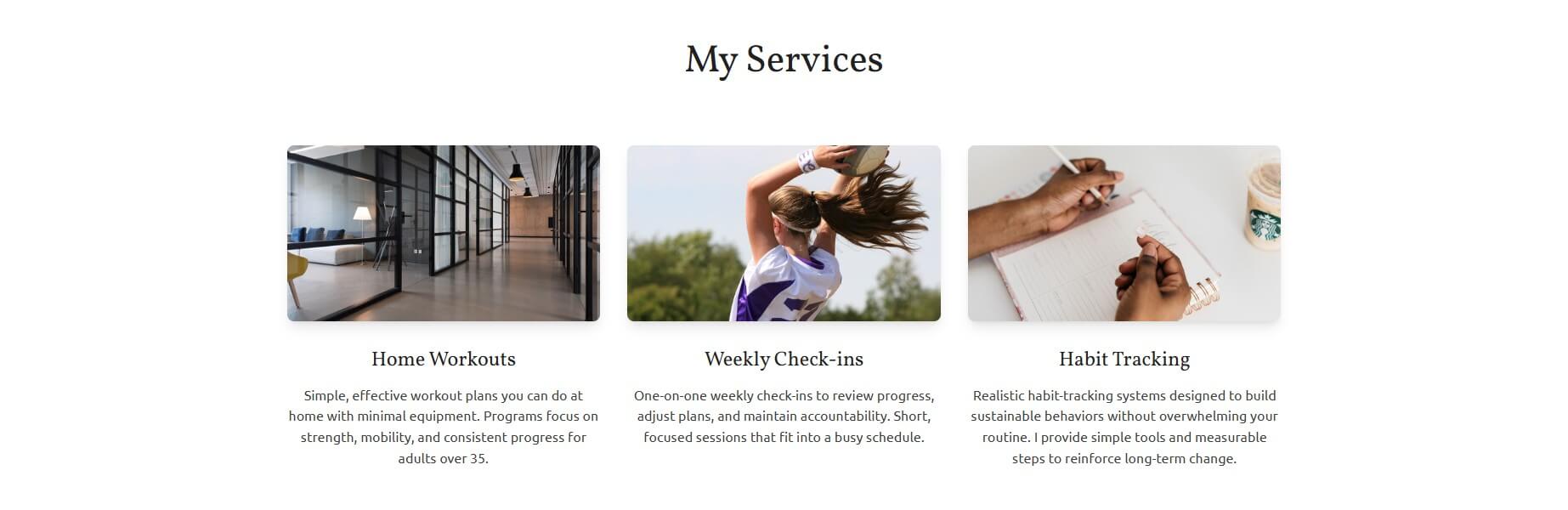
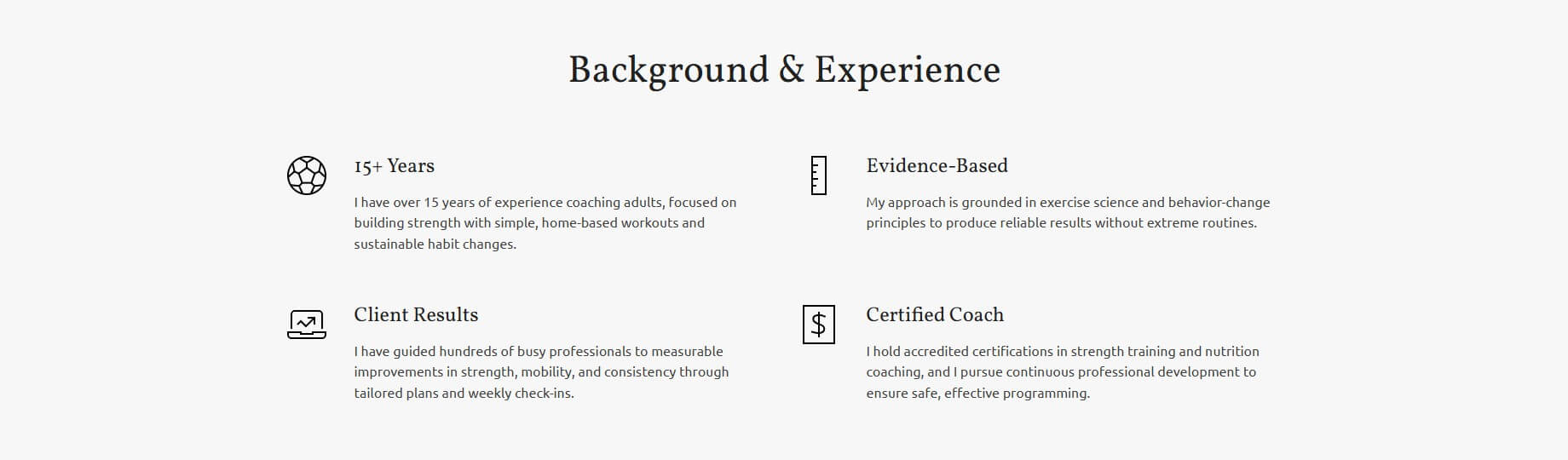
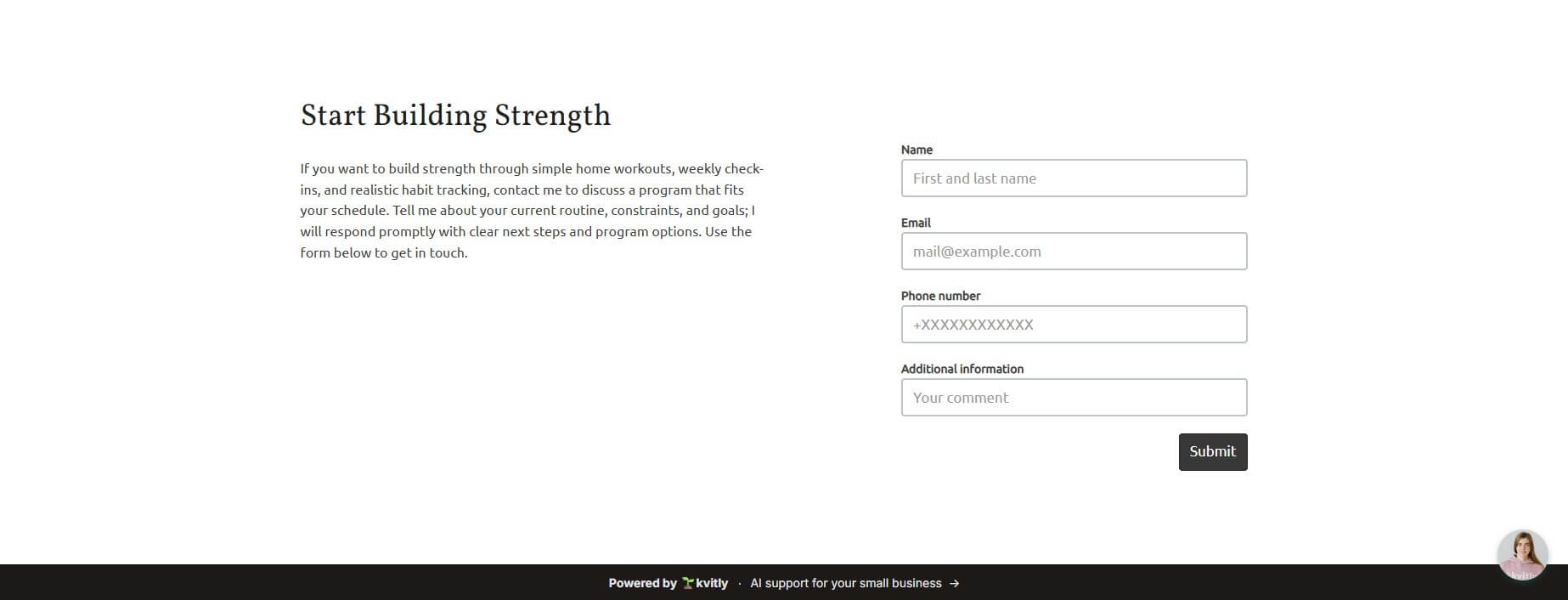
What do you do?: Leo Cruz Coaching helps adults over 35 build strength with simple home workouts, weekly check-ins, and realistic habit tracking. Our programs are designed for busy people who want better health without extreme fitness routines.
Tone of voice: Supportive and motivating
This is the personal website sample generated from the Online Fitness Coach input.



Kvitly is not just an AI website generator. The AI helps create the first draft, but the larger value is the operating layer around it. You can build a page, add forms, connect payments, manage inquiries, track orders, use CRM tools, and connect outside services. That makes it more useful for a founder or small team that wants a working business site, not just a pretty homepage.
The best way to think about Kvitly is “business website plus back office.” It is not trying to replace a custom agency build or a deep enterprise system. It is designed for people who want to launch faster, make changes without developers, and avoid a messy stack of disconnected apps.
| Area | What It Does | Best For |
|---|---|---|
| AI website setup | Creates a first version from a short business description | New businesses, solo founders, quick launches |
| Visual website builder | Lets users edit blocks, images, colors, fonts, and layout | Non-technical site editing |
| Landing pages | Builds campaign pages with forms, payments, and automation | Lead magnets, services, events, product offers |
| E-commerce | Supports catalogs, product pages, variants, orders, and payments | Small online stores |
| CRM | Tracks inquiries, tags, payments, statuses, comments, and funnels | Managing leads and orders |
| Email workflows | Sends order or payment notifications and connects to email tools | Customer updates and follow-up |
Kvitly’s website builder is built around visual editing. Users can add or remove blocks, change images and colors, choose fonts, use icons, configure SEO settings, view analytics, and add custom forms. This matters because many small business owners do not need full design freedom. They need enough control to publish something clear, clean, and useful without hiring a developer for every change.
The AI layer helps with the first version. Kvitly says users can describe their business, then the AI can generate website copy, social posts, and promotional content. It can also regenerate content when the first draft does not fit. That is helpful, but it still needs review. AI-generated pages can sound too broad unless the user adds real details: service area, offer, proof, process, guarantees, exclusions, and the exact action visitors should take.
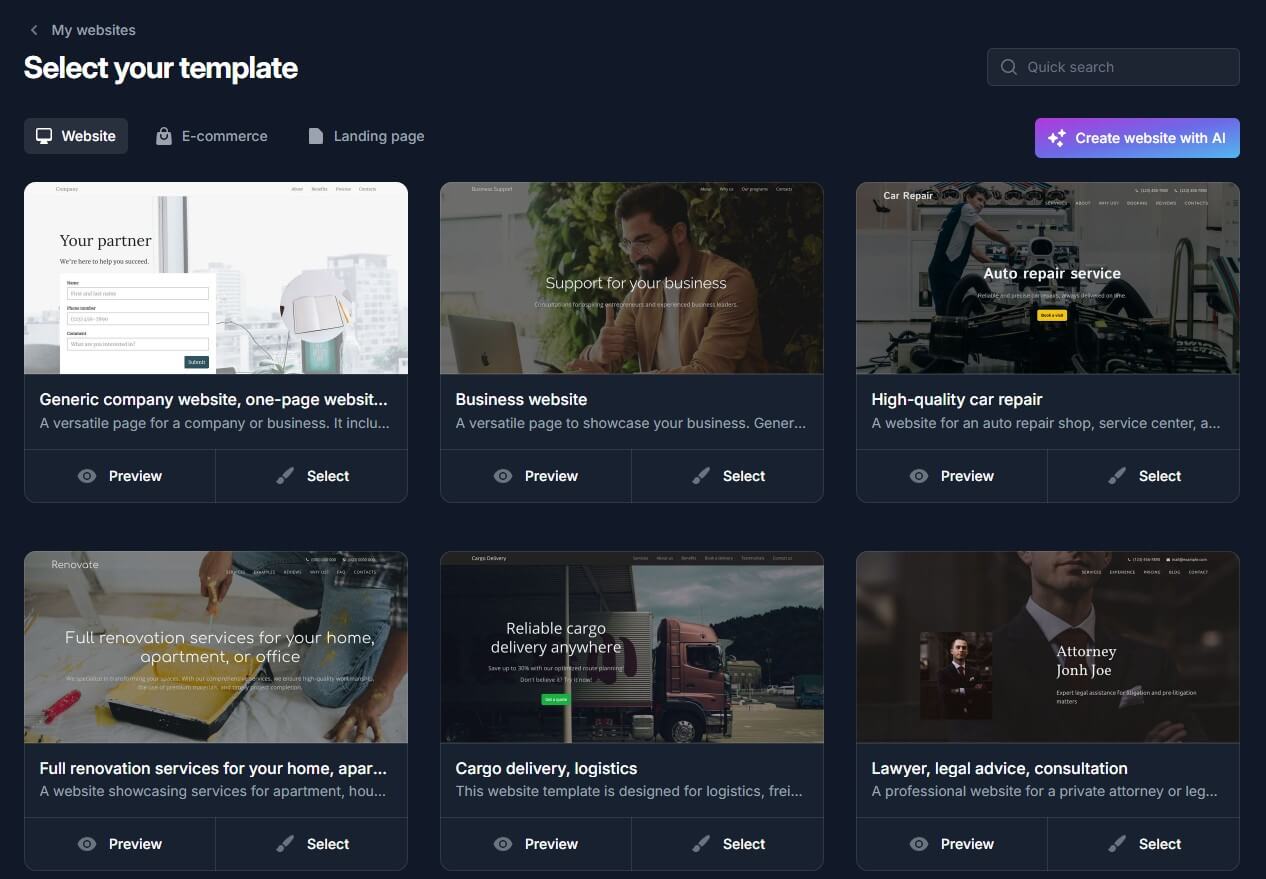
Kvitly’s landing page tools are useful for more focused campaigns. The platform supports page blocks, forms, payment options, analytics, CRM connection, and automations for lead magnets or paid digital products. This makes it a good fit for webinars, local services, consultations, simple digital products, event signups, and one-off promotions.
The practical strength here is speed. A small business can create a campaign page, capture contact data, send a promised file or follow-up, and track the lead in one system. The limitation is that advanced marketers may still want deeper A/B testing, more granular personalization, or stronger design control from dedicated landing page software.
Kvitly also supports online stores. Its e-commerce tools include product catalogs, product images, categories, descriptions, delivery options, individual product pages, product variants such as size or color, import and export, order tracking, notifications, status tracking, and online payments. It also includes marketing tools such as remarketing connections, analytics, promo codes, product labels, SEO settings, and Google Merchant export.
This is useful for simple stores and service-based selling. It can work well for small product catalogs, local sellers, course sellers, digital downloads, handmade goods, or businesses that want to take payments from a page. It may feel lighter for stores with complex inventory, advanced fulfillment, multi-location operations, or highly custom checkout rules.
The CRM is one of Kvitly’s more practical features. Kvitly stores inquiries from the website in one section, where users can add tags, view payments, change statuses, write comments, and manage order stages. It also supports flexible sales funnels, invoice links, automations, contact segmentation, filters, and export.
Its email tools are more modest, but that is not a bad thing. Kvitly says it is not an email delivery service. Instead, it helps users build business email communications, send trigger emails after orders or payments, collect contact data, and pass contacts to email platforms such as Mailchimp or Unisender.
Kvitly’s integration coverage helps it avoid the biggest weakness of many all-in-one tools. It supports webhooks, Google Sheets, Zapier, analytics tools, Meta Pixel, Google Merchant export, live chat tools, Telegram, Google Search Console, Google Tag Manager, Zoho, Mailchimp, GetResponse, SendGrid, PayPal, Stripe, CookieYes, Setmore, and more.
Kvitly fits solo founders, local service businesses, consultants, coaches, small stores, event sellers, and freelancers who want a website plus simple business operations. It is strongest when the goal is to launch a functional online presence, not build a custom digital product.
It is also a good fit for users who want fewer tools. A business can create a site, capture leads, take payments, track orders, and connect analytics without starting from scratch in five different apps.
Kvitly may not be ideal for teams that need advanced design systems, complex CMS structures, enterprise CRM workflows, deep marketing automation, or large-scale e-commerce operations. The platform covers many jobs, which is useful, but some modules will not be as deep as specialist tools.
The AI also should not be treated as a final editor. Users still need to check the copy, claims, offers, tone, and customer journey before publishing.
Kvitly is best for small businesses and solo operators that want to launch and manage a practical online presence from one place.
Its strength is the mix of AI drafting, no-code site building, landing pages, e-commerce, CRM, email workflows, and integrations.
The main caveat is depth: it is a strong lean-business platform, but advanced teams may still need specialist tools for design, automation, or complex commerce.
TAGS: Marketing
Related Tools:

Automatically edits videos by detecting highlights

Combines AI and human expertise for multilingual content marketing

Create website tools like forms and chat widgets
Simplifies creation of visual content for marketing
Transforms product images into animated marketing videos
Automates messaging and customer interactions