Share this tool:
 |
Description:
Vidby makes the most sense as a localization tool, not as a general “AI media” app. Its core value is straightforward: take a video, translate it, subtitle it, dub it, and push it toward something usable for a new audience without building a custom localization stack. The flagship product is Vidby Video Translation, but the broader platform now also includes document translation, subtitles, text-to-speech, voice cloning, a live interpretation product called MeetUp for Business, and a YouTube Audio Tracks Detector. Vidby is also presented as a Recommended Vendor by YouTube for AI-powered content localization, which gives it more credibility than a typical one-page dubbing startup.
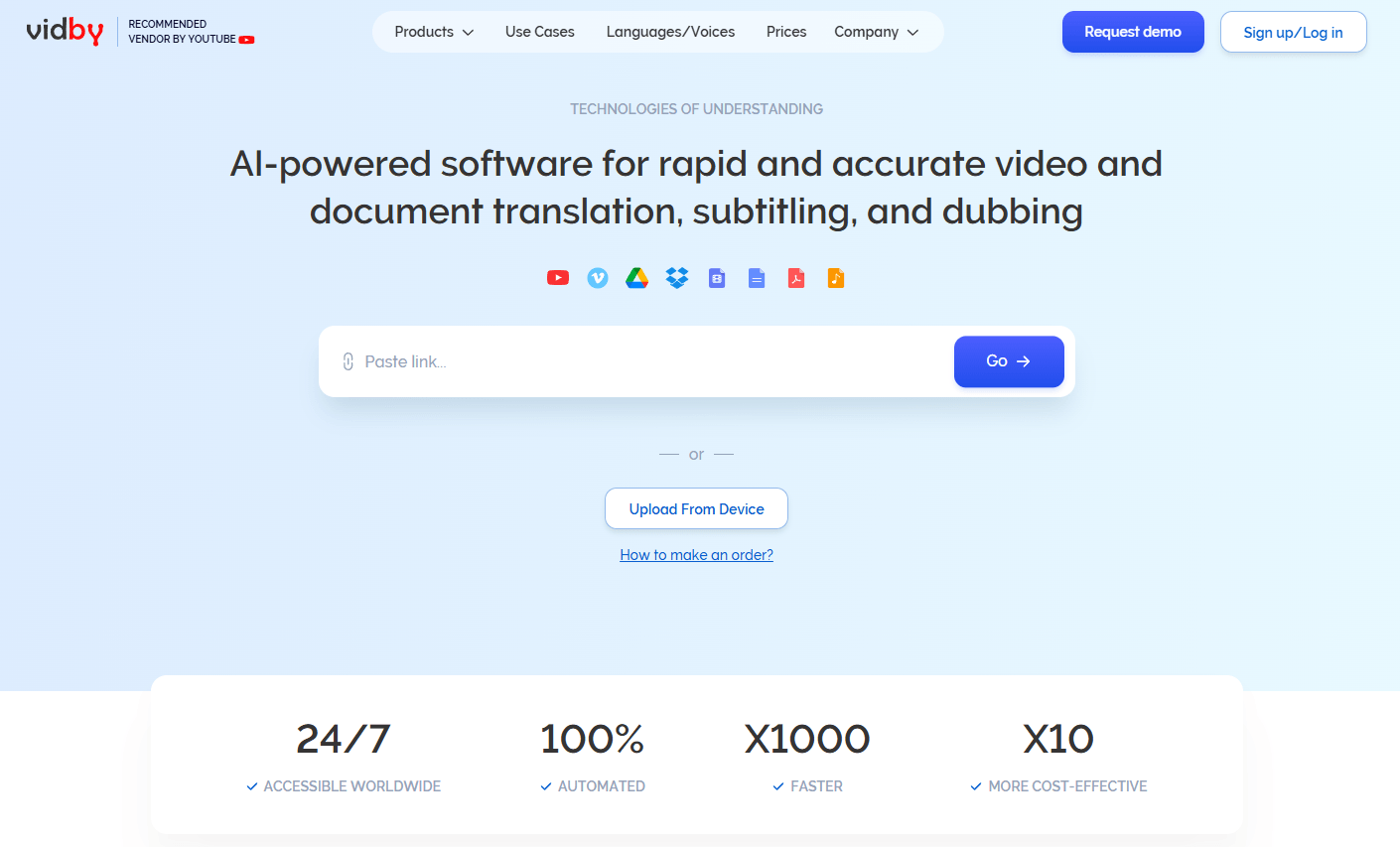
At the center of the platform is a browser-based video translation workflow. Vidby supports uploads from the device plus sources such as YouTube, Vimeo, Google Drive, Dropbox, Instagram, and TikTok, then lets you choose the source language, target language, and service layer around translation, subtitles, and dubbing. The public product pages position it as supporting translation into more than 150 languages and dialects, with optional human review on higher-touch tiers.
What makes Vidby more useful than a bare-bones “translate my video” tool is that it is not locked to one output mode. The company’s product lineup spans video translation, subtitles, document translation, text-to-speech, voice cloning, live translation via MeetUp for Business, and creator-facing extras like the YouTube Detector. That wider product shape matters because it means Vidby is trying to be a practical multilingual publishing layer, not just a one-off dubbing widget.
Vidby is strongest when the job is operationally clear: localize an existing asset quickly, choose how much human involvement you want, and get subtitles plus dubbed output without stitching together separate tools. The official workflow and pricing structure are built around that decision. Rather than forcing one “best” mode, Vidby offers four quality levels ranging from fully automated output to expert-reviewed and actor-led delivery, with different recommended use cases for drafts, social clips, tutorials, training material, YouTube videos, educational content, promos, and film-style work.
That makes Vidby especially practical for teams that already have finished content and want reach, not for teams that still need creative production. If your problem is “how do I publish this existing video in more markets,” Vidby’s setup is aligned with that. If your problem is “how do I creatively reinvent this video,” it is a weaker fit because the product is built around translation and delivery choices rather than deep editorial reinvention. That is an inference from the platform’s public controls and tier structure, which focus on source ingestion, voices, dubbing, subtitles, and review level rather than full timeline editing.
The most important Vidby decision is not really the subscription plan. It is the quality tier.
Full AI is the speed-first option for drafts, basic understanding, and first-pass testing. Vidby’s own pages frame it as the lowest-touch mode with no human involvement.
The lower-cost manually revised tier is aimed at simpler content such as reels, tutorials, and quick translation.
Professional sits between the lower-cost tiers and actor-led dubbing for YouTube, courses, internal guides, and educational content.
Actor is positioned for promo, advertising, cartoons, and film/show-style work, with expert subtitle/translation review and dubbing by actors.
That tier logic is good product design because it maps to how buyers actually think. Most people do not need “the best localization technology.” They need the right amount of quality for the audience and the budget. Vidby understands that. The platform is clearest when you treat it as a sliding scale between speed and polish rather than a single monolithic dubbing engine.
Voice selection is another practical strength. Vidby’s help materials say users can choose voices by gender and age group, and its dubbing options page says that in the Professional tier you can choose the relevant number of speakers and use voices from the voice library or voice-cloning samples. That is important because many localization tools sound decent in one voice but become awkward once a scene has multiple speakers or a mismatched vocal identity. Vidby is clearly trying to give buyers more control over that than the cheapest “auto dub” products usually do.
Voice cloning also matters here. Vidby’s cloning page says you can clone your voice and dub videos in 28+ languages in that voice, which is potentially very useful for creators, course makers, and branded spokesperson content where vocal continuity matters more than pure speed. I would treat this as a meaningful upgrade path rather than a default starting point. For many projects, generic AI voices are enough. Cloning matters when identity is part of the product.
Vidby looks easiest for self-serve localization of existing content. The workflow is intentionally simple at the top level: paste a link or upload a file, choose the language direction, choose the quality level, then decide on subtitles and dubbing. That simplicity is one of the better things about the product. It lowers the barrier for creators and marketing teams that want results without learning a complicated media tool.
The next layer is where Vidby gets more serious. Once you move beyond “just translate this,” the real questions become speaker handling, voice choice, review level, and whether the content needs AI-only output or a human-assisted finish. Vidby’s structure supports that escalation well. You can test cheaply, then move up the quality ladder when the content justifies it. That is a strong commercial workflow because it avoids overpaying for early drafts.
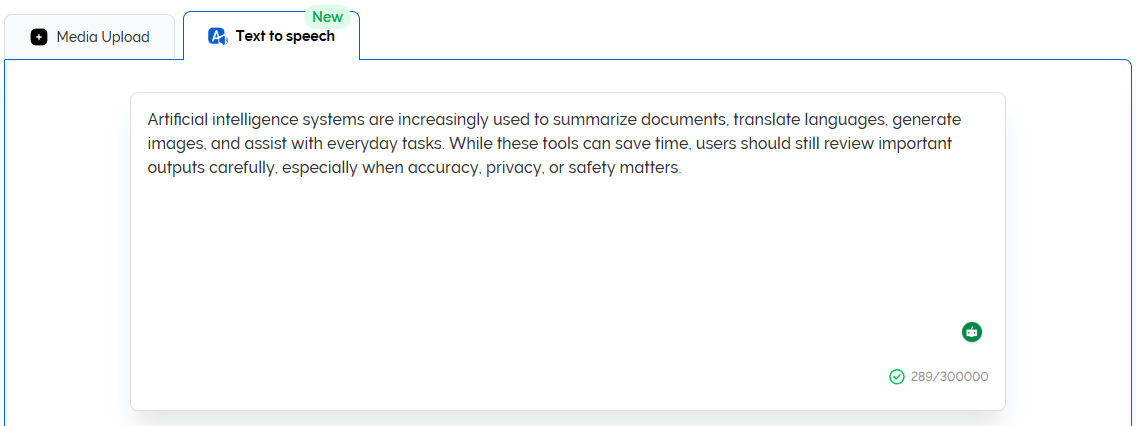
There is also a broader platform story now. Vidby offers document translation, subtitles as a standalone service, text-to-speech, MeetUp for Business for real-time translation, and an Open API for developers. The 2024 product updates also mention API support for original and translated subtitles, which makes the platform more relevant for products and internal systems rather than only one-off website users.
The extras are not filler. They make Vidby more coherent.
MeetUp for Business expands Vidby beyond prerecorded content into real-time multilingual communication, which is useful for events, discussions, and client communication. That pushes the platform closer to communication infrastructure than simple media translation.
The YouTube Audio Tracks Detector is also smarter than it first sounds. Vidby describes it as a tool that alerts users when new videos or audio tracks in chosen languages appear on favorite channels. That is niche, but for creators and audience teams working around multilingual YouTube distribution, it is actually a practical monitoring tool rather than a gimmick.
The Open API is the other signal that Vidby wants enterprise relevance. The company’s 2024 product highlights say the Open API became available for developers, and later updates mention subtitle support in API v2. That matters because once a localization product gets API access plus marketplace presence, it becomes more plausible as part of an internal publishing workflow, not just a freelancer tool. Vidby is also listed on Google Cloud Marketplace, Microsoft Azure Marketplace, and AppSource.
- YouTube creators and media publishers that already have finished videos and want multilingual distribution, subtitles, or dubbed versions without building a custom workflow.
- Training, education, internal communications, and course content, where Professional-tier output is usually a more sensible target than actor-led dubbing.
- Marketing teams localizing promos, social cuts, and explainers, especially when they want to test AI-only output first and upgrade later.
- Businesses that need a mix of prerecorded localization and live multilingual communication, because Vidby now spans both video translation and MeetUp for Business.
- Developers or operations teams that want API-based localization workflows rather than only manual uploads.
- The biggest limitation is that Vidby is more of a delivery platform than a creative finishing environment. The public product story emphasizes translation, dubbing, voice choice, subtitles, review, and export. That is good for localization, but it also suggests that teams wanting deep scene-by-scene editorial control, expressive performance direction, or fine post-production mixing may still need other tools around it.
- The second trade-off is pricing clarity. Vidby clearly explains that different tiers exist for different kinds of content, but the public naming around the lower-cost middle tier is not perfectly tidy across pages, and the real budget question depends heavily on what quality level you need. That makes the product understandable, but not perfectly simple.
- The third limitation is that the platform has expanded enough that not every buyer needs all of it. If you only want a dead-simple subtitle generator, or only want best-in-class voice generation, Vidby may feel broader than necessary. Its value is highest when you genuinely need localization workflow, not just one narrow voice or subtitle task. That is an inference from the size of the product suite and the platform’s positioning across video, documents, TTS, live translation, cloning, and API.
Vidby is best understood as a practical AI localization platform for existing content. It is strongest when you need to translate, subtitle, dub, and republish video across languages with a clear ladder from cheap automated output to higher-touch reviewed and actor-led delivery.
It is especially useful for creators, education teams, marketing groups, and businesses expanding content into new markets. The main caveat is that you need to choose the right quality tier carefully, because that decision drives both the workflow and the real cost.
TAGS: Translation Text to Speech
Related Tools:

Offers variety of tools for document creation
Translates app content into over 100 languages

Converts text to speech
Creates translation glossaries and style guides
Translates, dubs, and add subtitles to videos
Transcribes and translates audio into text