Share this tool:
 |
Description:
- Introduction: What Is Manifest AI?
- What Manifest AI Does Best
- Core Features and Capabilities
- Workflow and Setup
- Customization and Brand Control
- Shopping Experience and Cart Flow
- Human Handoff and Support Fit
- Analytics and Performance Visibility
- Best Use Cases
- Practical Tips for Better Results
- Limitations and Trade-Offs
- Final Takeaway
Manifest AI is a GPT-powered digital sales associate for e-commerce stores, with a strong focus on Shopify. It helps shoppers ask product questions, compare items, get recommendations, understand policies, track post-purchase needs, and move closer to checkout inside a chat-based buying experience.
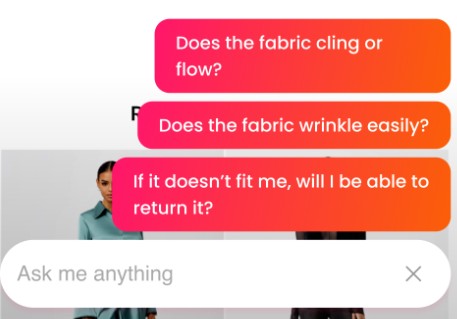
Manifest AI is strongest when a store has enough product detail, policy content, and buying friction for an AI assistant to be useful. A basic store with five products and simple descriptions may not need this much help. A catalog-heavy store with variants, sizing questions, return concerns, shipping rules, bundles, or repeated support questions has a much better fit.
That makes it more useful as a commerce layer than as a plain support widget. The assistant sits close to the customer’s purchase decision. It can help someone choose the right product, answer “will this work for me?” questions, and reduce the need to leave the product page to search for policy details.
| Feature | Practical Value |
|---|---|
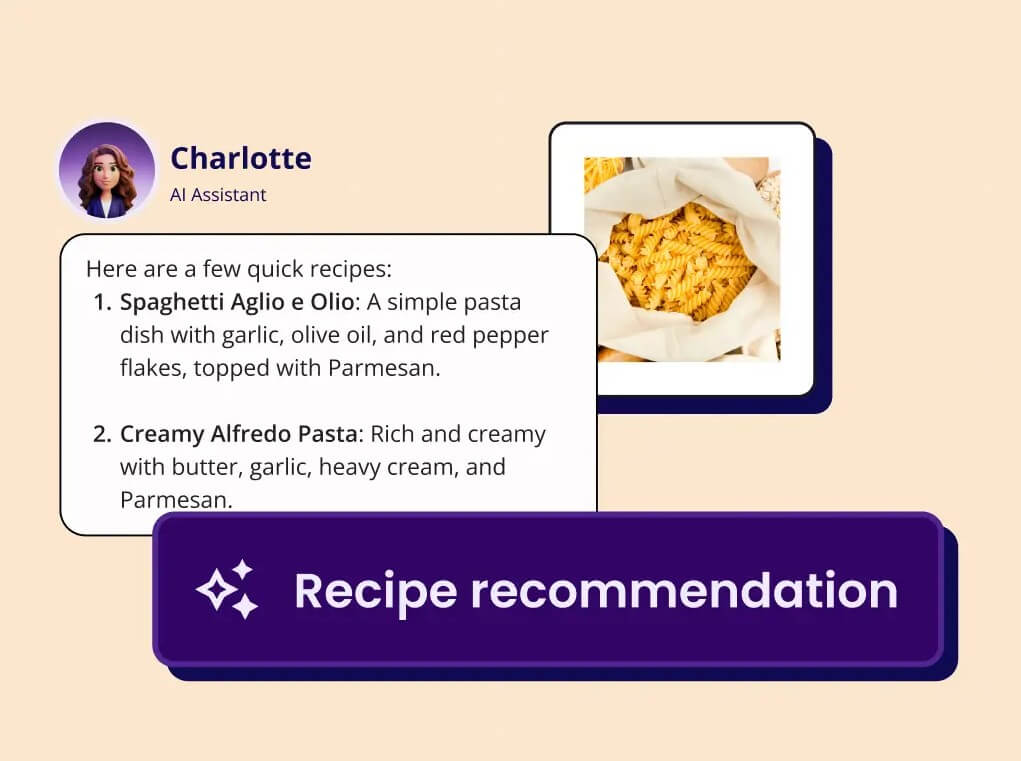
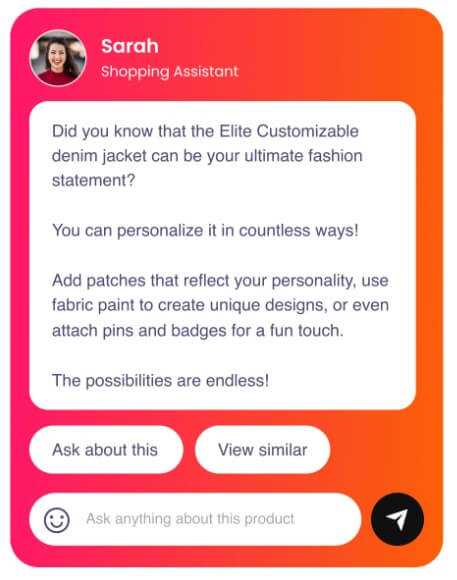
| AI Shopping Assistant | Answers customer questions and guides shoppers through product discovery and pre-purchase decisions. |
| Product Recommendations | Uses customer behavior, preferences, and catalog understanding to suggest relevant products. |
| Store Data Training | Imports products, collections, policy pages, and articles after installation so the assistant can respond using store-specific information. |
| AI Quizzes | Supports guided shopping flows where customers answer questions and receive product suggestions. |
| Human Handover | Lets stores define when conversations should move from AI to a human agent based on intent, messages, business hours, or support channels. |
| Add to Cart from Chat | Allows customers to add products from Manifest product cards without opening a product page first. |
Manifest AI’s setup is built around Shopify installation, product sync, customization, testing, and publishing. The help center says the assistant appears on a storefront through a Shopify app embed, and store owners can track widget visibility and app embed status from the Manifest dashboard.
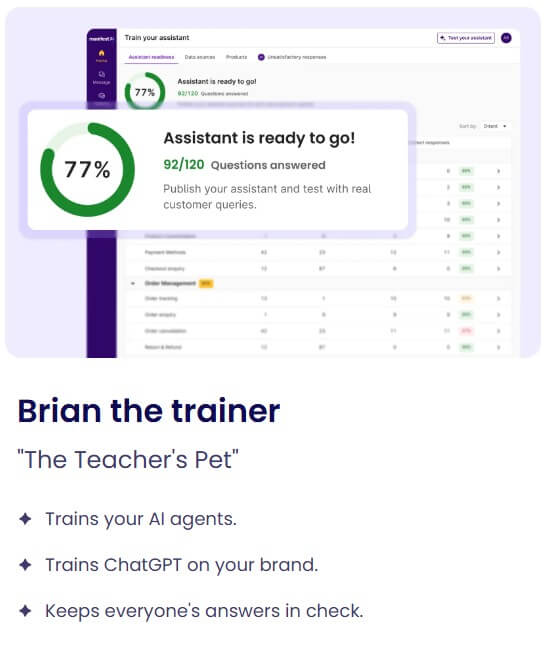
The onboarding idea is practical. Once installed, Manifest imports product data, collections, policy pages, and other store content. Store owners can also upload PDF files for extra training, including product information, company details, customer agreements, or policy documents. The help center notes that each PDF can be up to 5 MB.
This training layer matters because e-commerce AI assistants are only as useful as the information they can access. If product descriptions are thin, policies are vague, or sizing data is missing, the assistant may still sound polished while giving incomplete answers. Manifest gives store owners tools to improve that knowledge base, but the store still needs clean source content.
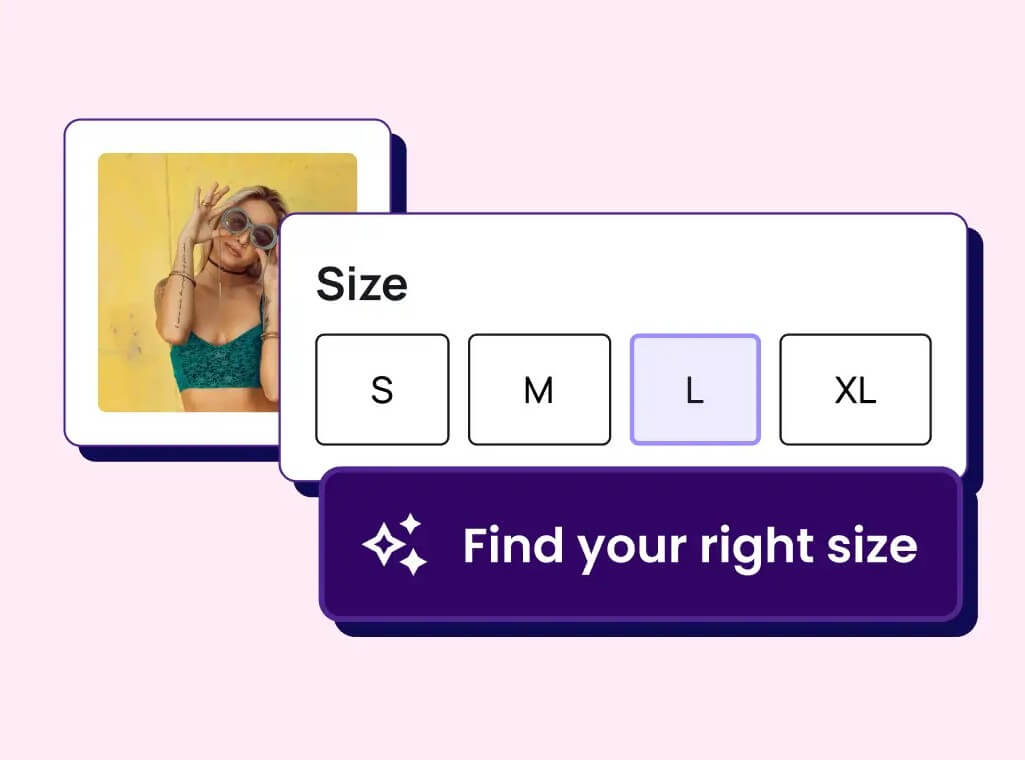
Manifest AI includes controls for how the assistant sounds and behaves. The help center describes AI Model and Personality settings where store owners can choose the assistant’s model, set tone, define brand description, adjust response length, add instructions, and set guardrails. Preset tones include Professional, Playful, Friendly, and Empathetic, with a custom option for brands that want more control.
This is one of the more important parts of the product. A chatbot that gives correct information but sounds wrong can still hurt the brand. A luxury skincare store, a technical parts supplier, and a playful pet brand should not all speak the same way. Manifest’s tone and instruction controls help narrow that gap.
There is one detail worth noting: public pages describe the product as GPT-powered and mention GPT-3.5, GPT-4, and GPT-4o, while the help center describes dashboard-facing options named Manifest Lite, Manifest Pro, and Manifest Ultra. That is not unusual for SaaS tools that wrap underlying models, but buyers should check the current dashboard naming during setup so they know which option they are using.
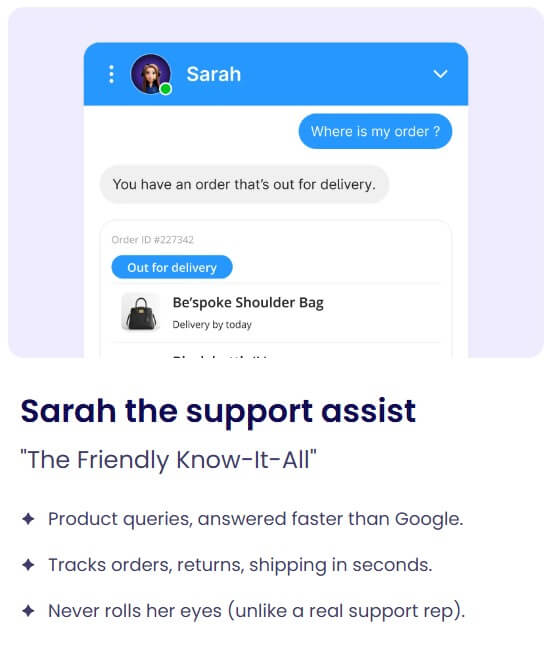
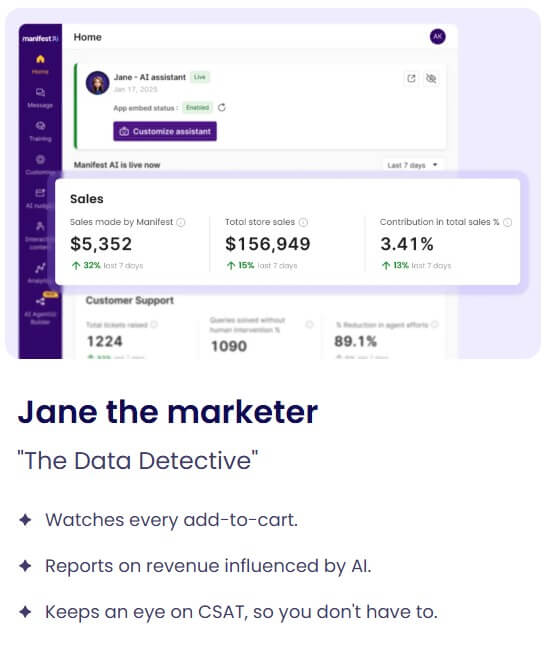
Manifest AI becomes more interesting when it goes beyond answering questions. The Add to Cart feature allows customers to add products directly from product cards shown in chat. The modal can show product image, title, dynamic price, variants, stock status, and selling plans when configured in Shopify. After an item is added, the assistant can show checkout-related options or let the shopper keep browsing.
That is a useful commerce detail. Many chatbots answer questions but then push the shopper back into the site to act. Manifest shortens that loop. A customer can ask for a recommendation, review product options, choose a variant, and add to cart from the same assistant flow.
The same feature also includes control. Store owners can hide Add to Cart for specific products through a product metafield, which helps when some items require special handling, consultation, or a more controlled buying path.
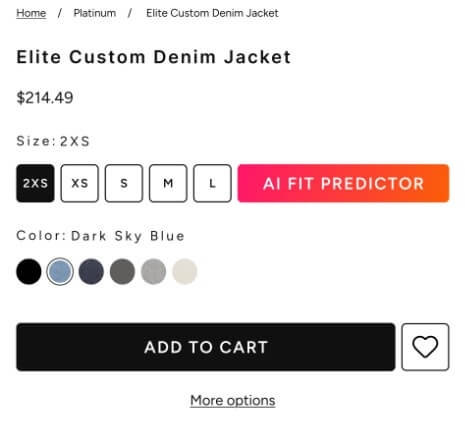
Manifest AI should not be judged only by how many conversations it handles alone. In many stores, the better question is how well it knows when to stop.
The Agent Handover feature lets merchants define when a human should step in. By default, handover can happen when a customer asks for a person or when the assistant lacks the data to answer. Store owners can also configure handover by intent, specific messages, business hours, and preferred support channels.
That makes Manifest better suited for stores that care about service quality, not only ticket reduction. A good AI assistant should answer repetitive questions, but it should also avoid blocking customers who need a human for refunds, complaints, sizing edge cases, damaged shipments, or high-value purchase concerns.
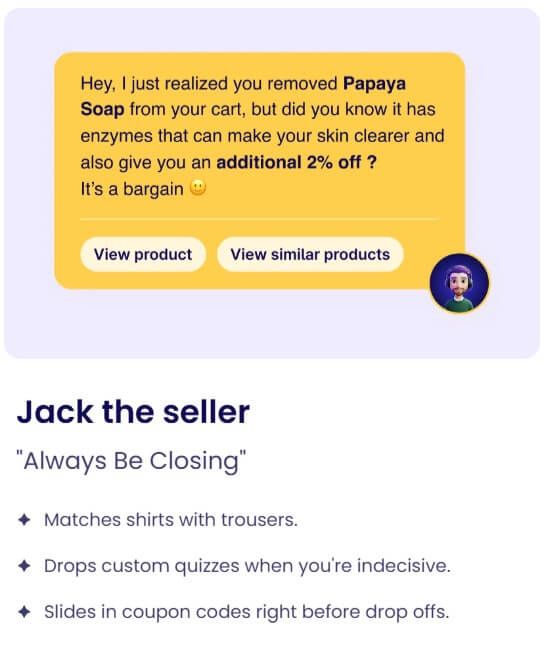
Manifest includes analytics after the widget is published. Its help center describes a dashboard covering sales, customer support, engagement, conversion rate, and Add to Cart rate. It can track sales influenced by Manifest, total store sales, contribution to total sales, total queries raised, queries solved without human intervention, and reduction in agent effort.
This matters because AI chat should be measured. A store should not only ask, “Is the bot answering?” It should ask whether the assistant improves discovery, lowers support load, helps customers reach the cart, and reduces friction without creating bad answers.
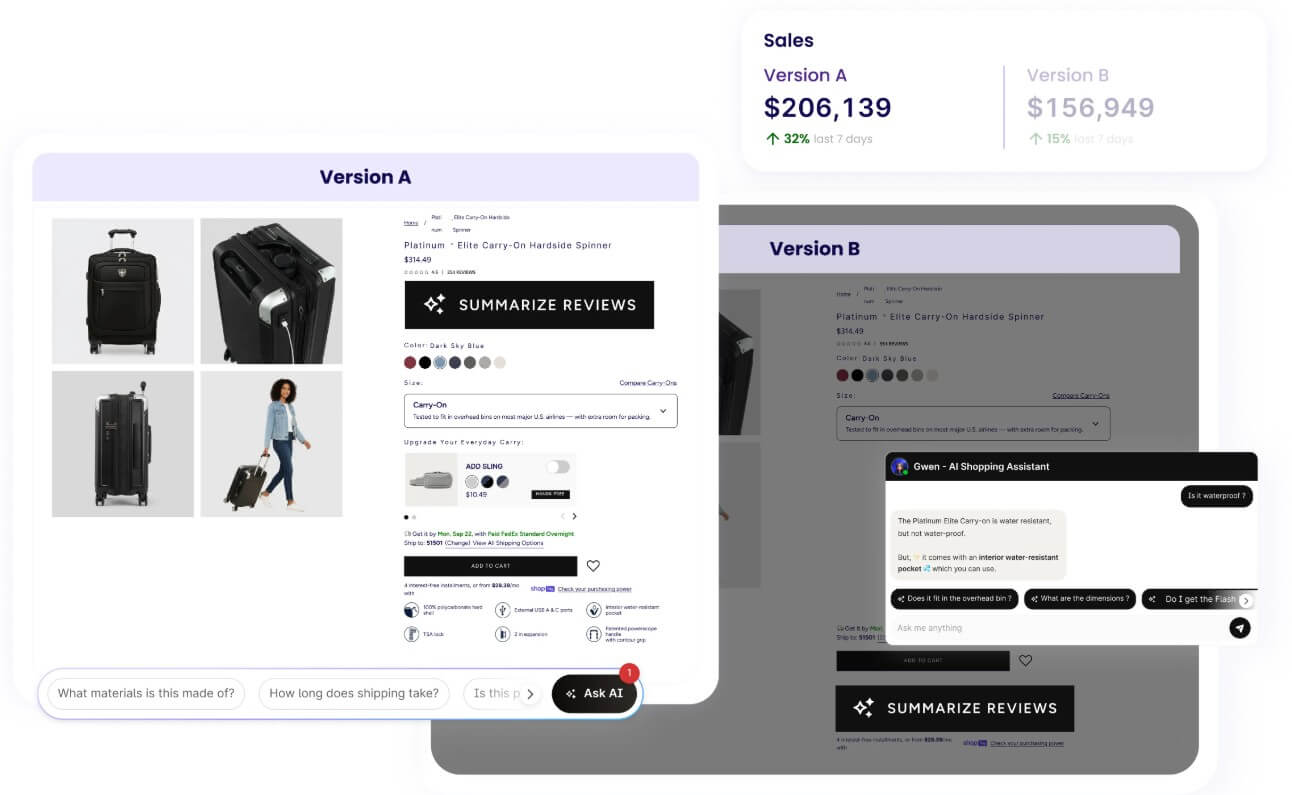
- Catalog-heavy Shopify stores: Manifest AI is a strong fit for stores with many products, variants, collections, and buyer questions.
- Product recommendation workflows: It helps when customers need guidance choosing between similar products or matching products to needs.
- Stores with repetitive support questions: Shipping, returns, refunds, product details, comparisons, and policy questions are natural use cases.
- Conversion support on product pages: The assistant can answer objections, recommend alternatives, and keep customers moving toward cart actions.
- Multilingual stores: Manifest says the assistant can understand and respond in many languages, including Hindi, Spanish, French, German, Portuguese, Italian, Dutch, Russian, Arabic, and Chinese.
- Start by improving your product and policy content. Manifest can train on your store data, but weak source material leads to weaker answers.
- Use the testing mode before publishing widely. The help center describes options for testing the assistant and publishing it to all users or a limited percentage of visitors.
- Set clear guardrails. Add instructions for tone, return-policy handling, discount language, medical or legal claims, and cases where the assistant should hand off to a human.
- Review analytics after launch. Look at solved conversations, add-to-cart activity, handoffs, and revenue influence, not just chat volume.
- Manifest AI depends heavily on store data quality. If product descriptions, policies, sizing charts, or support articles are incomplete, the assistant may not have enough reliable context to answer well.
- It is also more naturally suited to Shopify than to every e-commerce stack. Manifest says non-Shopify stores can contact the team for integration help, but Shopify is the clearest path based on its public materials.
- Another trade-off is oversight. AI can reduce support load, but merchants still need to audit conversations, update training sources, refine handoff rules, and check whether recommendations match business priorities.
Manifest AI is best for Shopify brands that want an AI shopping assistant, not just a passive chat widget.
Its strongest value is the full commerce workflow: store-data training, product discovery, recommendations, AI quizzes, cart actions, human handoff, multilingual support, and analytics.
The main caveat is that it needs clean store data and careful setup. Used casually, it may become another chatbot. Used well, it can become a useful sales and support layer across the buying journey.
TAGS: Marketing
Related Tools:

Analyzes websites to increase conversions and sales
Generates realistic marketing videos using AI avatars

Easily create custom logos and brand identities

create full brand identities—logos, visuals, and messaging

Allows users to create precise models
Helps businesses find investors