

Share this tool:
 |
Description:
Selfstorming, formerly presented through Creative Fast Aid, is an AI-powered creative strategy platform for marketers, strategists, freelancers, brand managers, founders, copywriters, and consultants. It combines AI models with a structured base of marketing knowledge, creative techniques, campaign references, frameworks, naming methods, hooks, and marketing laws. The main promise is simple: instead of starting with a blank AI chat window, users start with a guided creative system built around real marketing thinking.
Selfstorming is strongest before production begins. It is not mainly a tool for writing final ad copy, designing finished assets, or managing campaigns after launch. Its sweet spot is the messy early stage: finding the angle, shaping the brief, exploring strategic directions, building a research deck, naming a product, or preparing stronger ideas before a client meeting.
The platform’s own framing is useful here. It describes selfstorming as one person working with a knowledge-grounded AI to produce campaign ideas, insights, hooks, names, and strategy directions faster than a slow group brainstorm. That gives the product a clear point of view. It is designed for solo creative work, but not in a lonely “empty chatbot” way. The system gives the user frameworks, examples, and marketing context to push against.
That is where Selfstorming feels more practical than a general AI assistant. A blank model can generate ideas, but it often gives you the average of the internet. Selfstorming tries to narrow the field by grounding output in creative patterns, famous campaigns, hooks, naming techniques, and marketing principles.
| Area | What It Helps With |
|---|---|
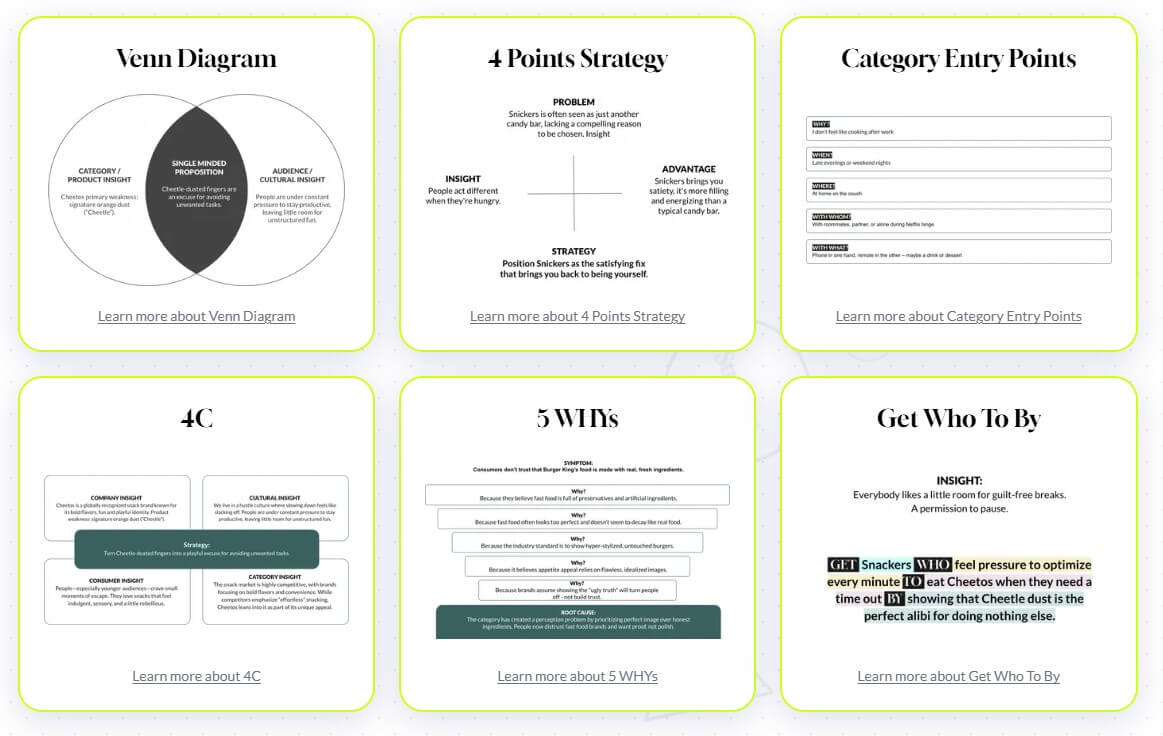
| Framework Agent | Builds strategy plans using expert frameworks and real-world examples, with editing, saving, and PowerPoint export. |
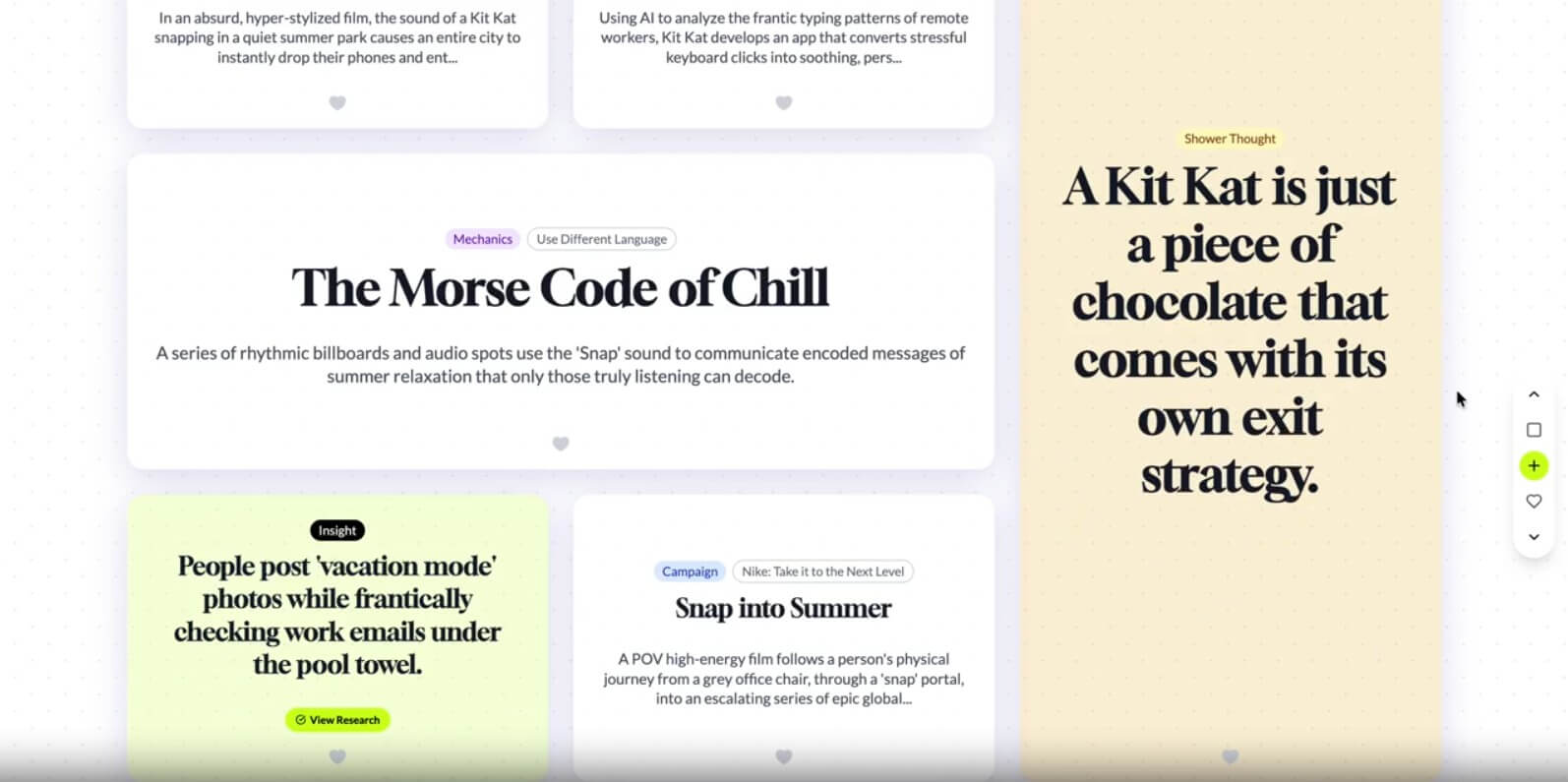
| Research Deck | Turns a brief into a research article or deck with pictures, source attribution, audience context, culture, category, region, and language relevance. |
| Creative Inspiration Session | Combines a brief, ideas, prompts, campaign context, creative mechanics, and a prompt library to generate campaign inspiration. |
| Naming Session | Generates brand and product names using proven naming techniques, with domain checks, usage scans, meaning checks, and logo-style previews. |
| Hooks Session | Uses 360+ hook mechanics for scroll-stopping social and content angles. |
| Prompt Builder | Helps build or improve marketing prompts for use with tools such as ChatGPT, Claude, or other LLMs. |
| Share of Search | Compares brand search visibility against competitors as a proxy for demand, consumer interest, and competitive position. |
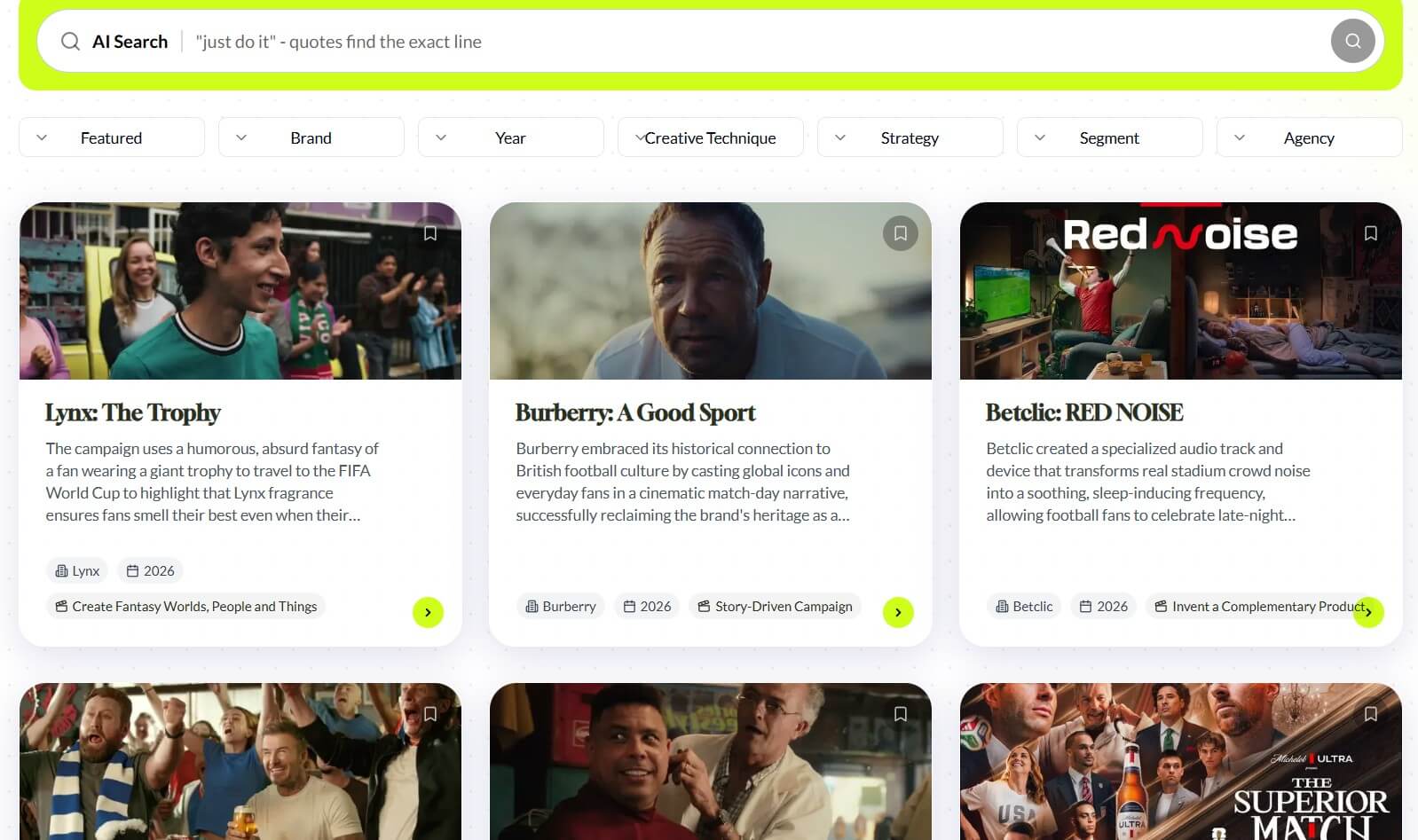
Selfstorming currently lists tools for strategy, research, creative ideation, prompt building, naming, hooks, and share of search. Its knowledge libraries include marketing laws, creative strategy techniques, creative techniques, storytelling techniques, strategy frameworks, naming techniques, hooks, share of search reports, and a campaign library with 1506+ famous campaigns broken down by strategy, technique, craft, and results.
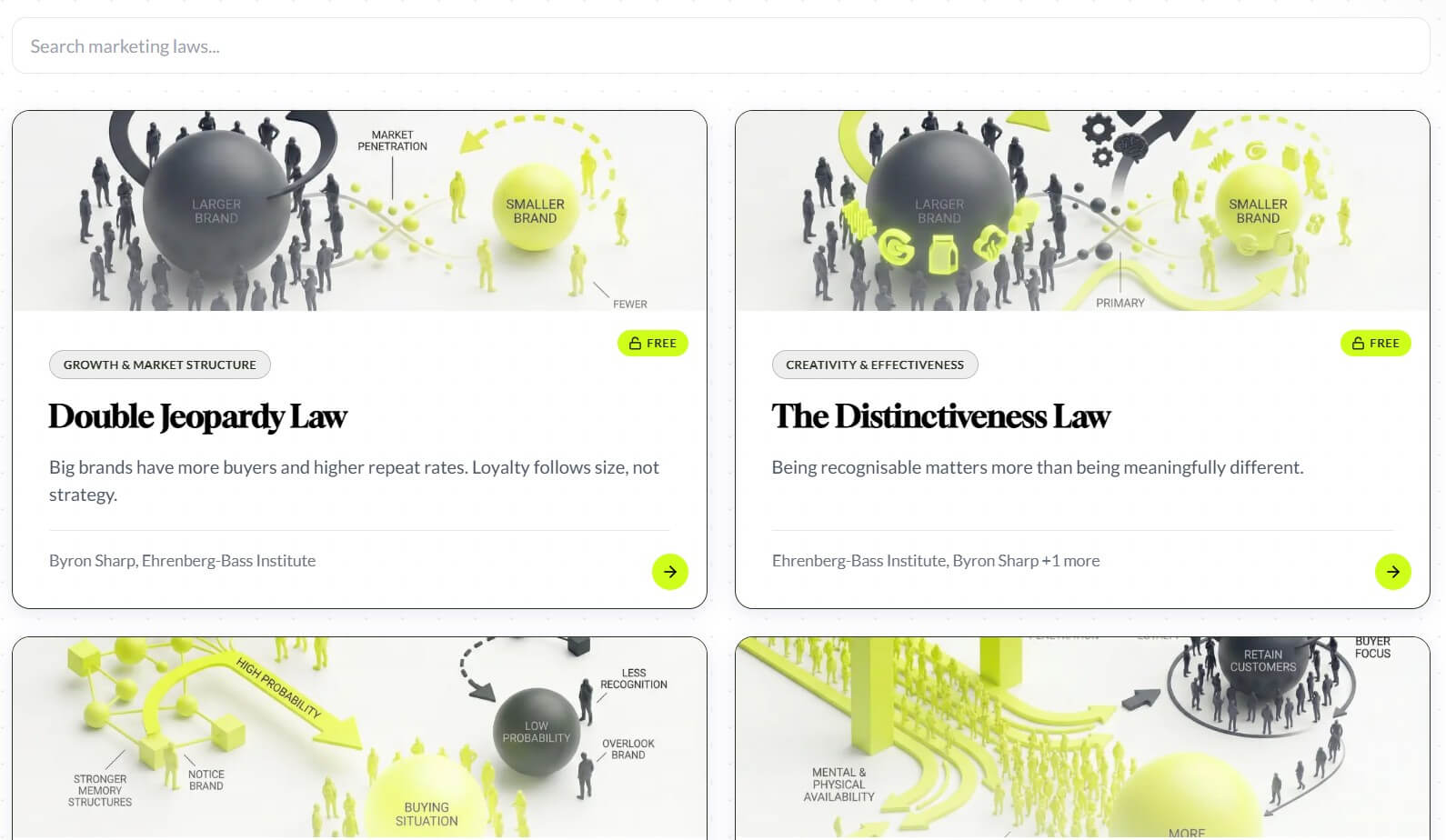
The most important part of Selfstorming is not the chat interface. It is the library behind the work.
The platform says it draws on 250+ creative techniques, naming methods, hooks, frameworks, and 60+ marketing laws. In another public tools section, it lists 61 marketing laws, 50 creative strategy techniques, 100 creative techniques, 48 storytelling techniques, 9 strategy frameworks, 66 naming techniques, 360 hooks, 243 share of search reports, and 1506+ campaign examples.
That matters because creative work depends on references. Good strategists do not start from nothing. They remember patterns, campaigns, category norms, customer tensions, media behaviors, and simple laws that keep ideas from drifting into nonsense. Selfstorming tries to make that reference layer available inside the tool.
Its campaign search angle is also interesting. Selfstorming says users can search campaign examples by “vibe,” such as minimalist emotional ads, hand-drawn animation campaigns, ads with famous actors, or campaigns that feel like short films. That is more useful for creative work than only searching by brand name, year, or category.

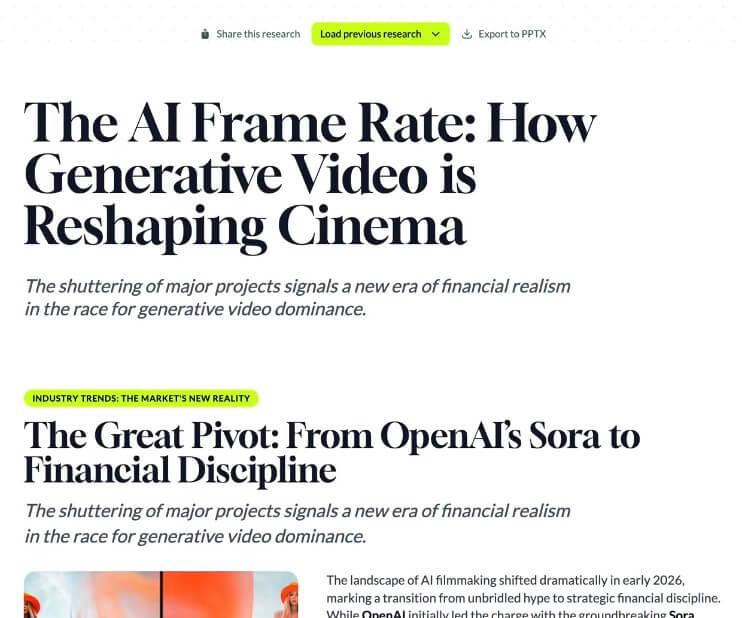
The Research Deck tool is one of Selfstorming’s more practical features. It turns a brief into a research article or PowerPoint-style output, with pictures, source attribution, and context around audience, culture, category, region, and language.
This is useful for strategists who need to move from “we need a direction” to “here is the logic behind the direction.” The key benefit is not just speed. It is structure. A research deck that already has source references, audience framing, and category context gives the user a better starting point than a loose list of AI observations.
Still, this kind of output needs review. Research decks can help organize thinking, but they should not be treated as final truth. Users should check sources, verify claims, and adjust the argument for the client, market, or internal team.
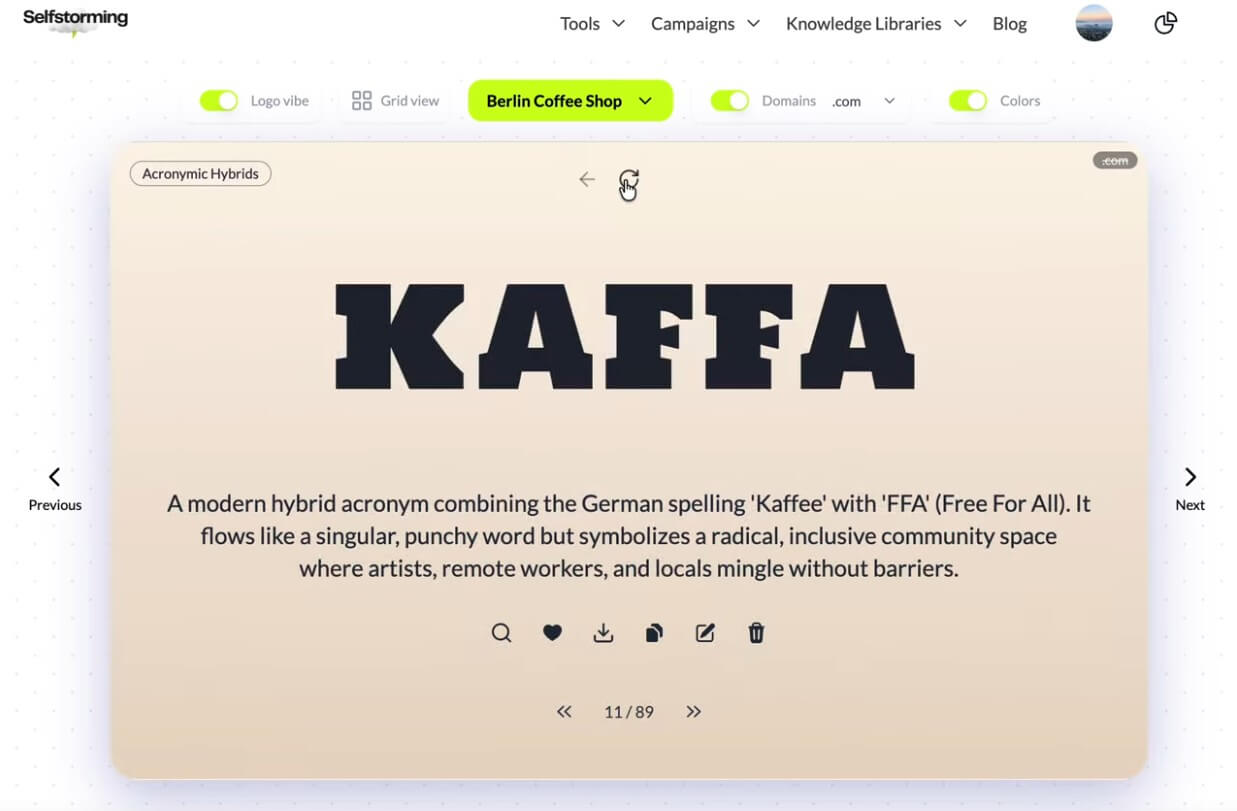
The Naming Session is one of the clearest examples of Selfstorming’s workflow-first design. It does not just throw out random startup-style names. The tool uses 66 naming techniques, shows logo vibes, checks domains across multiple TLDs, scans for existing usage, explains meanings, and allows users to keep generating or steer the direction with plain-language instructions.
That makes it more useful than a basic name generator. A name is not just a word. It needs category fit, memory value, available digital space, and low risk of awkward meanings. Selfstorming does not replace legal checks, and the site is careful to describe its scan as a first read rather than legal advice. But as an early naming workbench, it gives users more context than most quick generators.
The Hooks Session is more focused: it uses 360+ tested hook mechanics to generate attention-grabbing content starts. That is useful for social posts, video openings, ads, newsletters, and creator content where the first line decides whether the rest gets seen.
Selfstorming works best when the user brings a clear brief. A product, audience, category, market, problem, or campaign goal gives the system something to shape. The platform describes a workflow where the user feeds in a brief, the tool draws from campaigns and frameworks, then returns a shortlist of ideas, directions, names, hooks, or strategic outputs that the user can edit, challenge, save, and export to PowerPoint.
That is a sensible workflow for creative professionals. It respects the role of judgment. The AI does the first heavy lift, but the user still has to choose what is sharp, what fits the brand, what feels too familiar, and what can survive a client review.
The PowerPoint export matters more than it sounds. Strategy work often dies in formatting. If the tool can get users from brief to editable deck faster, it saves time in a place where teams often waste hours.
Selfstorming is a strong fit for creative strategists preparing campaign directions, freelancers building client decks, founders naming products, consultants shaping positioning, brand managers preparing internal presentations, and copywriters looking for better hooks or angles.
It is especially useful for early-stage campaign exploration, creative strategy routes, pitch preparation, brand naming workshops, social hook generation, category research, competitor demand snapshots, and pre-meeting idea development.
It is less suited to users who only want finished ad designs, media buying tools, long-form SEO production, or automated campaign management. Selfstorming lives upstream from those tasks.
- The main limitation is that Selfstorming still needs human taste: The platform itself says it is not a magic button, not a generic chatbot, not a replacement for creative teams, and not a deck template shop. It produces a starting point, not the final artifact.
- The second trade-off is scope: Because the platform covers ideation, research, naming, hooks, frameworks, prompts, and demand signals, users may need time to learn which tool to use first. A vague brief can still create vague output. The better the input, the better the shortlist.
- There is also a validation issue: Naming checks, share of search reports, campaign references, and research decks are useful, but they should be reviewed before major decisions. Share of Search can help indicate consumer interest or brand visibility, but it is still a proxy, not a complete market model.
Selfstorming is best understood as a creative strategy partner, not a generic AI writer.
Its strongest value comes from combining briefs with marketing laws, campaign references, frameworks, hooks, naming techniques, research workflows, and editable deck outputs.
It is best for strategists, freelancers, consultants, founders, copywriters, and brand thinkers who need sharper starting points faster. The main caveat is that it does not remove the need for judgment. Selfstorming can produce better raw material, but the final strategy still depends on the user’s taste, market knowledge, and ability to choose what is worth presenting.
TAGS: Marketing
Related Tools:

Generates high-quality marketing assets

Enhances product photography

Create high-quality animations and motion graphics

Create highly detailed 3D models and textures

Monitors websites, turning real-time changes into clear insights

Allows artists to create intricate graphics and simulations