

Share this tool:
 |
Description:
TreeBrain AI is an AI content and marketing platform built for eCommerce brands that need faster blogs, product listings, SEO content, social posts, ad copy, and promotional material. Its main focus is not general writing. It is store-aware content creation for Shopify and WordPress, with tools that tailor output to a brand voice, customer persona, product details, and marketing workflow.
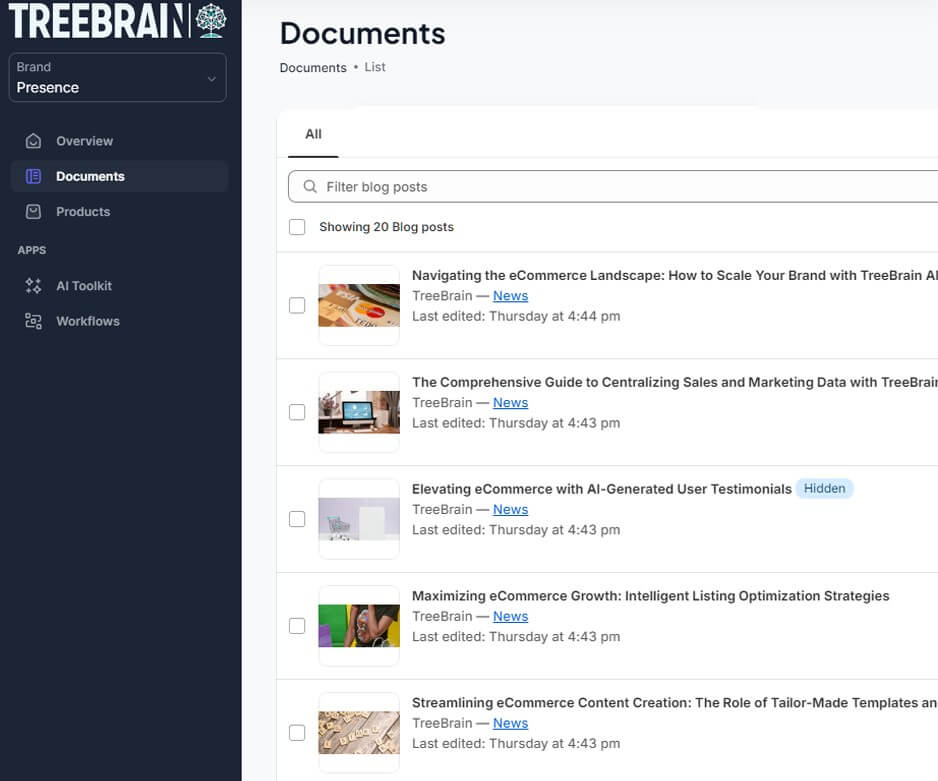
TreeBrain is strongest when used as a content production system for online stores. It is designed to help brands create more marketing content around their products without starting from a blank page each time.
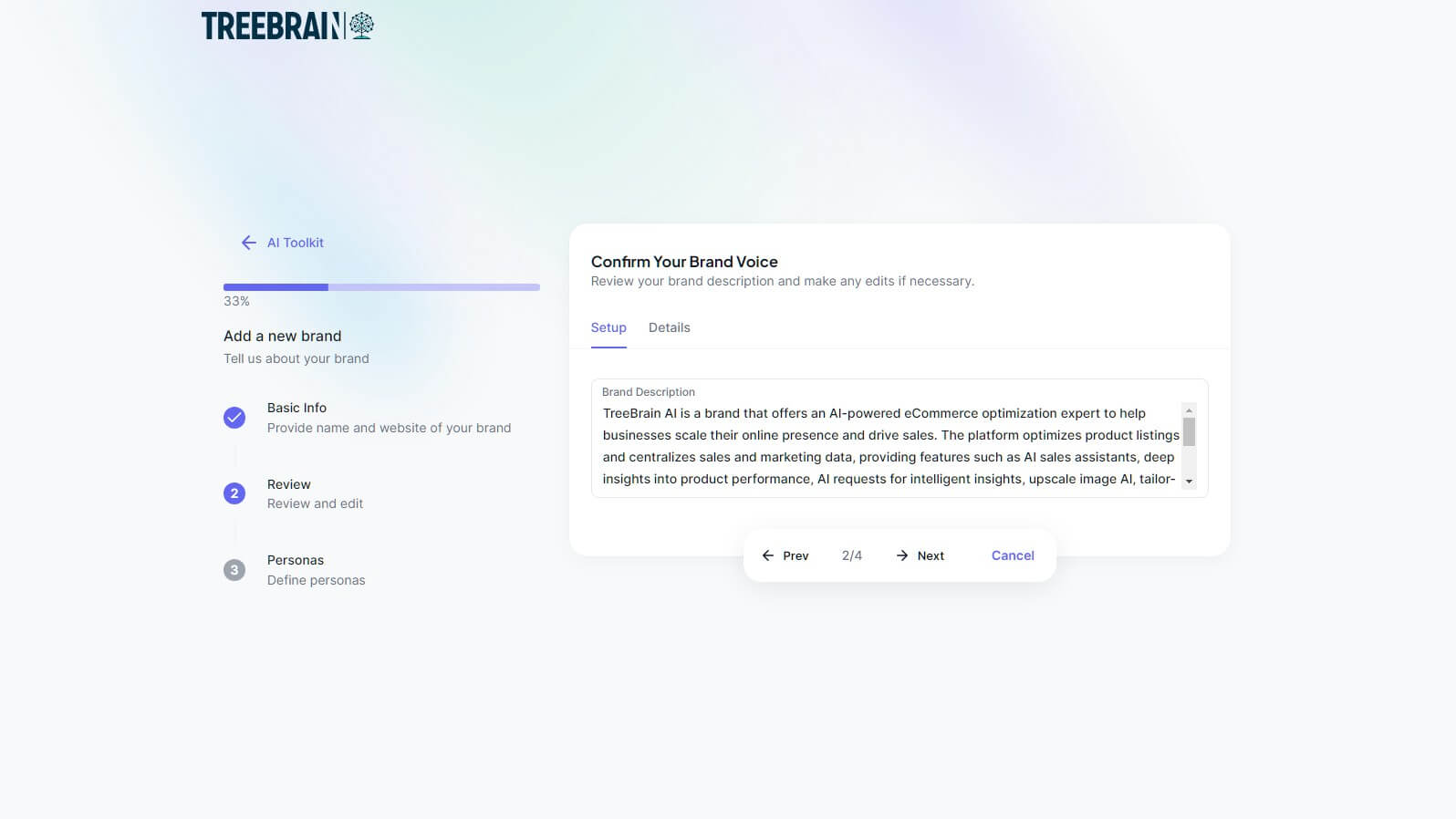
That matters because eCommerce content is repetitive, but it still needs context. A generic AI writer can produce a blog post or product description, but it may miss the product’s real positioning, the buyer’s concerns, the store’s tone, or the SEO angle. TreeBrain tries to solve that by training the content around brand identity and customer personas, then connecting the workflow to Shopify or WordPress publishing. Its own FAQ says the platform stands out from ChatGPT by using brand and customer persona training, reducing the need for prompting, and simplifying publishing through workflows.
The platform is most useful for teams that know they need content, but do not have a full content department. A small Shopify seller may need educational blogs, email content, ad descriptions, and product copy. An agency may need to manage the same type of output across several brands. TreeBrain’s value is in making that process repeatable.
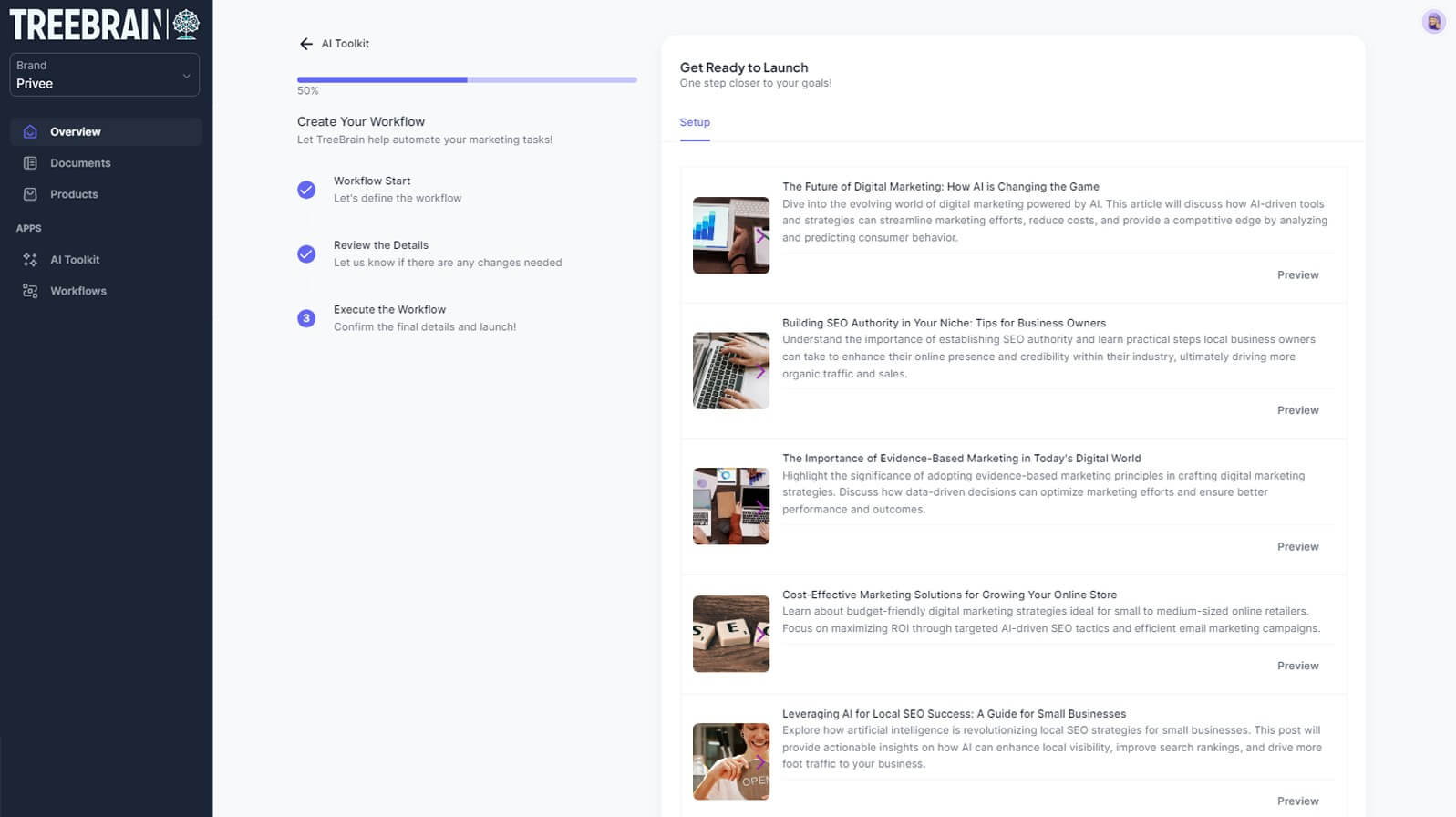
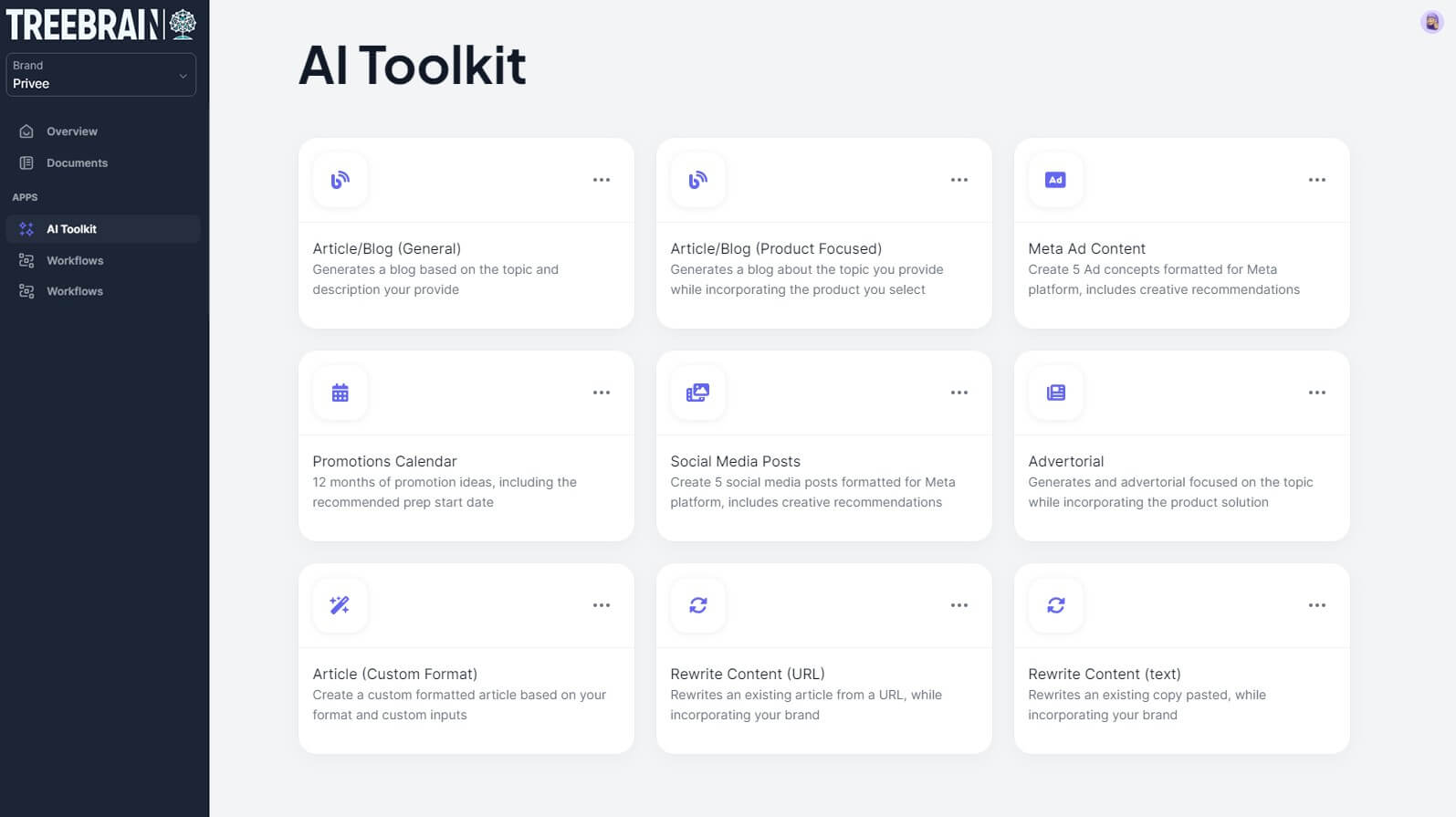
TreeBrain’s workflow is built around the idea that store owners should not need to become prompt engineers. This is the right direction for its audience. Many eCommerce sellers do not want to spend time crafting perfect prompts, comparing model outputs, or rewriting everything by hand. They want usable copy that fits their products and can move into a live marketing workflow.
The basic flow appears to be: connect or use the platform with your store context, define brand and persona details, choose the type of content you want, generate the content, then publish or adapt it for marketing channels. TreeBrain’s site highlights direct posting to Shopify or WordPress, which is important because content often loses momentum when it sits in a draft document instead of reaching the store.
The Shopify App Store reviews support that positioning. Several merchants mention time savings, blog creation, brand-specific content, and the ability to create educational material more quickly. One review also notes that the app can “learn” from the store, which lines up with TreeBrain’s brand-persona message.
This is not the same as a long-form editorial suite for publishers. It is more practical than that. TreeBrain is about helping stores generate content that supports traffic, product education, and repeat marketing touches.
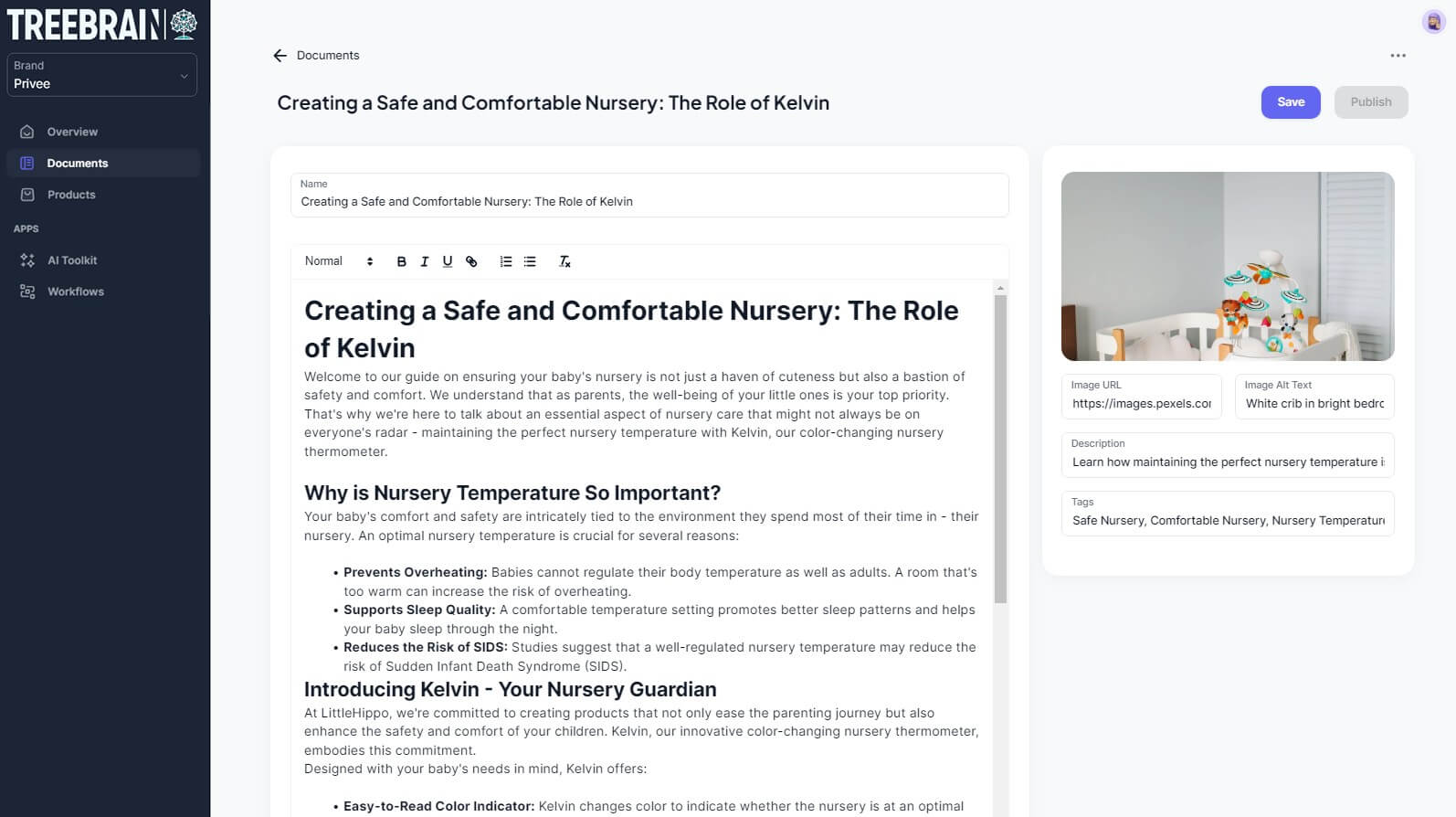
TreeBrain’s output quality depends on how well the brand, product, and audience context are set up. That is the part users should take seriously. If the persona is too vague, the output may sound like any other AI-written eCommerce content. If the product information is thin, the content may lean on generic claims. If the brand voice is not reviewed, the copy may need more manual cleanup.
The strongest content will likely come from stores that give TreeBrain clear product data, customer segments, and content goals. For example, a health product brand writing for both consumers and occupational therapists needs different angles, different terms, and different levels of explanation. One Shopify review specifically calls out the ability to add multiple personas for different audiences, which is the kind of detail that can make the tool more useful than a generic copy generator.
TreeBrain’s best content use is probably educational and commercial support content: blog posts that explain product benefits, product-page copy that clarifies features, emails that bring customers back, and social content that keeps a store active. It may be less ideal for brands that need highly original editorial essays, technical white papers, or heavily regulated claims without expert review.
TreeBrain should not be judged as “ChatGPT, but for stores.” The better comparison is between a general AI chatbot and a workflow-specific content system.
ChatGPT gives more open-ended flexibility. You can ask it for almost anything, adjust the tone, paste in product information, and keep refining. But it also requires the user to manage the structure, context, prompt quality, and publishing process.
TreeBrain is narrower, but more directed. Its public FAQ says it trains on brand and customer personas, creates more SEO-optimized content, and publishes through workflows. For busy store owners, that trade-off makes sense. The less time spent managing prompts, the more valuable the tool becomes. The main question is whether a business wants creative flexibility or operational speed. A content strategist may still prefer a general AI tool plus a detailed editorial process. A small eCommerce team may prefer TreeBrain because the common tasks are already shaped around store growth.
- Shopify blog creation: TreeBrain is a strong fit for stores that want educational blogs around their products, customer problems, buying guides, or use cases.
- Product listing improvement: The Shopify integration makes it useful for creating copy that explains product features and gives shoppers more context before buying.
- WordPress content publishing: Brands that use WordPress for content marketing can use TreeBrain to create SEO-focused blog and marketing content with less manual production work.
- Agency content workflows: Agencies managing multiple eCommerce brands can use TreeBrain to standardize repeatable content workflows while still tailoring output to each brand.
- Email and campaign support: Store owners can turn product education and blog ideas into supporting email content, campaign copy, and promotional material.
- Persona-specific content: TreeBrain is useful when a product needs different messaging for different buyer groups, such as consumers, professionals, gift buyers, parents, or niche hobbyists.
- Start by tightening the brand voice. Do not settle for broad labels like “friendly” or “premium.” Give TreeBrain stronger direction: plain-spoken, expert but warm, playful but concise, technical but not clinical.
- Build clear customer personas. The tool’s persona system is only useful if the audience details are real. Include what the customer wants, what they worry about, what objections they have, and what language they already use.
- Use product-specific inputs. The more TreeBrain knows about materials, benefits, use cases, sizing, ingredients, or differentiators, the less generic the output should feel.
- Review SEO content before publishing. AI can help draft and structure content, but titles, claims, internal links, and factual details still need human review.
- Create repeatable workflows. The platform makes the most sense when used weekly, not once. Use it for recurring blogs, product updates, campaign ideas, social posts, and seasonal promotions.
- TreeBrain’s main limitation is that it still needs strong source material: If the brand has weak positioning, thin product descriptions, or unclear customer personas, the AI will not magically create a better business strategy.
- The second limitation is editorial depth: TreeBrain can help produce more content, but brands should still review tone, accuracy, product claims, and SEO intent. This is especially important for health, wellness, finance, supplements, baby products, or any category where claims can create trust or compliance issues.
- It may also feel too narrow for users who want a broad creative AI workspace: TreeBrain is built around eCommerce content workflows, not every kind of writing or marketing strategy. That focus is a strength for store owners, but a limitation for teams that want deep research, complex editorial planning, or advanced analytics in one place.
TreeBrain AI is best for Shopify and WordPress brands that need a faster way to create SEO content, product copy, blogs, and marketing assets without managing every prompt manually.
Its strongest value is workflow: brand-aware content, customer personas, product-focused copy, and direct publishing support.
The main caveat is quality control. TreeBrain can speed up content production, but brands still need to review accuracy, claims, tone, and SEO fit before publishing.
TAGS: Marketing
Related Tools:

Enhances website design and user experience
Automates digital marketing tasks

Analyzes user behavior to enhance engagement

Provides comprehensive CRM functionality

Automates phone calls for businesses using voice agents

Provides customizable email templates