
Share this tool:
 |
Description:
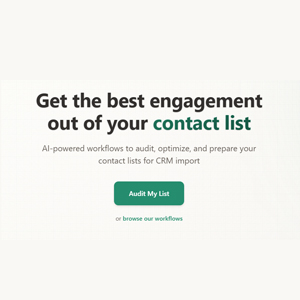
Engagico is an AI-powered contact list preparation tool for teams that need cleaner data before it reaches a CRM, email platform, or outreach workflow. Its focus is narrow in a good way: it helps users take raw contact lists, find problems, clean them up, merge duplicates, organize segments, and export something more usable.
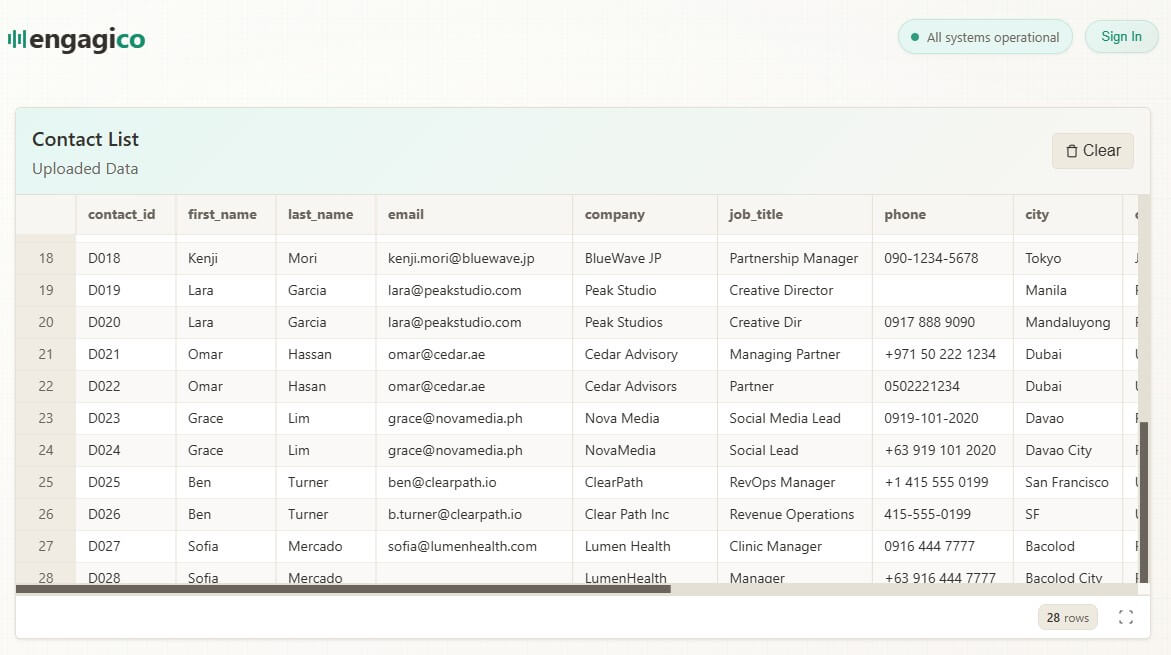
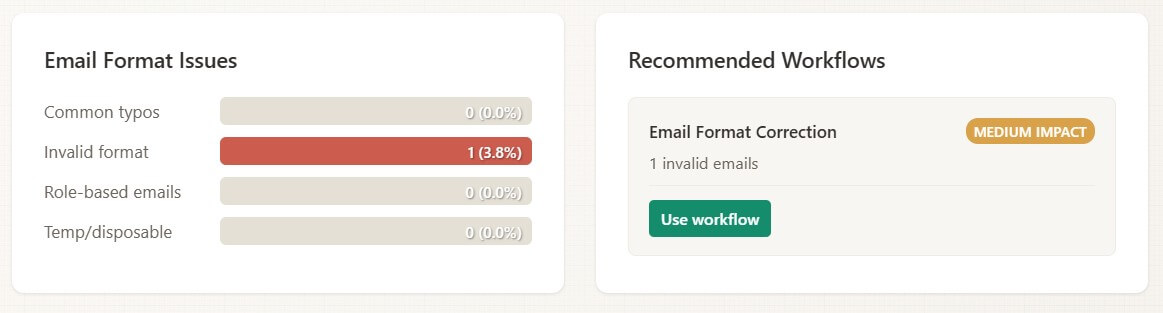
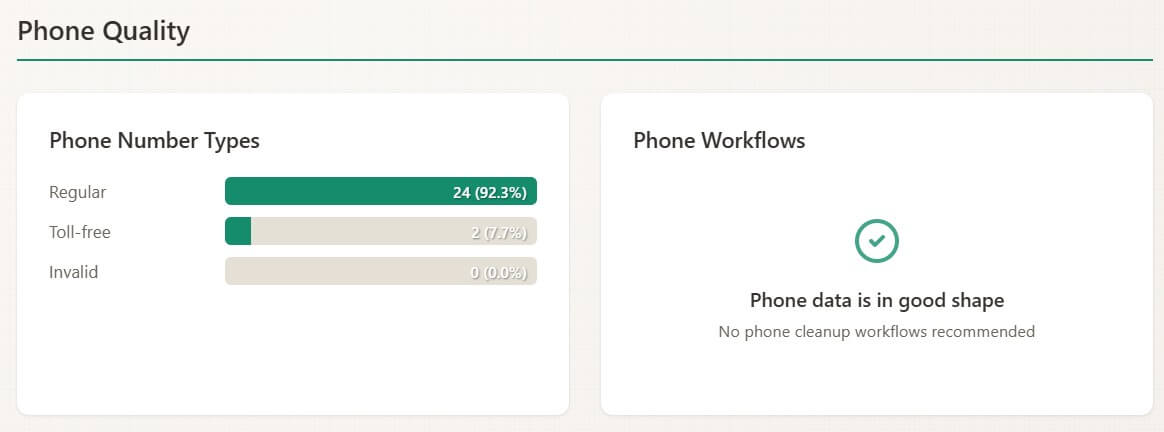
Contact lists get messy fast. A sales team may have one export from LinkedIn prospecting, another from a webinar, another from a CRM backup, and another from an event badge scanner. The names do not match. Phone formats are inconsistent. Some contacts appear twice. Company fields are incomplete. Old unsubscribes may be mixed with active leads.
Engagico sits in that gap between collection and usage. It is not trying to be the CRM itself. It is the cleaning step before the list gets imported, segmented, or used for campaigns.
That makes the tool useful for one of the least glamorous but most important parts of sales and marketing: data hygiene. Bad contact data creates wasted outreach, duplicate records, broken personalization, weak segmentation, and reporting that no one trusts.
Engagico’s workflow appears to center on a few practical contact-list tasks. The official site lists audit, merge, dedupe, segment, and format as core AI-powered workflows.
| Workflow | Why It Matters |
|---|---|
| Audit | Finds issues before users commit to cleanup |
| Merge | Combines lists from different sources |
| Dedupe | Reduces repeated contacts and duplicate records |
| Segment | Groups contacts into more useful audiences |
| Format | Standardizes fields for smoother CRM import |
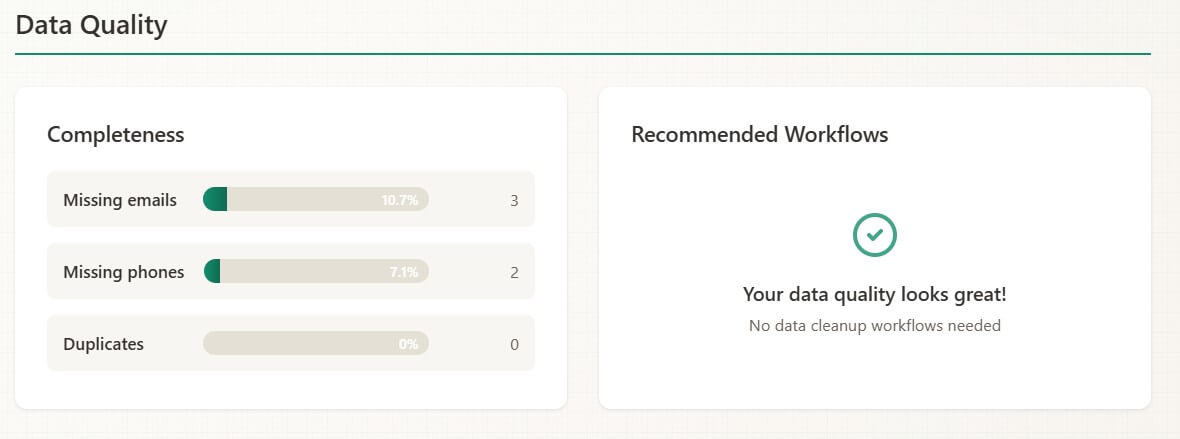
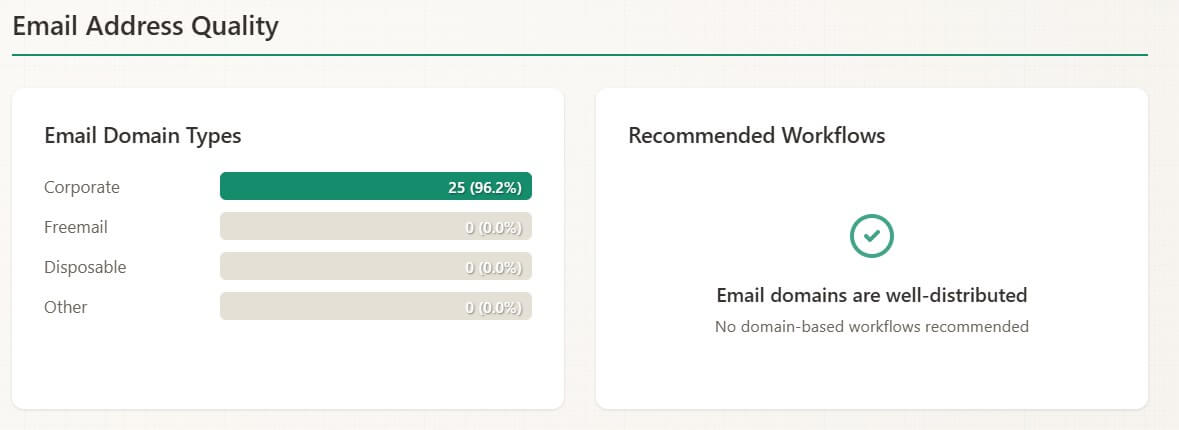
The audit step is important because users should not clean data blindly. A good list workflow should first show what is wrong: repeated contacts, missing fields, strange formatting, or records that may need review.
Merging and deduping are where Engagico has the most practical value. These are the tasks that become painful in spreadsheets, especially when the same contact appears with small variations. “Mike Chen,” “Michael Chen,” and “M. Chen” may be the same person, but they also may not be. AI can help surface likely matches, but users still need review controls for uncertain cases.
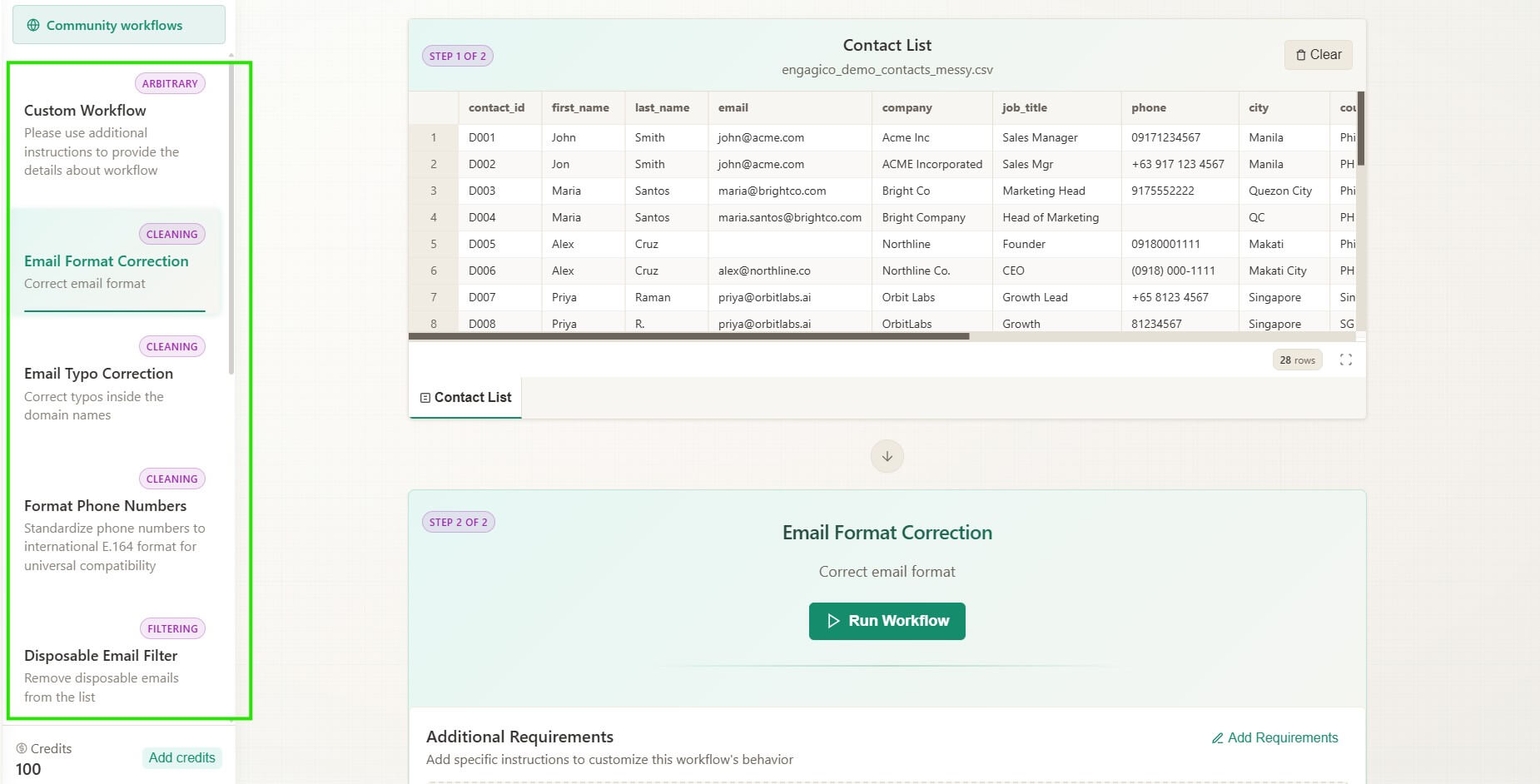
Many teams already use spreadsheets for contact work. They sort columns, remove exact duplicates, split names, format phone numbers, and manually scan rows. That works for small files, but it becomes unreliable when several lists are involved.
Engagico is interesting because it turns cleanup into a workflow rather than a set of manual spreadsheet tricks. Third-party listings describe it as a tool for auditing, cleaning, and formatting contact lists for CRM import, which matches the product’s own positioning.
The value is not only saving time. It is reducing small errors that spread later. Once a dirty list enters a CRM, cleanup becomes harder. Records may connect to deals, automations, ownership rules, email sequences, tasks, and reporting dashboards. Cleaning before import is usually safer.
Engagico is strongest when a team has contact data from several sources and needs to make it usable quickly. That could mean a sales team preparing an outbound list, an agency cleaning a client’s old customer export, or a marketer organizing webinar leads before adding them to a nurture campaign.
It also fits CRM migration work. Moving from one CRM to another often exposes years of data problems. Duplicate contacts, inconsistent fields, and old formatting rules can slow the project down. A focused tool like Engagico can help prepare the data before the migration begins.
The segmentation workflow is also useful. Clean lists are not enough. Teams need lists that can be used. Separating contacts by source, status, customer type, location, company type, or campaign intent can make outreach more relevant.
Engagico is most useful for:
| Use Case | Practical Value |
|---|---|
| Event lead cleanup | Fixes messy exports before follow-up |
| CRM imports | Prepares cleaner contact records before upload |
| Sales prospecting | Makes outbound lists easier to manage |
| Newsletter cleanup | Helps organize and reduce duplicate contacts |
| Agency onboarding | Cleans client lists before campaign work |
| Recruiting pipelines | Organizes candidate and company contacts |
The strongest use case is probably pre-CRM cleanup. That is where mistakes are easiest to prevent and hardest to fix later.
Engagico appears to be built for users who do not want to write formulas, build spreadsheet macros, or manually inspect thousands of rows. That is the right audience. Contact cleanup is not glamorous work, but it affects sales accuracy, campaign quality, and reporting.
The simpler the workflow, the better the tool becomes. Users should be able to upload a list, run an audit, see the issues, choose a cleanup workflow, review uncertain changes, and export a cleaner file.
The tool’s success depends on how transparent the review process is. Users should be able to see what changed, approve merges, catch risky matches, and export the final file with confidence. If the workflow hides too much, teams may worry about bad merges. If it exposes every detail, cleanup may feel slow. The right balance is assisted review, not blind automation.
- Engagico’s biggest limitation is that contact cleanup still depends on source quality. If the original list has fake emails, missing names, outdated companies, or unclear consent status, AI can help organize the data, but it cannot make every record reliable.
- Another trade-off is review time. Users may expect automation to solve the full cleanup process, but good data hygiene still needs human checks. Dedupe suggestions, segmentation rules, and formatting changes should be reviewed before upload.
- There is also a privacy and compliance consideration. Contact lists often include personal data. Teams should check how any list-processing tool handles uploads, retention, consent, and deletion before using it with sensitive records.
Engagico is best at solving a specific but common problem: messy contact lists that are not ready for CRM, email, or outreach work.
It is a strong fit for sales, marketing, agency, recruiting, and operations teams that need to audit, merge, dedupe, segment, and format lists without living in spreadsheets.
The main caveat is that AI-assisted cleanup still needs human review, especially when duplicate matching, consent, and data accuracy matter.
TAGS: Marketing
Related Tools:

Facilitates efficient Email marketing

Creates videos for marketing outreach
Simplifies creation of visual content for marketing
create full brand identities—logos, visuals, and messaging

Automates lead generation and marketing for real estate

Generates alt text, titles, captions, and descriptions for images