
Share this tool:
 |
Description:
Textio is an AI writing platform for HR teams, recruiters, hiring managers, and people leaders. Its main job is not general writing. It helps teams improve the language they use in job posts, sourcing messages, interview feedback, performance reviews, self assessments, peer feedback, and manager communication.
Textio is best understood as a purpose-built AI tool for workplace language. It focuses on a narrow but important problem: the words used in hiring and performance management shape who applies, who gets evaluated fairly, and who receives useful growth feedback.
The platform currently covers several connected areas. Textio’s homepage describes it as an integrated suite of recruiting and feedback tools, with options to work inside Textio or extend guidance into an ATS or performance management system.
That matters because Textio is not just a document editor. It is designed to coach users while they write. Instead of giving HR teams a blank AI chat box, it gives real-time guidance, suggested language, bias detection, and structured writing support for specific HR workflows.
| Product Area | Best For | Practical Value |
|---|---|---|
| Textio Recruiting | Job posts, sourcing, employer brand content | Helps teams create clearer, more inclusive hiring content |
| Textio Feedback | Manager feedback, reviews, self assessments, peer feedback | Helps managers write more actionable and growth-oriented feedback |
| Interview Feedback | Candidate evaluations and hiring documentation | Helps teams focus interviews on skills rather than vague impressions |
| Extensions and Integrations | ATS, HRIS, LinkedIn, performance tools | Brings writing guidance into existing HR workflows |
This structure is useful because HR writing happens in many places. Recruiters may be working in an ATS. Managers may be writing reviews in a performance platform. Hiring teams may be documenting interview notes in a separate system. Textio’s value increases when it appears where people already write.
Textio is strongest when writing quality affects real talent outcomes.
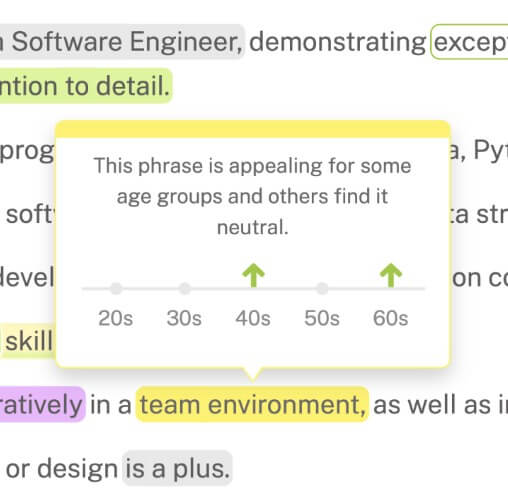
In recruiting, it helps teams avoid job posts that are vague, biased, jargon-heavy, or off-brand. The Recruiting product page says Textio supports job posts, sourcing messages, employer branding, and a library of trusted job descriptions. It also includes guidance for age appeal, gender-coded language, custom brand guidance, and AI-assisted first drafts.
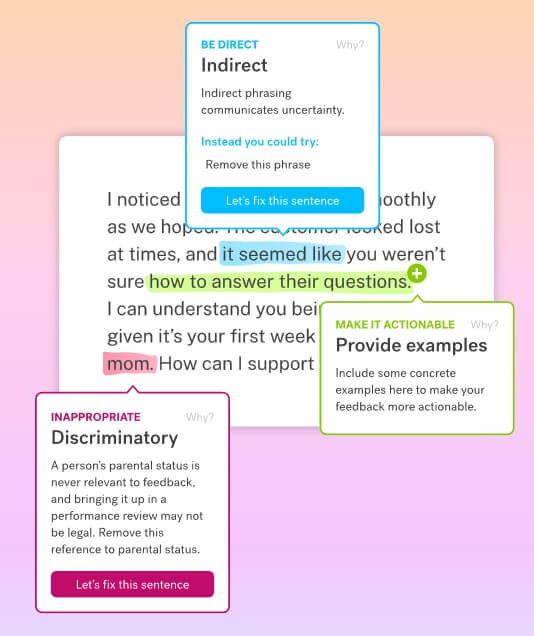
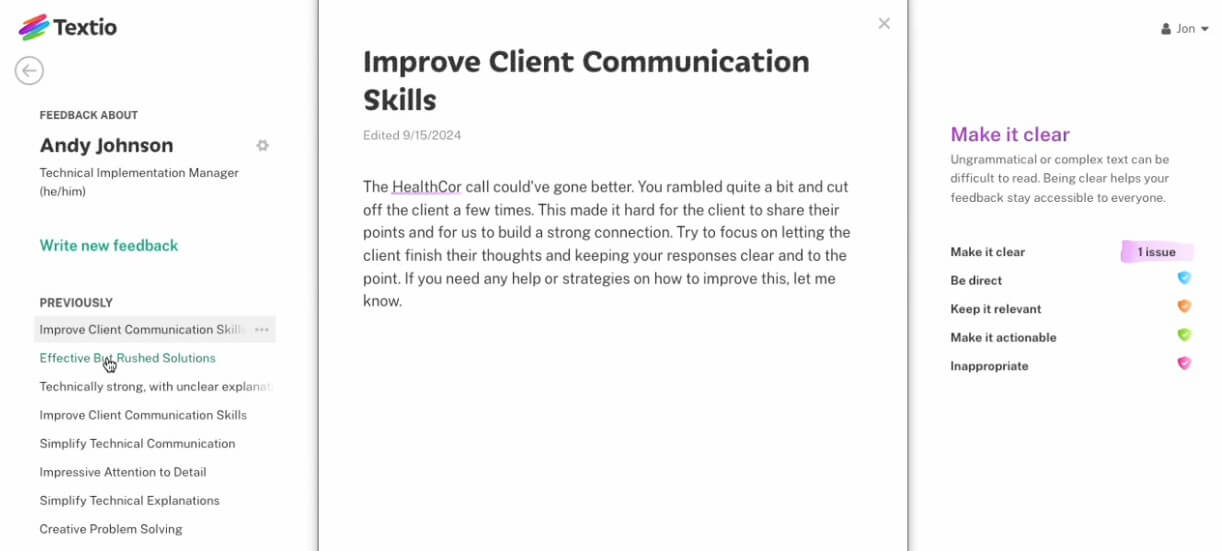
In performance management, Textio helps managers turn rough notes into clearer feedback. This is a practical use case because many managers know what they want to say but struggle to say it in a way that is direct, useful, and fair. Textio Feedback supports informal feedback, performance reviews, self assessments, peer feedback, and upward feedback.
The strongest idea behind Textio is simple: HR language should be specific, fair, and useful. A job post should attract the right candidates. A review should give someone a clear path to improve. Interview notes should document skills, not personal impressions.
Textio Recruiting is probably the most familiar part of the platform. It helps teams write job posts and recruiting content that is easier to read, more inclusive, and more aligned with the company’s employer brand.
The platform can generate job posts from a few details, but the better value is in the guidance around the draft. Textio can show whether language may appeal unevenly across age groups, whether wording is gender-skewed, and whether a post follows brand language rules. It also supports programmable brand guidance, which is useful for companies that want recruiters and hiring managers to use consistent terms.
That makes Textio useful for scaling quality. One strong recruiter can usually write a good job post. The harder problem is getting every recruiter and hiring manager to write clear, inclusive, on-brand content across hundreds of roles. Textio works best when consistency matters.
Textio Feedback is aimed at one of the messiest parts of management: giving feedback that people can act on.
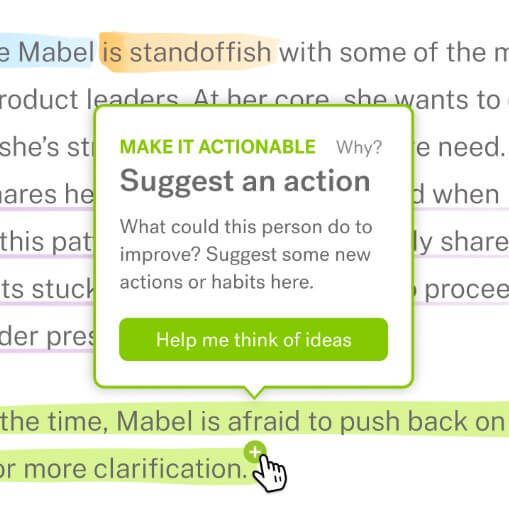
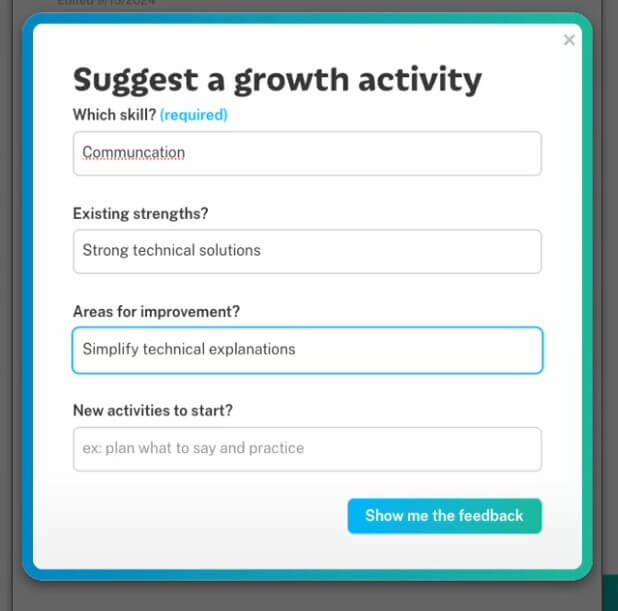
The product page describes Textio as a feedback expert for managers, with tools for actionable feedback, performance reviews, self assessments, peer feedback, and upward feedback. It also includes shortcut prompts, real-time guidance, AI rewriting, risk detection, tone adjustment, and a feedback organizer.
This is where Textio feels more useful than a generic AI writer. A general chatbot can make feedback sound polished, but polished is not always better. Feedback needs to be specific, grounded in behavior, free from irrelevant personal comments, and clear about what the employee should do next.
Textio’s risk detection is especially important. The product page says it can flag comments about physical appearance, parental status, and similar areas that do not belong in performance feedback. That kind of guardrail is valuable for managers who may not notice how risky or unhelpful a sentence sounds.
Textio has also moved into interview feedback. In March 2025, Textio announced Interview Feedback, describing it as a way for hiring teams to create clearer, structured, compliant, skills-based candidate assessments. The announcement says it helps teams document interview feedback, centralize assessments, reduce subjective notes, and focus on candidate skills and qualifications.
This is a smart expansion. Hiring decisions often suffer when interviewers rely on vague notes like “great culture fit” or “not enough energy.” Those comments may feel useful in the moment, but they do not create strong hiring evidence. Textio’s interview layer is designed to push teams toward job-related criteria instead.
For companies trying to improve hiring quality, this may be one of Textio’s more important workflows. It connects the front end of hiring, job posts and sourcing, with the evaluation stage.
Textio’s biggest differentiation is that it is purpose-built for HR. The company says its AI is trained for specific use cases rather than general-purpose writing, and that its approach includes bias-aware model design, dataset balancing, and review of model outputs.
The homepage also says Textio uses more than 30 AI models, trained on over 1 billion HR documents, with new records added monthly. Those are official company claims, but they point to Textio’s main argument: HR teams should not rely on generic AI for sensitive workplace communication without guardrails.
Textio also publishes information about privacy. Its AI privacy page says the company is ISO 27001 certified and follows regulations such as GDPR and CCPA. For enterprise HR teams, that matters. Performance reviews, candidate notes, and employee feedback contain sensitive data.
- Enterprise recruiting teams: Textio is useful for companies that need consistent, inclusive job posts and sourcing messages across many recruiters and hiring managers.
- People managers writing reviews: Managers can use Textio to turn rough thoughts into clearer, more actionable feedback without making the message vague or overly soft.
- HR leaders improving feedback quality: Textio is a strong fit when the goal is to improve review fairness, reduce risky language, and make feedback more useful across the company.
- Hiring teams standardizing interview notes: Interview Feedback is useful for moving hiring teams away from gut-feel comments and toward skills-based evidence.
- Companies with strong employer brand rules: Custom brand guidance helps teams keep language aligned across job posts, recruiting emails, and public-facing hiring content.
- Use Textio before content goes live, not after problems appear: It is easier to fix a job post or review while writing than to explain poor language later.
- Do not accept every suggestion blindly: Textio can guide better language, but the writer still needs context. A manager should know the employee’s work. A recruiter should know the role. AI should improve the message, not replace judgment.
- For recruiting, build a shared job description library: That makes Textio more valuable because teams are improving repeatable assets, not one-off drafts.
- For performance reviews, start with concrete examples: Textio can improve phrasing, but weak feedback stays weak if the manager has no evidence.
- Textio is not a general HR platform: It does not replace an ATS, HRIS, performance management system, or applicant tracking workflow. It improves language and feedback inside those processes.
- It also depends on adoption: If recruiters and managers do not use it consistently, the organization will not get much value from it. Tools like this work best when HR leaders make them part of the writing process.
- Better wording cannot fix weak management: Textio can help a manager write clearer feedback, but it cannot create trust, coaching skill, fairness, or performance evidence on its own.
Textio is best for HR teams that care about the quality of recruiting language, interview feedback, and performance communication.
Its strongest value is not generic AI writing. It is real-time, HR-specific guidance for sensitive workplace language.
The main caveat is that Textio works best as a coaching and quality-control layer, not as a replacement for human judgment. Teams still need good hiring criteria, real performance evidence, and managers willing to give honest feedback.
TAGS: Copywriting Content Creation
Related Tools:

Enhances photo and video editing

AI-powered academic writing tool

AI-driven writing assistance

Offers advanced visual effects and 3D capabilities
AI-enhanced copywriting tool

Streamlines content creation