Share this tool:
 |
Description:
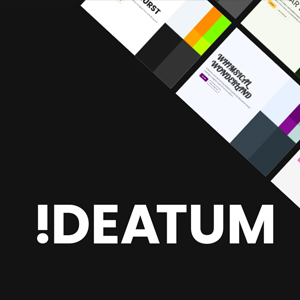
Ideatum is an AI design exploration tool built for having an idea and knowing what that idea should look like. You describe a visual direction in a prompt, and the platform generates color schemes, font pairings, sizing relationships, layouts, and a style guide around that concept.
It’s a focused proposition. Ideatum isn’t an AI image generator or a replacement for a full design application. Its job is to give designers, entrepreneurs, and brand builders a visual starting point they can work with. Then, they can refine, and eventually carry it into production.
The workflow begins with plain language. Instead of selecting colors and fonts manually, you describe the project and the mood you want.
For example:
“Independent coffee shop with a warm neighborhood feel, contemporary but not corporate, natural colors, friendly typography, handmade details, designed for young professionals.”
Ideatum interprets that description and proposes visual ingredients that fit the direction. The platform showcases examples ranging from a tropical rainforest resort to a cyber-noir design agency and a sleek corporate website, which gives a good sense of how broadly prompts can define the starting aesthetic.
This approach is especially useful when the brief contains descriptive language rather than concrete design specifications. A client may know they want something “quiet, premium, natural, and modern” without knowing which typeface or color values express that idea.
Ideatum tries to bridge that gap.
Color palette generators aren't difficult to find. Ideatum's approach is more useful because the colors begin with a creative concept rather than an isolated starting color.
Describe a sustainable outdoor brand and you should get a different direction from a luxury technology company or playful children's product. The palette becomes part of a broader system that includes typography and layout.
That makes the output useful for early exploration. Instead of spending time manually assembling five unrelated mood boards, a designer can use different prompts to explore several interpretations of the same brief.
The generated choices still need judgment. An attractive palette isn't automatically accessible, distinctive, or suitable for every application. Contrast and real-world usage should be checked before treating an AI-generated direction as final.
Typography gets more attention here than it does in many AI mood-board tools. Ideatum generates font pairings alongside its color recommendations, helping the design direction feel more complete.
The team has also developed an interesting approach to font discovery based on visual similarity. Rather than sorting a font collection only by name or broad classifications, its research uses vision transformers to compare how typefaces look. The system can then surface fonts that are visually close to a typeface you already like.
That solves a practical problem. Designers often know they want “something like Oswald, but softer” or a similar alternative to an existing typeface. Searching by visual resemblance can be more useful than scrolling alphabetically through a font menu.
Ideatum's published implementation focuses on regular Latin typefaces from Google Fonts, so this particular approach isn't a universal typography search system.
Colors and fonts alone don't make a style guide. Ideatum also generates sizing ratios intended to establish hierarchy between design elements.
This is an important addition because typography depends on relationships. A heading may use the right font but still feel wrong if its scale doesn't work with the body text or surrounding layout.
Ideatum therefore moves beyond “here are some colors and two fonts” toward defining how those choices might behave together.
It also generates responsive mood boards for desktop, tablet, and mobile contexts. That makes the platform particularly relevant to websites and digital products, where a design direction needs to survive more than one canvas size.
A mood board is useful for discussion, but it becomes more valuable when its decisions can move into production.
Ideatum supports exports to HTML, HTML with CSS, Figma, and Webflow.
That makes the output easier to hand to a designer or bring into an existing workflow. A startup founder, for instance, could use Ideatum to communicate a direction more precisely than a paragraph of adjectives. A designer could use several generated concepts to start a client discussion before investing time in detailed visual development.
| Best use case | Why Ideatum fits |
|---|---|
| Brand exploration | Quickly turns abstract brand attributes into visual directions |
| Website concepts | Combines typography, colors, sizing, and responsive thinking |
| Client mood boards | Makes vague creative briefs easier to discuss |
| Font discovery | Helps explore pairings and visually related alternatives |
| Startup projects | Provides an initial system before detailed design begins |
| Design brainstorming | Makes it practical to compare several concepts early |
Ideatum is deliberately narrow. It generates the building blocks of a visual direction, not a complete brand identity. Logo systems, illustrations, detailed components, complex page layouts, interaction design, and production-ready design systems still require additional work.
The platform's own terms describe its service more narrowly as generating website color schemes and font pairings. They also note that outputs aren't guaranteed to be accurate or reliable.
There is a privacy consideration when writing prompts as well. Ideatum states that prompts are processed using OpenAI language models and that user data is stored through Cloudflare infrastructure. For confidential client work, it makes sense to avoid putting sensitive strategy or unreleased information into the brief.
Ideatum is most useful before detailed design begins. It takes an abstract direction such as “minimal, warm, premium, and sustainable” and gives you concrete colors, typography, sizing, and layout ideas to discuss.
That makes it a good fit for designers exploring concepts, founders defining an early visual direction, agencies preparing mood boards, and non-designers who struggle to translate ideas into design language.
Its main limitation is scope. Ideatum gives you a starting system, not a finished identity. Used that way, its narrow focus makes sense: get the visual direction moving quickly, then bring human design judgment into the decisions that follow.
TAGS: Generative Art
Related Tools:
Transforms 3D architectural models into photorealistic images

AI tool for animating paintings
Generates color palettes, font pairings, and moodboards
Generates high-quality images and videos quickly
Transforms sketches into detailed visuals

Generates realistic images of people