Share this tool:
 |
Description:
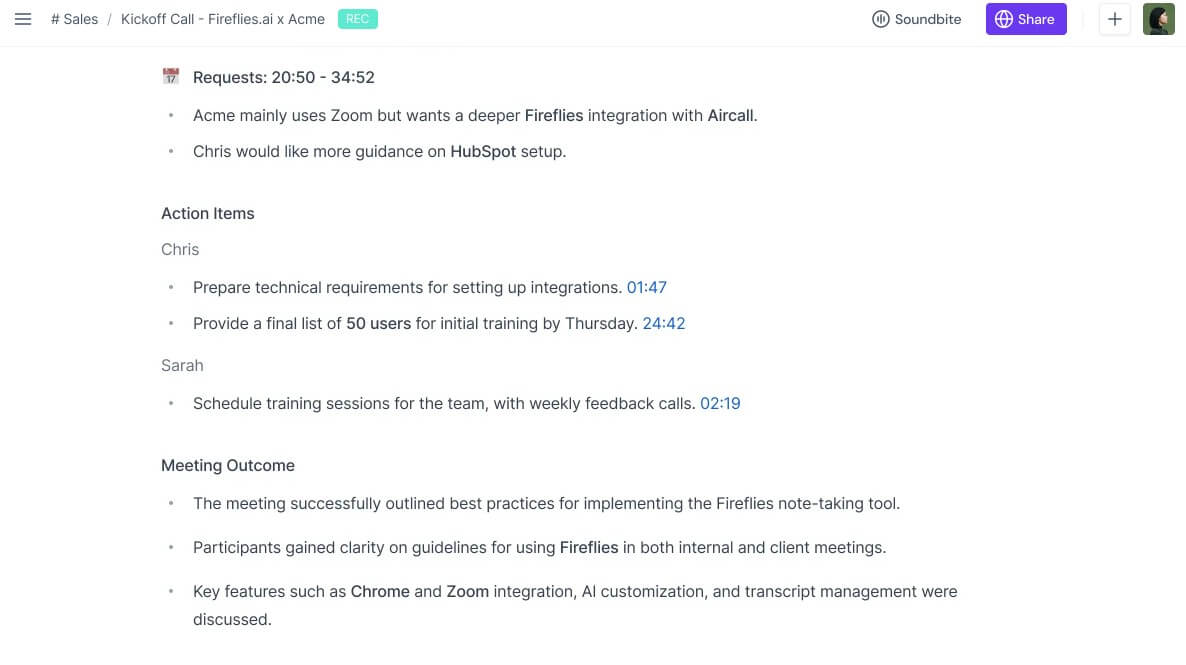
Fireflies.ai is an AI meeting assistant for teams that want meetings to become searchable, shareable work records instead of scattered notes. It can join calls, record conversations, transcribe speech, generate summaries, identify action items, and push meeting data into tools like CRMs, project management apps, and Slack. Its strongest value is not just note-taking. It is turning meetings into a reusable knowledge layer for the team.
Fireflies is a meeting documentation and conversation intelligence platform. You can invite its bot to a meeting, let it auto-join calendar events, use the Chrome extension for Google Meet, record through mobile or desktop, upload audio and video files, or connect dialers and APIs for call workflows. Fireflies says it supports transcription across 100+ languages, speaker recognition, auto-language detection, and AI summaries with bullet points, action items, and custom notes.
That range matters because Fireflies is not only for Zoom calls. It is built for companies where conversations happen across video meetings, sales calls, interviews, internal check-ins, customer calls, and uploaded recordings. The more meetings your team has, the more useful the archive becomes.
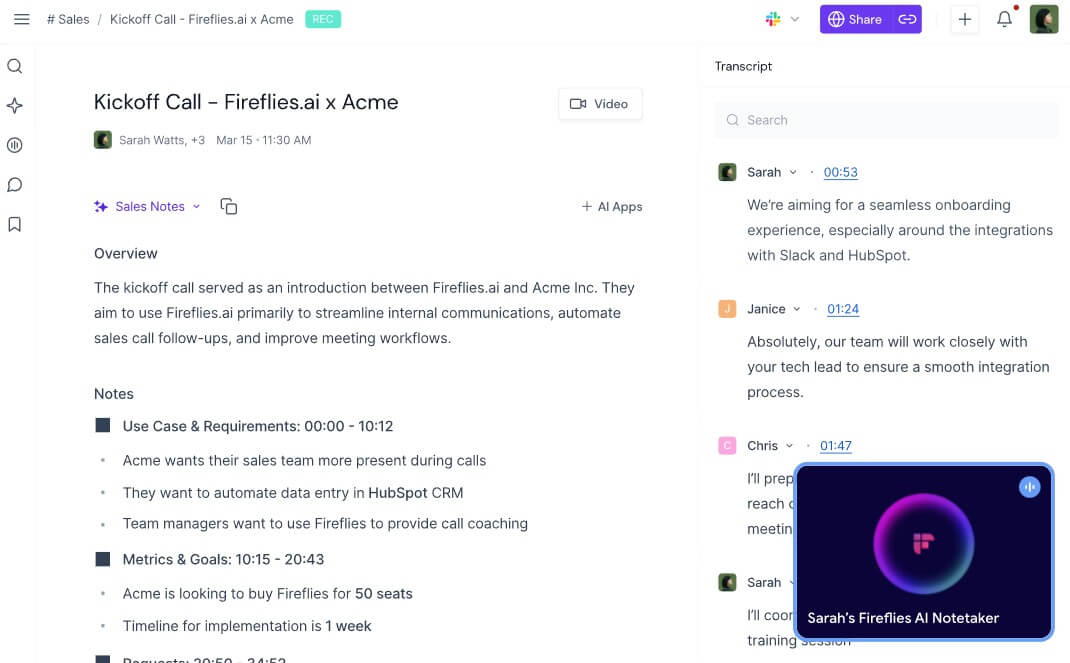
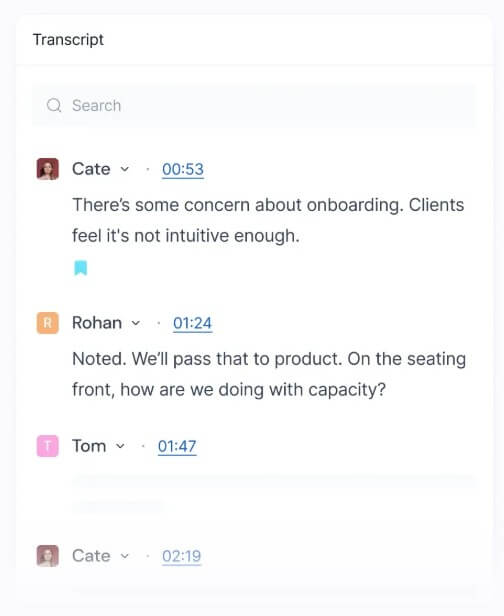
Fireflies works best when meetings create follow-up work. A single transcript is useful, but the product becomes more valuable when it captures decisions, tasks, objections, customer feedback, and recurring themes across many calls.
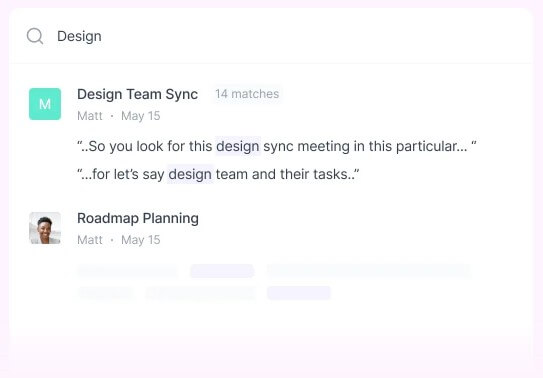
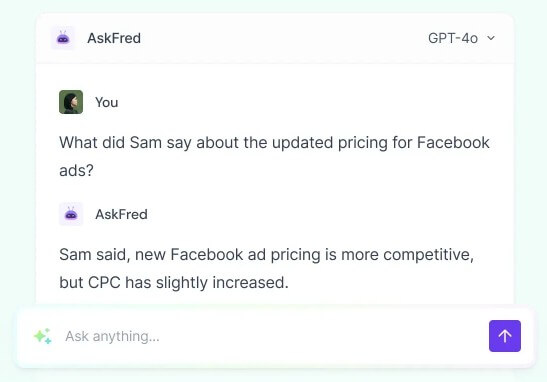
The strongest use case is team memory. Instead of asking, “What did the customer say last month?” or “Who owned that follow-up?” users can search meeting history, review timestamps, ask questions with AskFred, or scan summaries. Fireflies describes AskFred as an AI assistant that answers natural language questions about individual or multiple meeting transcripts.
This makes Fireflies more practical for sales, customer success, recruiting, product research, management, and operations than for casual personal note-taking.
| Feature | What it does | Why it matters |
|---|---|---|
| AI Meeting Capture | Auto-joins calendar meetings or records through bot, browser, mobile, desktop, uploads, dialers, and APIs | Captures conversations across different meeting workflows |
| Transcription and Speaker Recognition | Supports speaker identification, multilingual transcription, and searchable transcripts | Makes long meetings easier to review and reuse |
| AI Summaries and Action Items | Turns calls into bullet points, action items, custom notes, and highlights | Reduces manual meeting recap work |
| AskFred | Lets users ask questions about transcripts | Removes the need to manually search through long meeting records |
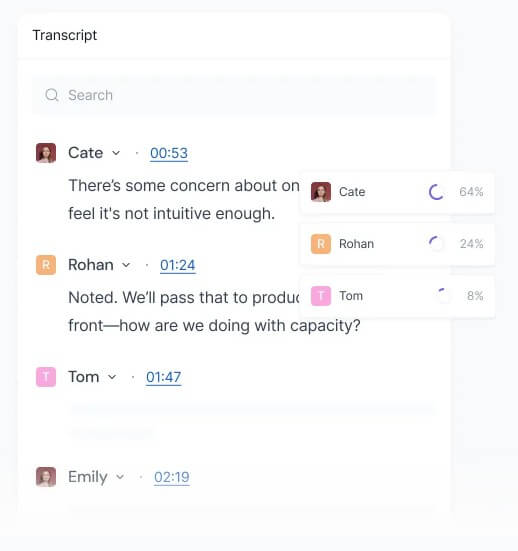
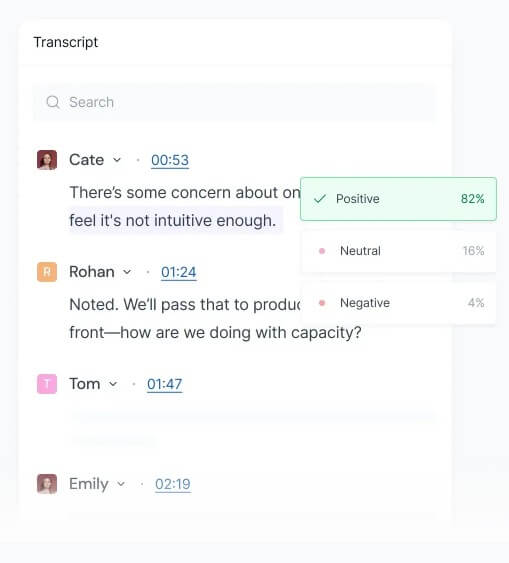
| Conversation Intelligence | Includes speaker talk time, sentiment analysis, topic trackers, and AI filters | Helps teams understand meeting patterns, not just meeting content |
| AI Skills | Supports use cases like sales qualification, recruiting scorecards, customer satisfaction, project tracking, conflict detection, and board meeting summaries | Turns meeting records into role-specific analysis |
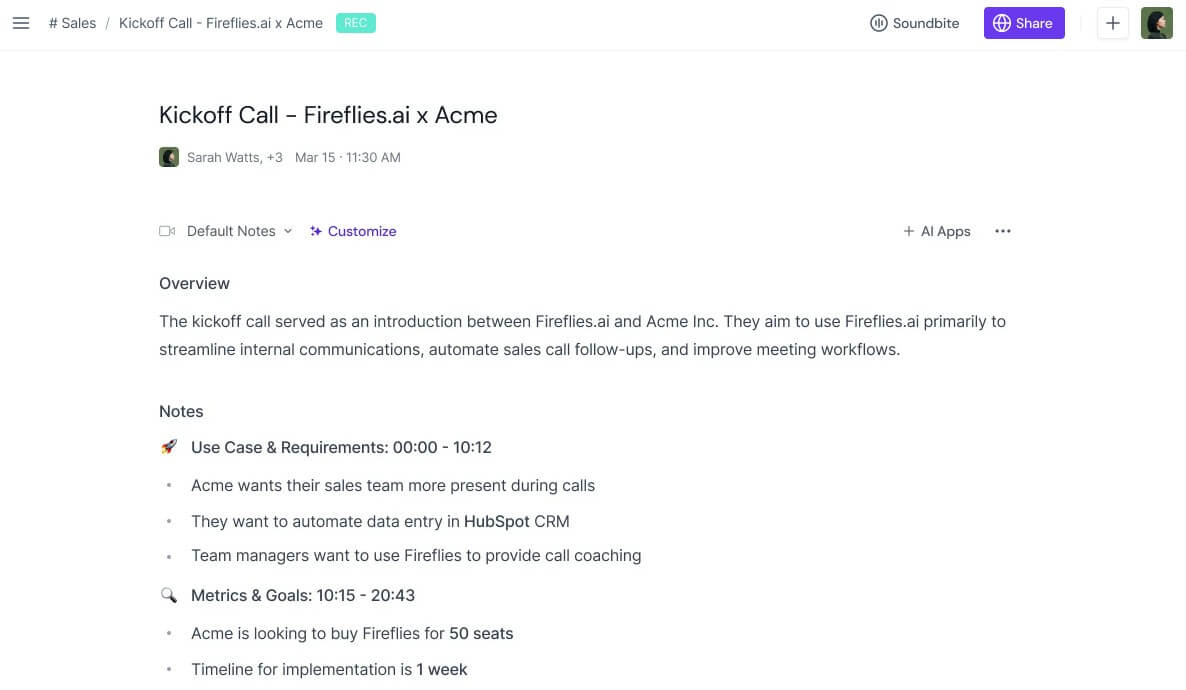
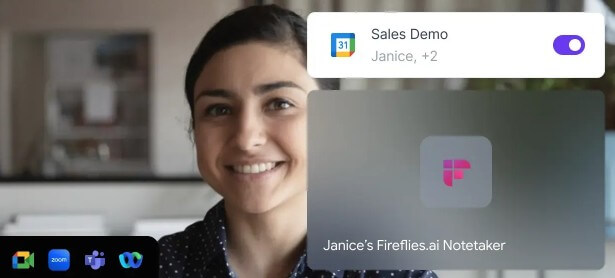
The basic workflow is simple: connect your calendar or meeting app, let Fireflies capture the meeting, then review the transcript and AI notes afterward. For Google Meet users, the Chrome extension can record calls and show real-time transcripts from the browser.
The best part is that Fireflies does not require someone to manually write minutes during the meeting. People can stay focused on the conversation, then use the summary, action items, transcript, and timestamps afterward. That is especially useful for managers and client-facing teams who cannot afford to miss details while leading a call.
The trade-off is bot visibility and meeting consent. In many organizations, having an AI notetaker join meetings is acceptable, but it still needs clear norms. Teams should decide which calls Fireflies should join, how recordings are announced, who can access transcripts, and when sensitive conversations should be excluded.
The AI Skills section is one of Fireflies’ more interesting layers. Instead of only producing a generic meeting summary, Fireflies can run task-specific analysis after a meeting. Examples include BANT sales qualification, objection handling, interview screening, decision tracking, goal progress, user research recording, workflow optimization, and customer satisfaction scoring.
This is where Fireflies moves beyond “AI notes.” For a sales team, the useful output may be deal risk, customer objections, next steps, and CRM-ready notes. For recruiting, it may be candidate scorecards and interview summaries. For product teams, it may be feature requests, pain points, and user quotes.
The practical value depends on how consistent your meetings are. AI Skills are more useful when calls follow a repeatable pattern, such as discovery calls, support reviews, user interviews, or hiring screens. They are less useful for messy, informal, or heavily off-topic meetings where the AI has less structure to work with.
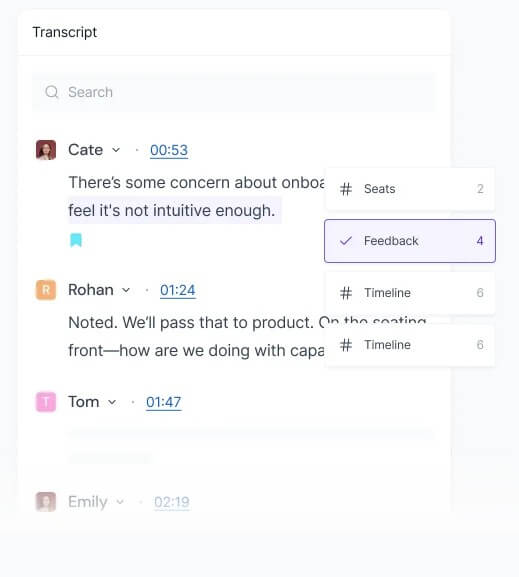
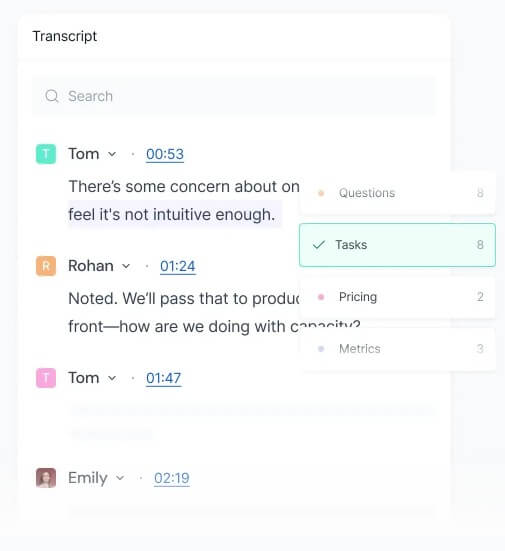
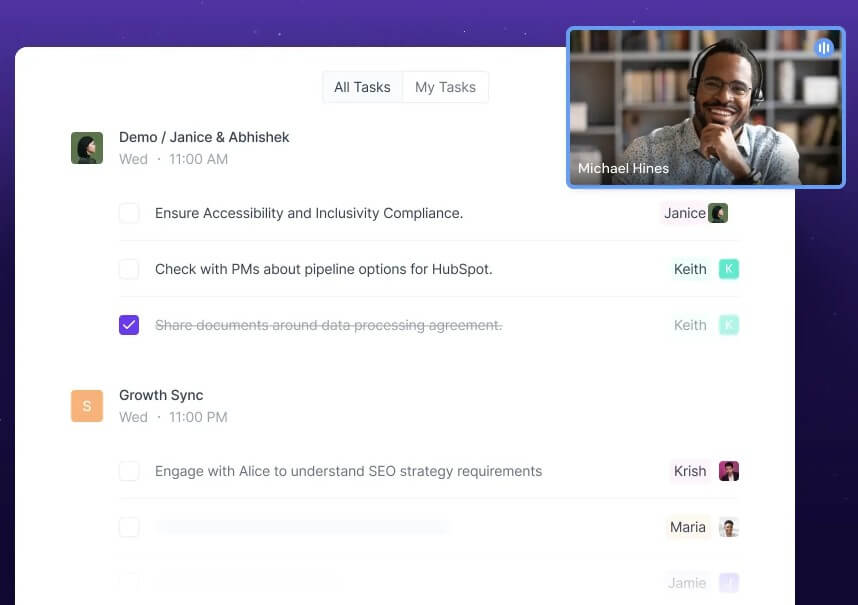
Fireflies is strongest when it connects to the tools where teams already work. Its official site lists integrations across CRM, project management, applicant tracking systems, Slack, storage, video conferencing, dialers, and more. It can auto-fill CRM notes and call logs, create tasks in project management tools, and send notes or alerts into Slack channels.
That makes Fireflies a better fit for teams than for solo users who only need occasional transcripts. The real productivity gain is not only “I have a transcript.” It is “the meeting created the right follow-up record in the right system.”
For developers and technical teams, Fireflies also offers an API for uploading audio, fetching transcripts, extracting keywords or transcript sections, deleting transcripts, managing users, and applying custom topic categories.
Sales teams: Fireflies can capture discovery calls, log notes into CRM workflows, track objections, identify next steps, and help managers review call quality.
Customer success and support: It is useful for documenting customer issues, renewal conversations, escalations, product feedback, and follow-up commitments.
Recruiting: Interview notes, scorecards, candidate comparisons, and hiring team alignment are good fits, especially when several people are involved.
Product research: Fireflies helps teams preserve customer language, feature requests, pain points, and usability feedback from interviews.
Internal meetings: Leadership updates, project reviews, retrospectives, and one-on-ones become easier to search and share when decisions and action items are captured.
Podcasting and media: Upload support for audio and video files makes Fireflies useful for transcripts and searchable archives, though it is not a full editing suite.
Meeting data is sensitive, so Fireflies’ security posture matters. Its security page says users own their data, Fireflies does not train on it by default, and the platform supports controls such as private storage options, custom data retention, admin controls, encryption, SSO, and compliance programs including SOC 2 Type II, GDPR, and HIPAA-related support for eligible healthcare workflows.
This does not remove the need for internal policy. Teams should still define recording rules, retention settings, access permissions, and consent practices before rolling out Fireflies widely.
Fireflies depends on audio quality. Crosstalk, poor microphones, background noise, heavy accents, and fast speakers can reduce transcript quality. That is true of most meeting assistants, but it matters because the transcript becomes the foundation for summaries and analysis.
The AI summaries also need review. Fireflies can save time, but users should not treat action items, sentiment, or sales analysis as perfect records without checking the transcript when stakes are high.
Another trade-off is meeting clutter. If Fireflies joins every call by default, your workspace can fill with low-value recordings. Teams get more value when they decide which meeting types deserve capture and which should stay off the record.
Finally, Fireflies is less useful for people who want a lightweight personal notepad. Its best features lean toward teams, archives, integrations, and repeatable business workflows.
Fireflies.ai is a strong AI meeting assistant for teams that want calls to become searchable notes, tasks, summaries, and business records. It is best for sales, customer success, recruiting, product research, management, and operations teams that rely on meetings to make decisions and move work forward. The main caveat is that Fireflies works best with clear recording norms, good audio, and a team workflow that turns meeting intelligence into action.
TAGS: Productivity
Related Tools:
Enhances browsing and online tasks
Helps teams plan, manage, and track their work
AI-powered writing tool for paraphrasing
Automates and customizes business operations

Enhances productivity for researchers

Enhances writing productivity